Commonwealth of LearningCHOGM26 · Talking points

Climate Action

Resilient learning for resilient communities

13

Talking point 13Commonwealth of Learning
infocol.org

Learning interrupted

Climate change is a direct threat to learning. In 2025, climate shocks disrupted schooling for at least 171 million students in 106 countries / territories.*

* Source: UNICEF (2026).

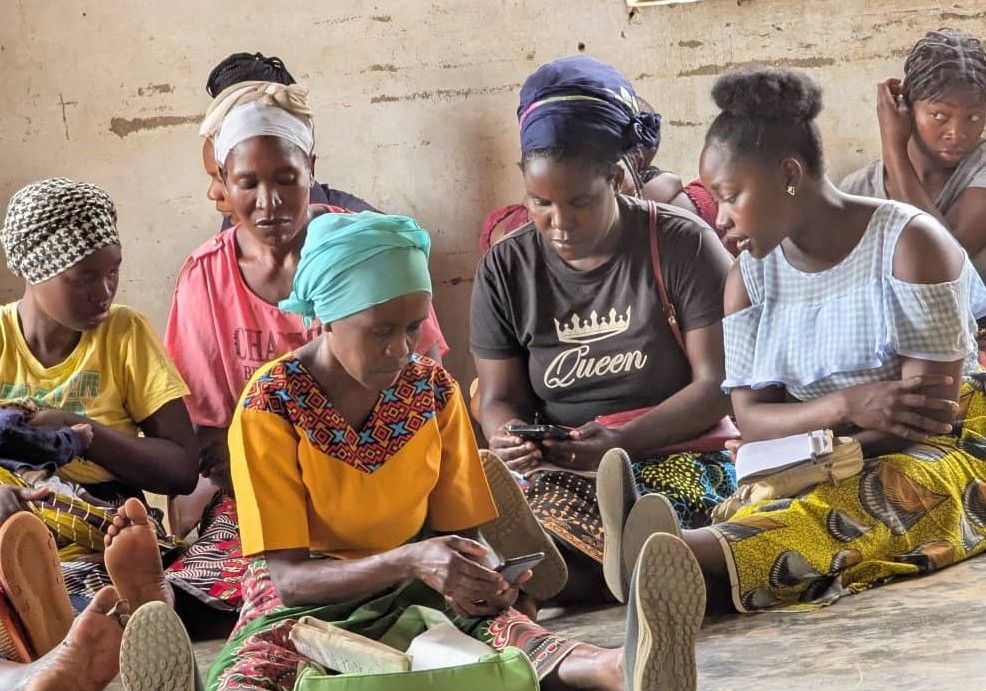
A group of women seated on the floor of a community room in Malawi, looking at mobile phones together during a training session.
Women began self-initiated community training sessions, using COL’s Aptus frugal network device to reach vocational content, with partner CYO, Malawi, March 2025.

The opportunity

Put climate education and resilient, open learning at the heart of national climate action, starting in small island states.

The argument

Climate education matters

Education is a crucial tool for mitigating and adapting to climate change, especially in smaller countries that are hit hardest by its impacts. Integrating climate education into national teaching and learning gives people the knowledge and skills to drive sustainable practices and innovation, and open and flexible learning makes that education accessible and scalable for diverse populations.

Climate change is also a direct threat to learning. In 2025, climate shocks disrupted schooling for at least 171 million students in 106 countries or territories (UNICEF, 2026). Small island developing states are among the most exposed: cyclones, floods and heat close schools and cut power and connectivity.

Yet education is often missing from climate planning. COL’s report to Commonwealth education ministers urges a shift from reacting to shocks to reducing risk in advance (Kwauk, 2022).

Resilience is built in classrooms and ministries as well as in hardware, and above all by teachers who can keep teaching through disruption and help schools, and the communities around them, get back to normal quickly.

In 2025, UNICEF recorded climate shocks to schools in at least 29 of 56 members

One equal tile per Member Nation, by region. Select a tile for students affected and the hazard behind the latest disruption.

UNICEF recorded climate-related school disruptions in 2025 in at least 29 of the 56 Commonwealth Member Nations, in every region.

Source: COL analysis of UNICEF (2026), Learning interrupted: Global snapshot of climate-related school disruptions in 2025, Annex 1 (pp. 16–19), pp. 5–6 and methodology (p. 13), matched to the Commonwealth Secretariat’s list of 56 Member Nations.

The concept

Learning for climate action

Models that reach the most remote communities

COL has developed several models that ensure even the most remote communities are equipped with the tools to respond to climate change. Its Aptus device creates a local network so that phones, tablets and laptops can provide access to digital learning resources without the internet. Low-cost and portable, Aptus has helped learning reach outer islands in Fiji, and teachers in the Maldives were trained to use it. In Malawi, women began their own community training sessions with partner CYO, using vocational content delivered this way.

Cyclones test these models. After Tropical Cyclone Gita struck Tonga in February 2018, damaging the power grid and school buildings, COL provided 25 Aptus devices and 250 tablets to restore classroom teaching, with the Tonga Institute of Higher Education leading the deployment (COL, 2018). In The Bahamas, where schools were still recovering a year after Hurricane Dorian, COL presented 30 Aptus devices and 300 tablets to the Ministry of Education in 2020, preloaded with curriculum-aligned content and backed by a helpdesk (COL, 2020). Both responses came after the storm; the lesson is to prepare before the next one.

Technology that still works when power and internet failIllustrative model

How COL’s Aptus device keeps a classroom on its digital learning resources without the grid or the internet. Cut the power and internet, add teacher-led AI, or select any part to read about it.

COL’s Aptus device creates a local network so that phones, tablets and laptops can reach digital learning resources without the internet; it runs on a battery that can be recharged from the grid or a solar charger.

Sources: the talking point; COL (2018, 2020); Mays and Cheng (2024), Journal of Learning for Development; COL (2025), Programme achievement 2024–25.

Resilience is also institutional. When an earthquake struck Vanuatu in 2024, the learning platform of the Pacific partnership for open, distance and flexible learning was back within a week.

Communities carry climate learning further. Mobile learning through COL’s Lifelong Learning for Farmers has reached more than 1 million farmers, and women farmers in COL’s Empowering Women and Girls initiative adopted climate-smart practices that raised yields and incomes.

Greening the Learning Agenda

Initiatives such as ‘Greening the Learning Agenda’ emphasise embedding sustainability into all levels of education (Kanwar, 2022). When COL consulted 26 Commonwealth countries, they asked for climate literacy in the curriculum, closer alignment of climate and education policies across ministries, stronger teacher capacity and digitised Indigenous knowledge of environmental conservation, as well as devices and connectivity.

The same thinking now shapes COL’s programmes. In the next phase of the Pacific partnership, climate content is one of five design gates to pass before delivery scales, and every learner-facing activity is reviewed each year for the quality of its climate content. Teachers are being prepared for climate-responsive teaching, and green and blue skills turn climate learning into livelihoods: climate-smart agriculture, renewable energy and water management on land, and ocean literacy, sustainable fisheries and marine protection at sea.

Resilient systems, resilient communities

By prioritising climate education and promoting open learning, we can build resilient communities able to respond to long-term environmental challenges and short-term shocks. For education systems, that means assessing climate risks school by school, planning how learning resumes when schools become shelters, and choosing technology that still works when power and internet fail: radio, print, offline and online.

Offline, teacher-led AI can be part of that kit, with compact models on local servers that keep supporting lesson preparation when connections drop, and teachers in charge. And education belongs in national climate plans, budgets and climate finance requests, so that the next cyclone, flood or heatwave finds teachers and learners ready, and the system recovers in days, not months.

A resilience checklist for education systems

  • Climate risks are assessed school by school, with communities, and mapped nationally.
  • Learning can resume within days, even when schools serve as shelters.
  • Ministries track damaged schools, affected learners and days of learning lost.
  • Teachers and staff are trained in climate literacy and trauma-informed support.
  • Radio, offline and online options keep learning going through power cuts.
  • Digital and AI tools work offline and keep teachers in charge.
  • Education is written into national climate plans, budgets and finance requests.
Places of impact

Member Nations named in this talking point

6 of the 56 Member Nations. Every member is one equal tile, so small states stay visible; select a tile to read what happens there.

  1. FJI
    FijiAptus has helped learning reach outer islands
  2. MDV
    MaldivesTeachers were trained to use Aptus
  3. MWI
    MalawiWomen began their own community training sessions with partner CYO, using Aptus to reach vocational content (March 2025)
  4. TON
    TongaAfter Tropical Cyclone Gita (2018), COL provided 25 Aptus devices and 250 tablets to restore classroom teaching
  5. BHS
    The BahamasA year after Hurricane Dorian, COL presented 30 Aptus devices and 300 tablets to the Ministry of Education
  6. VUT
    VanuatuAfter the 2024 earthquake, the Pacific partnership’s learning platform was back within a week

The opportunity

Put climate education and resilient, open learning at the heart of national climate action, starting in small island states.

COL will share open content, distance-learning expertise and teacher training, and help partners measure what works.

From the newsroom

We are already moving

Stories from the Commonwealth of Learning that highlight this strategic talking point. Each opens on col.org.

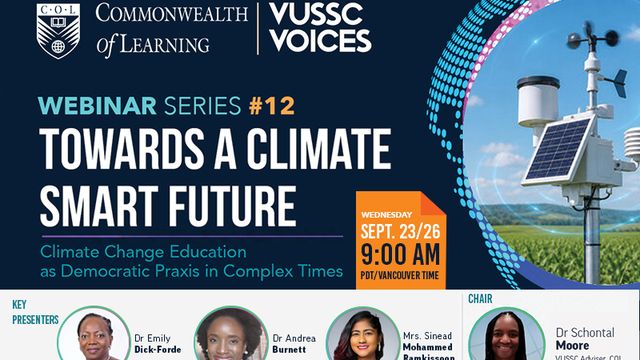
VUSSC Voices webinar #12 banner, ‘Towards a climate smart future’, with presenters, chair and a solar-powered weather station

VUSSC Voices webinar #12: Towards a climate-smart future

Chaired by COL’s VUSSC Adviser Dr Schontal Moore, the online session scheduled for 23 September 2026 was to include a University of the West Indies Global Campus presentation on climate change education as democratic praxis.

“VUSSC Voices, a webinar series highlighting expert voices from COL’s Virtual University for Small States of the Commonwealth (VUSSC) network, returns with its 12th webinar on climate-smart futures.”

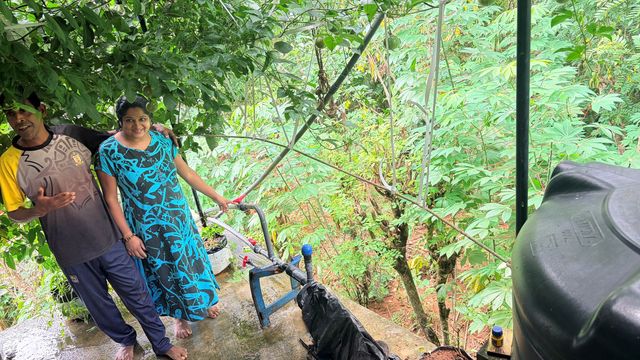
A woman and a man in a home garden with an irrigation pump and water tank

Seeds of resilience: Saroja’s journey into agricultural entrepreneurship and community mentorship

Through COL’s Global Affairs Canada-funded EWG project with Sri Lankan partner WDC, Saroja trained in sustainable agriculture and climate-smart farming, helping her build a home-garden business that recovered after Cyclone Ditwah.

“The garden now provides nearly 90 per cent of the food her family consumes, significantly reducing household food expenses while giving the family access to a more nutritious diet.”

COL Earth Day 2026 graphic on a green background

Greening education systems: The role of Open and Distance Learning in advancing climate action

In an Earth Day piece, COL’s Jako Olivier argues ODL can expand access while cutting emissions, citing COL’s call for a “New Green Learning Agenda” that equips learners with green skills.

“A recent systematic review of 17 studies found that ODL typically produces substantially lower emissions than campus-based education, with some landmark studies reporting reductions of more than 80 per cent.”

COL contributes to building education resilience in The Bahamas

COL gave The Bahamas Aptus off-grid learning devices pre-loaded with local curriculum content, plus tablets, for schools still grappling with hurricane Dorian's devastation, to help build education resilience.

“Professor Asha Kanwar symbolically handed over 30 Aptus devices and 300 tablets to The Honourable Jeffrey Lloyd, Minister of Education, The Bahamas”

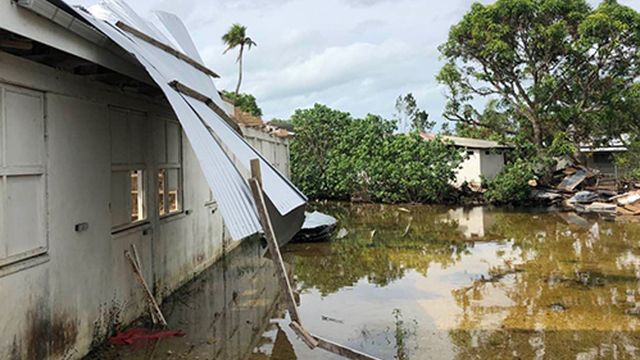
Floodwater beside a building with torn, hanging roof sheeting after Tropical Cyclone Gita in Tonga

Aptus restores education in cyclone-hit Tonga

After Tropical Cyclone Gita damaged Tonga's power grid and school buildings, COL sent Aptus devices to help restore classroom teaching and, with its regional centre PACFOLD, trained local personnel to create learning materials.

“On April 10, COL deployed 25 Aptus devices and 250 high-quality tablet computers”

Working in synergy

Connections

This talking point aligns with the Commonwealth Secretariat’s Climate pillar and the Commonwealth Foundation’s focus on climate and environment justice.

Connections named in the talking point

Talking points on the same pillar

References

Sources (8)

Show the sources

As printed in the talking point, followed by the further sources used for this site’s charts and diagrams.

Further sources for the charts and diagrams