landmark child marriage measures in Pakistan to which advocacy by women’s rights organisations contributed
ResultCOL
From community voice to national change
The right to learn
Young women are twice as likely as young men to be out of employment, education and training, and nearly one in five young women worldwide was married before the age of 18: 31% in sub-Saharan Africa and 25% in Southern Asia.*
* Source: UN DESA (2026).
The opportunity
Scale community-led models to link women’s and girls’ learning, livelihoods and rights to national policy change.
The argument
Gender equality is not a side issue: it decides whether education and skills reforms succeed. Child, early and forced marriage ends education, while gender-based violence and harmful norms limit what girls and women can learn and earn. In Central and Southern Asia, young women are four times as likely as young men to be out of employment, education and training (UN DESA, 2026).
Lasting change comes when learning, livelihoods and rights move together at every level: the individual, the household, the community and the state. Women need skills and income; communities need leaders, including men and boys, who back girls’ education; and community voice must reach the people who make laws.
COL’s Empowering Women and Girls in the Commonwealth (EWG) initiative, supported by the Government of Canada, works this way with local partners in Bangladesh, Malawi, Mozambique, Pakistan and Sri Lanka, where between 10% (Sri Lanka) and 48% (Mozambique) of women were married before the age of 18 (Ferreira, 2026; Girls Not Brides, n.d.). It strengthens women’s rights organisations, engages men and boys as allies, connects women to skills and livelihoods, and links community advocacy to national policy change.
The approach is rooted in rights. Knowing their rights gives women and girls the confidence to claim education, control income and speak to those in power.
Proof points
Each card represents evidence in a strategic talking point, chosen because it shows the need or a result of COL’s work. Use the share button to copy a card as an image with a link back to this page.
landmark child marriage measures in Pakistan to which advocacy by women’s rights organisations contributed
ResultCOL
Women’s Empowerment Index in EWG project communities, up from 0.32 (empowerment threshold 0.80)
ResultCOL (2025)
of female EWG TVET graduates entered employment or self-employment within six to nine months
ResultCOL (2025)
rise in household incomes against baseline among female farmers in EWG project communities
ResultCOL
of men and boys in EWG project communities showing highly gender-equitable behaviour
ResultCOL
women and girls reached by EWG awareness-raising on rights
ResultFerreira (2026)
Case study
In Pakistan, COL has worked since 2016 on long-term advocacy by women’s rights organisations, supported with additional funding from Global Affairs Canada, most recently through EWG. This work has contributed to three landmark measures: the Islamabad Child Marriage Restraint Act (2025), Balochistan’s legislation (November 2025) and the Punjab Child Marriage Restraint Bill (April 2026), which makes underage marriage a non-bailable offence.
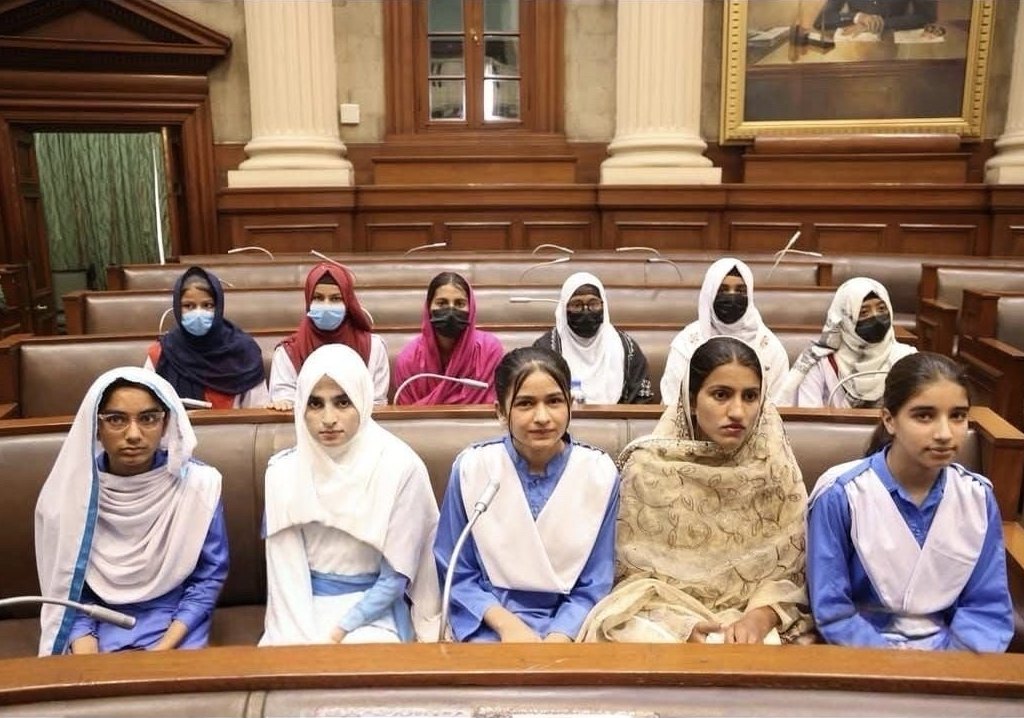
Girls themselves took the case to lawmakers, meeting Members of the Provincial Assembly of Punjab. Across the project, women’s focus groups prevented between 192 and 256 early or forced marriages in their own communities in a single year.
The EWG model in the talking point’s words: learning, livelihoods and rights move together at every level. Evidence from EWG’s work in Bangladesh, Malawi, Mozambique, Pakistan and Sri Lanka; the state level follows the Pakistan case. Select a level.
Sources: the talking point (COL, 2025; Ferreira, 2026). Pakistan dates and events: Government of Pakistan (2025); Government of Balochistan (2025); APP (2026). Grouping the evidence by level is this site’s.
Support for women’s rights and civil society organisations grew from 27 at the start of the project to 451, with 162 strengthened in 2025 alone. Over 80% of them challenged child, early and forced marriage, responded to gender-based violence, supported girls’ return to school and advanced women’s rights to equal wages, land and leadership, and over 40% reported no early marriages in their communities in 2024–2025.
At the systems level, civil society engaged governments on land and economic rights, representation, gender-responsive budgeting, policy on gender-based violence and the local application of CEDAW. Community structures now resolve problems locally: 270 community gender equality committees resolved more than 70% of gender-based violence cases, and in Sri Lanka, school-level redress mechanisms were reactivated.
Engaging men and boys has been a cornerstone. Scores on the Gender Equitable Men scale rose from a baseline average of 24 to 56.8 out of 72 across all five countries, with 65% to 80% of men and boys showing highly gender-equitable behaviour, and men’s knowledge of gender equality reached 76.4%, up from 15%. Men in project communities are preventing their daughters’ early marriages, advocating for girls’ schooling and sharing household responsibilities.
The Women’s Empowerment Index rose from 0.32 at baseline to 0.90, surpassing CARE’s empowerment threshold of 0.80, and every country met its three-year target (see chart). Between 60% and 75% of women gained greater control over decisions on health, marriage, education and economic participation. More than 28,000 women and girls were linked to financial services and business support, and 65–70% of female TVET graduates entered employment or self-employment within six to nine months (COL, 2025).
Women’s Empowerment Index (0 to 1), sampled women in EWG project communities (701 in 2025), by country: baseline (2023) and outcome monitoring (2025)
Source: COL (2025), EWG baseline and outcome monitoring, as cited in the talking point: Ferreira, Kuppuswami and Sudesh (2026), Empowering Women and Girls in the Commonwealth project: Annual report 2025, Table 4.
| Country | Baseline (2023) | Outcome monitoring (2025) |
|---|---|---|
| Bangladesh | 0.28 | 0.93 |
| Malawi | 0.30 | 0.90 |
| Mozambique | 0.29 | 0.85 |
| Pakistan | 0.31 | 0.83 |
| Sri Lanka | 0.41 | 0.99 |
Between 55% and 65% of female farmers adopted sustainable practices, and more than 56,000 women and girls took part in climate adaptation activities, from tree planting to rainwater harvesting; farm yields rose by 40–60% and household incomes by 70–75% against baseline. In Bangladesh, training reached 93 villages, with computer and sewing courses leading to incomes of about 8,000 taka a month.
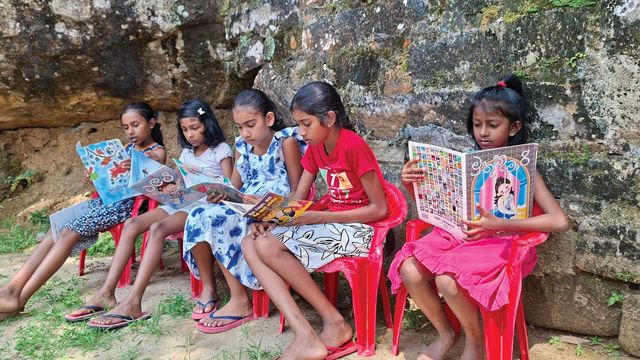
Seven local NGO partners kept programmes running through floods, heat, cyclones and unrest. Awareness-raising on rights reached more than 465,000 women and girls, more than 4,900 community leaders were trained and more than 770 clubs for men and boys challenged harmful norms (Ferreira, 2026). Community-led innovations, such as the human rights board game Tiene Toa, a Walking School mobile learning vehicle and 36 self-learning videos on climate resilience, are ready to be replicated, and a final evaluation will follow.
COL’s wider equity work is delivering in every other region. For instance: Girls Inspire courses with Gulu University in Uganda and YAPO in Tanzania; a tertiary gender and inclusion policy in The Gambia; and the new Women in STEM initiative (WiSE), which met in Kuala Lumpur in August 2026 with Member Nations including Malaysia, The Gambia and Uganda.
Places of impact
10 of the 56 Member Nations. Every member is one equal tile, so small states stay visible; select a tile to read what happens there.
The opportunity
Scale community-led models to link women’s and girls’ learning, livelihoods and rights to national policy change.
COL will share the EWG model, tools and evidence, and support partners to adapt and scale it, with special thanks to Global Affairs Canada for their direct support of this initiative.
From the newsroom
Stories from the Commonwealth of Learning that highlight this strategic talking point. Each opens on col.org.
After more than 10 years of work by COL and partners, three Child Marriage Restraint Bills passed in Pakistan, while COL's EWG project engages men and boys, community leaders and women's rights organisations.
“Over the past three years, EWG has reached more than 465,000 women and girls through awareness-raising activities on human rights, legal protections and personal agency.”
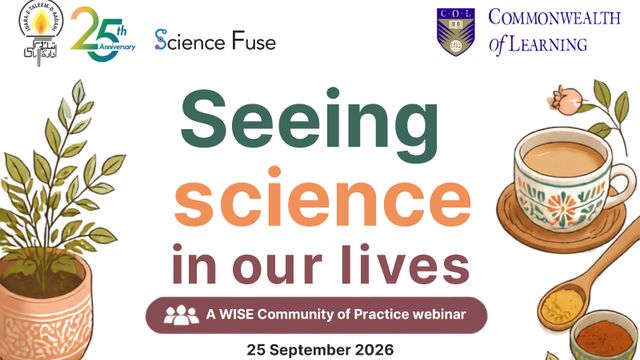
ITA and Science Fuse, in partnership with COL, organised a 25 September 2026 WiSE webinar on girls’ and young women’s interest in science, drawing on SSTR, an ITA–COL programme in peri-urban Lahore.
“The programme aims to translate young women’s strong aspirations to upskill, gain recognised certification and earn an income into tangible pathways to financial inclusion, entrepreneurship and sustainable livelihoods.”
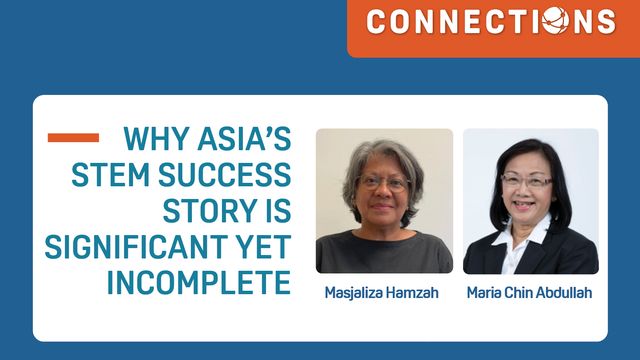
COL-supported research in Brunei Darussalam, India and Malaysia suggests that getting girls into classrooms and lecture halls has proven far easier than retaining women and enabling them to advance in STEM careers.
“Women account for less than 40 per cent of the STEM workforce in 12 of the 20 Asia-Pacific countries with available data”
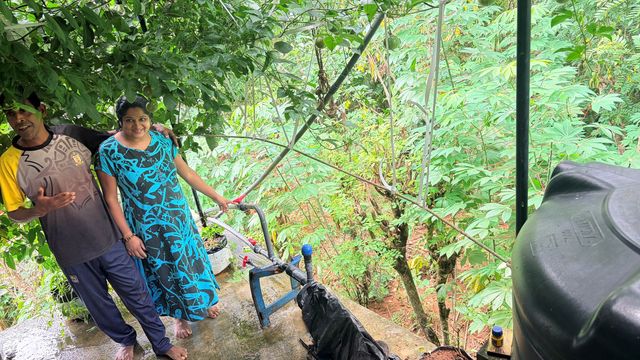
Through COL’s Global Affairs Canada-funded EWG project with Sri Lankan partner WDC, Saroja trained in sustainable agriculture and climate-smart farming, helping her build a home-garden business that recovered after Cyclone Ditwah.
“The garden now provides nearly 90 per cent of the food her family consumes, significantly reducing household food expenses while giving the family access to a more nutritious diet.”
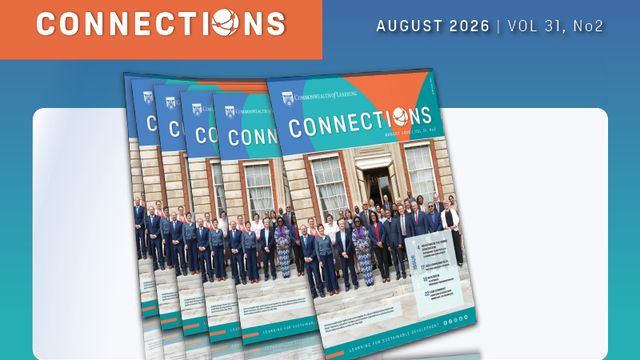
COL’s August issue of Connections covers youth innovation ahead of CHOGM 2026, the disengagement of boys and young men from education, pathways for women in science and technology, and livelihood-focused skills development.
“With young people representing more than 60 per cent of the Commonwealth’s population, this issue of Connections looks at the opportunities and barriers they face”
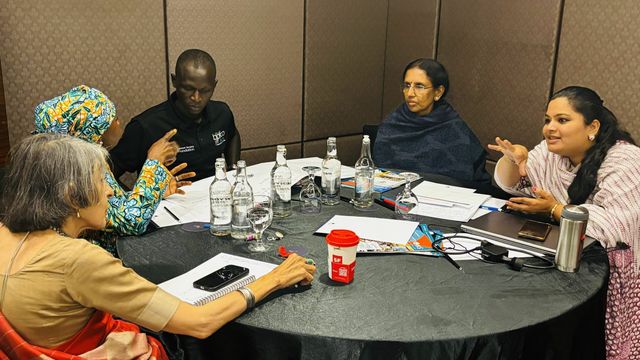
WiSE, COL’s Women in STEM initiative, held its first international activity, a four-day Kuala Lumpur workshop with participants from six countries, where Malaysia’s Ministry of Higher Education announced dedicated research funding.
“Around the world, women make up only 35 per cent of STEM graduates and hold only about a quarter of jobs in science, engineering, and ICT.”
Working in synergy
This talking point aligns with the Commonwealth Secretariat’s Economic and Democratic pillars and the Commonwealth Foundation’s focus on economic inclusion and freedom of expression.
Connections named in the talking point
Talking points on the same pillars
As printed in the talking point, followed by the further sources used for this site’s charts and diagrams.
Further sources for the charts and diagrams