growth in household income against baseline in COL’s Empowering Women and Girls initiative
ResultCOL (2025)
Climate-smart livelihoods, starting with agriculture
Our world needs green skills
Closing the gender gap in farm productivity and wages in agrifood systems would add nearly US$1 trillion to global GDP and cut the number of food-insecure people by 45 million.*
* Source: FAO (2023).
Opportunity for action
Members can accelerate in partnership
Put green skills, starting with climate-smart agriculture, at the heart of TVET, agricultural extension and community learning, with women and young people first.
The argument
The 11 years from 2015 to 2025 were the hottest on record (UN DESA, 2026). Climate change is already reshaping how people farm, build, travel and earn, and the green transition is creating work: renewable energy alone employed 16.6 million people in 2024 (IRENA & ILO, 2025).
Yet training, training spaces and trainers have changed far less than work itself. Most of the world’s workers, 57.9%, are in informal employment, where informal apprenticeships remain the main route to skills. For millions of rural families, and especially women farmers, green skills begin with climate-smart agriculture: soil health, water harvesting, seed spacing, record-keeping, and access to markets and credit.
Technical and Vocational Education and Training (TVET) must become an ecosystem where governments set policy and funding; institutions practise open and flexible TVET; industry co-designs curriculum and validates skills; and technology partners provide mobile and AI-enabled tools that link informal and formal learning and recognise what people can already do. Indigenous and local knowledge matter too: skills for life, community and land, not only for work.
Women produce much of the world’s food but have less access to land, credit, extension services and technology. Closing those gaps is one of the fastest routes to resilience.
Proof points
Each card represents evidence in a strategic talking point, chosen because it shows the need or a result of COL’s work. Use the share button to copy a card as an image with a link back to this page.
growth in household income against baseline in COL’s Empowering Women and Girls initiative
ResultCOL (2025)
increase in farm yields against baseline in COL’s Empowering Women and Girls initiative
ResultCOL (2025)
of female farmers in COL’s Empowering Women and Girls initiative adopted sustainable practices
ResultCOL
farmers reached through mobile learning by COL’s Lifelong Learning for Farmers model
ResultCOL
Case study
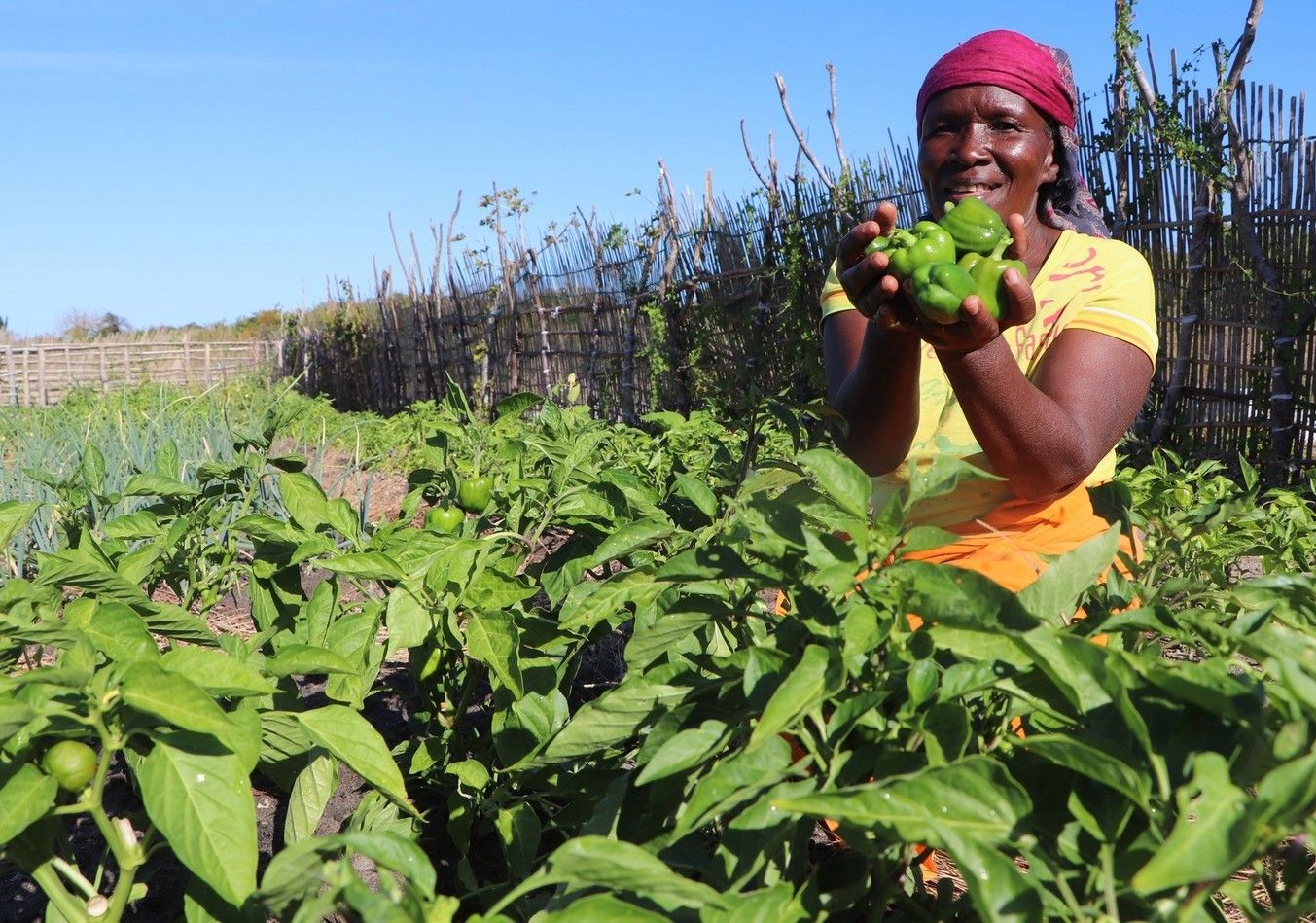
Through COL’s Empowering Women and Girls (EWG) initiative, supported by the Government of Canada, partners in Malawi and Mozambique combined climate-smart agriculture with literacy, savings, entrepreneurship and rights. In Mozambique, ADPP trained rural women and girls in sustainable agriculture; in Malawi, women began their own community training sessions using offline digital content.
More than 56,000 women and girls took part in climate adaptation activities, including tree planting, rainwater harvesting, soil fertility improvement and climate-smart farming. Between 55% and 65% of female farmers adopted sustainable practices, reducing their dependence on costly external inputs.
The results were economic as well as environmental. Farm yields rose by 40–60% and household incomes by 70–75% compared with baseline, improving food security and resilience to climate shocks (COL, 2025). Thirty-six self-learning videos on climate resilience now give communities a replicable resource.
Increase on the 2023 baseline per household, %, for farm yields (kg) and farm income (US$); sampled female farmers in the five EWG project countries, 2025
Source: COL (2025), as cited in the talking point: Ferreira, Kuppuswami and Sudesh (2026), Empowering Women and Girls in the Commonwealth project: Annual report 2025, Table 17 and pp. 76–77. Before-and-after surveys of sampled households, with no comparison group; incomes are farm income in US$ as reported, so may include price effects.
| Country | Farm yields | Household farm income | Note |
|---|---|---|---|
| Bangladesh | 40.0% | 68.6% | Yields 1,561 → 2,185 kg (target 2,341). Income US$637 → US$1,074 (target US$955). 55% of sampled female farmers adopted at least three improved practices. |
| Malawi | 41.5% | 73.7% | Yields 1,172 → 1,658 kg (target 1,758). Income US$663 → US$1,152 (target US$994). 60% adopted at least three improved practices. |
| Mozambique | 45.0% | 72.5% | Yields 2,087 → 3,026 kg (target 3,130). Income US$596 → US$1,028 (target US$894). 60% adopted at least three improved practices. |
| Pakistan | 60.9% | 74.7% | Yields 2,044 → 3,288 kg (target 3,066). Income US$982 → US$1,716 (target US$1,473). 60% adopted at least three improved practices. |
| Sri Lanka | 60.9% | 75.3% | Yields 2,078 → 3,343 kg (target 3,117). Income US$791 → US$1,387 (target US$1,186). 65% adopted at least three improved practices. |
The approach builds on COL’s Lifelong Learning for Farmers model, which has used mobile learning to reach more than 1 million farmers and links certified training to credit and markets. An independent study found that it generated 16 times the value of the investment in India; in Antigua and Barbuda it supports smallholders and backyard gardeners, alongside a Farmer Information System adapted from Jamaica.
In Dominica, COL and The UWI Global Campus run a Farmer Field School with the Ministry of Agriculture: in February 2026, 37 Indigenous Kalinago farmers completed its second six-week cohort, and the documentary ‘Harvest & Heritage’ follows farmers applying what they learned (COL, 2026). In Namibia, COL has helped train 300 community members in livelihood skills such as horticulture and poultry production, and supported a strategy to digitise learning resources for climate-responsive livelihoods and food security.
Systems matter too. In Zambia, the Ministry of Technology and Science and the regulator TEVETA built an enabling architecture for open, distance and flexible TVET, with policies, standards and a national monitoring framework. More than 30 institutions are engaged, 11 providers have developed implementation strategies, and the Technical and Vocational Teachers’ College prepares more than 900 graduates a year.
Together, these show that aligned governance, institutional capacity, industry partnerships and community-based delivery can make green skills a route to livelihoods.
What the talking point asks TVET to become. Switch the view, then select a part to read its role and where the case study shows it.
Source: the talking point, including its milestones. The arrangement, and the grouping of case-study examples under each part, are this site’s.
“EWG did not just teach farming – it taught me to challenge barriers. Learning to space seeds improved yields; learning about rights gave me confidence to control the income.”
Orlanda Varela, farmer, Mozambique (ADPP partner community)
Places of impact
12 of the 56 Member Nations. Every member is one equal tile, so small states stay visible; select a tile to read what happens there.
Opportunity for action
Members can accelerate in partnership
Milestones
Commit to green skills as part of a just transition, anchored in national TVET systems, with explicit targets for women, young people and rural communities.
Just transitionWomenYoung peopleMap green skills readiness and demand in priority agrifood value chains, and align agriculture and TVET policies, in open, tech-enabled, blended delivery.
Certify green skills and knowledge intermediaries through micro-credentials and recognition of prior learning; update TVET curricula and trainer development.
Micro-credentialsRecognition of prior learningTrainer developmentAligned national systems deliver recognised green skills pathways, from informal apprenticeships to formal qualifications.
We continue to act
COL will share proven models, support policy alignment, open learning content and trainer development, and help partners measure skills, yields, incomes and resilience.
From the newsroom
Stories from the Commonwealth of Learning that highlight this strategic talking point. Each opens on col.org.
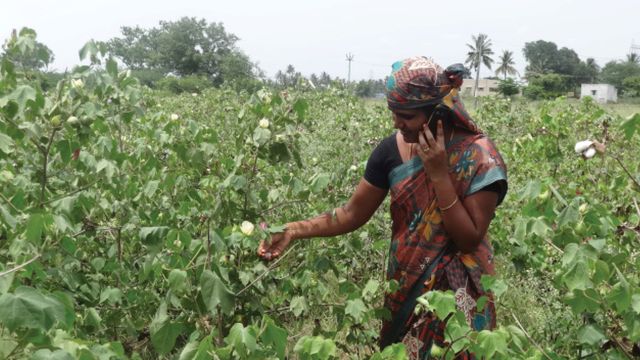
Building on Lifelong Learning for Farmers, COL is developing a three-pronged approach to agricultural green skilling and is exploring frugal, multilingual AI tools for learning.
“Looking ahead, COL is shaping its Future Skills interventions around a simple idea: helping member countries anticipate the skills their economies will need tomorrow and preparing youth, women, farmers and fishers for them today.”
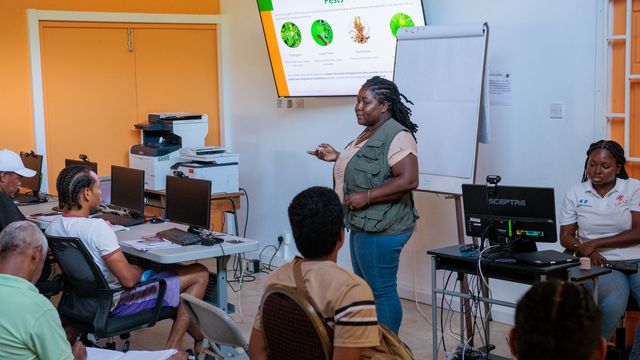
COL helps small states build resilience through skills for the green, blue and orange economies: a Farmer Field School in Dominica, four blue economy MOOCs with the University of Seychelles, and micro-credentials with The University of the West Indies, Mona, that help educators engage learners through creative expression.
“More than 6,000 learners from over 70 countries enrolled in these courses”
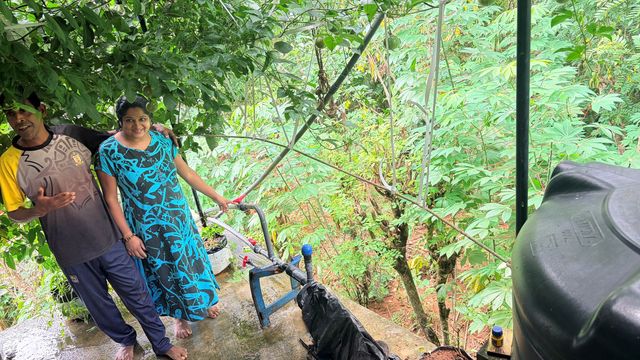
Through COL’s Global Affairs Canada-funded EWG project with Sri Lankan partner WDC, Saroja trained in sustainable agriculture and climate-smart farming, helping her build a home-garden business that recovered after Cyclone Ditwah.
“The garden now provides nearly 90 per cent of the food her family consumes, significantly reducing household food expenses while giving the family access to a more nutritious diet.”
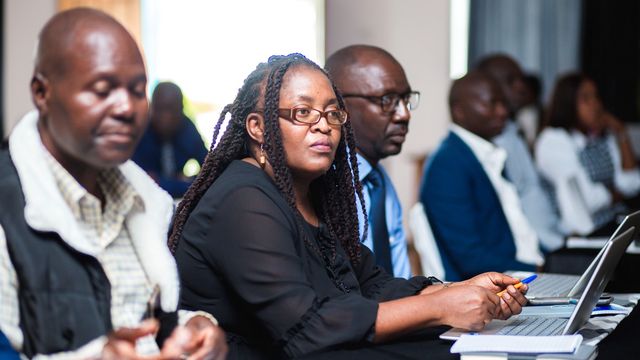
Zambia’s Open TVET Expo drew more than 80 policymakers, regulators and practitioners from 21 institutions, and COL presents Zambia’s aligned policy, regulation and blended competency-based training as a model for scaling Open TVET.
“With support from COL, the Technical Education, Vocational and Entrepreneurship Training Authority (TEVETA) in Zambia implemented national ODFL Standards in 2025, providing a framework for accrediting flexible and blended provision.”
In an Earth Day piece, COL’s Jako Olivier argues ODL can expand access while cutting emissions, citing COL’s call for a “New Green Learning Agenda” that equips learners with green skills.
“A recent systematic review of 17 studies found that ODL typically produces substantially lower emissions than campus-based education, with some landmark studies reporting reductions of more than 80 per cent.”
Working in synergy
This talking point aligns with the Commonwealth Secretariat’s Economic and Climate pillars and the Commonwealth Foundation’s focus on economic inclusion and climate and environment justice.
Talking points on the same pillars
As printed in the talking point, followed by the further sources used for this site’s charts and diagrams.
Further sources for the charts and diagrams