

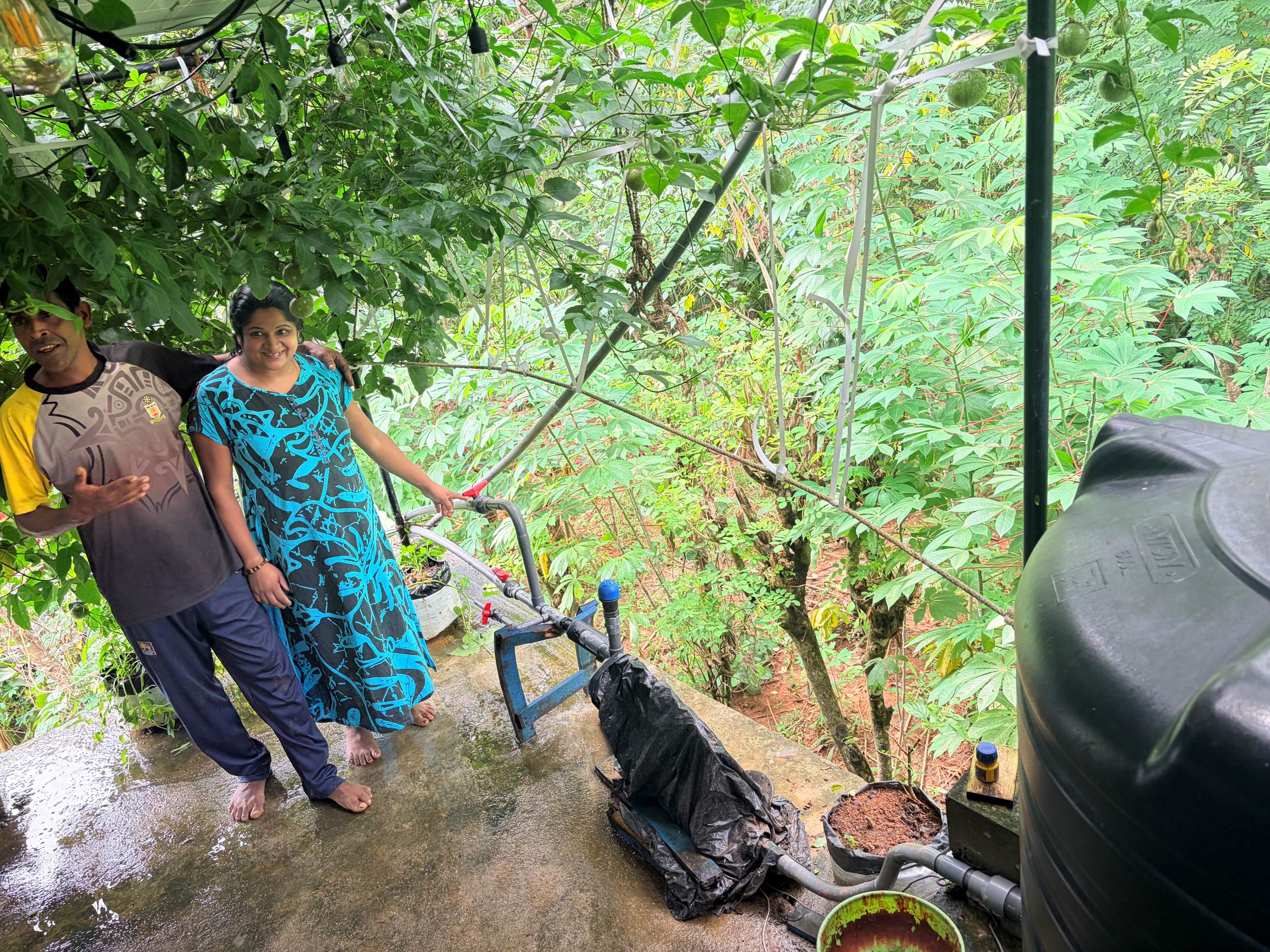
Living in Kurunduwatta village, Sri Lanka, with her husband and two sons, Saroja had endured years of hardship. Her husband, a former army combatant living with a disability, received a modest pension that was the family’s only steady source of income, supporting their daily needs, his medical care, and their sons’ education.
Determined to improve her family’s circumstances, Saroja began cultivating tea on a small plot of land. Despite her hard work, the income was not enough, and a medical diagnosis eventually made it impossible for her to continue the physically demanding work. Rather than giving up, Saroja began searching for a new path forward.
A TURNING POINT
That was when Saroja’s journey with the Women’s Development Centre (WDC) began. As part of COL’s Empowering Women and Girls (EWG) project — an initiative funded by Global Affairs Canada and implemented with partners in Bangladesh, Malawi, Mozambique, Pakistan, and Sri Lanka — WDC works with women and girls in Sri Lanka to build practical skills, strengthen livelihoods, increase awareness of their rights and empower them to exercise those rights, and connect them with community support.
Sustainable agriculture is an important part of this work, helping women improve household food security, adapt to climate challenges, and reduce spending on basic necessities.
Saroja first trained as an Equality Facilitator with WDC in 2024, strengthening her knowledge of women’s and girls’ rights, community leadership, digital health, financial literacy, and entrepreneurship. Later, she completed hands-on training in sustainable agriculture and organic fertiliser production, including a visit to a model farm where she learned climate-smart farming techniques and more efficient water management approaches.
These opportunities inspired Saroja to establish a small home garden. They gave her the foundation to develop it into a business, strengthening her economic independence and improving her family’s financial circumstances.
After exploring local markets, Saroja identified a strong demand for organically grown Scotch Bonnet pepper plants in a greenhouse, along with tomatoes, beans, leafy vegetables, passion fruit, flowers, and other crops. She sells her produce to exporters, local markets, roadside vendors, and weekly fairs, with some of her peppers reaching markets as far away as Thailand.
The garden now provides nearly 90 per cent of the food her family consumes, significantly reducing household food expenses while giving the family access to a more nutritious diet.
“We are now a happy family. Earlier, we struggled with my illness and my husband’s disability, and we constantly worried about our children’s future. Today, our farming provides both food and income,” Saroja says proudly.
GROWING STRONGER AS A FAMILY
Maintaining the garden has not been without challenges. Protecting crops from monkeys and other wild animals, coping with climate-related disasters, and farming on steep terrain have required Saroja to find practical, innovative solutions.
Fortunately, she has not faced these challenges alone. Her husband has become one of her strongest supporters.
“The knowledge and skills my wife gained through this project are worth millions. They have transformed our lives. Our family income has increased, our children’s education is secure, and our family is now recognised in the community. You cannot put a price on that,” he says.
Over time, the garden has become a shared family responsibility, with Saroja passing on the knowledge and skills gained through her training to her husband and two sons.
To reduce crop losses, the family invested in a greenhouse, improving productivity and better protecting their crops. They also introduced a drip irrigation system and sprinklers to support farming across the sloping terrain and reduce the need for manual watering. Their farming practices have become more environmentally sustainable as well, with solar power now used to support irrigation and provide lighting around the property.
Cyclone Ditwah in 2025 severely damaged the greenhouse and a significant portion of the family’s crops. With help from her family, along with timely financial and technical assistance from the WDC and relevant government institutions, Saroja drew on the resilience she had developed to recover from the losses and restore the family’s farming enterprise.
What stands out in Saroja’s experience is how the training became a catalyst for continued learning and innovation. Rather than simply adopting new farming practices, the family embraced a broader approach to sustainability, using their new green skills to protect the environment, adapt to climate challenges, strengthen their livelihoods, and build a healthier, more secure future.
EMPOWERMENT BEYOND THE GARDEN
The impact of Saroja’s journey has extended well beyond her own farm. Through community meetings, awareness programmes, and a WhatsApp support group, Saroja shares her knowledge with other women and girls, offering practical farming advice and encouragement to explore sustainable livelihoods.
The family has also gained access to opportunities that once seemed beyond reach. Their eldest son is completing an internship at a private company, while their youngest is preparing for his Advanced Level examinations in English medium education.
Frances Ferreira, COL’s Senior Adviser: Women and Girls, recently visited Saroja’s garden and reflected on how green skills can help families build sustainable livelihoods while protecting the environment for future generations.
“Standing in their flourishing garden, it was clear that the project had done more than introduce new farming techniques. It had inspired a lifelong commitment to learning, innovation, and environmental stewardship.”
Saroja’s story demonstrates the lasting impact of investing in women’s economic empowerment. The garden is now more than a source of food and income. It also represents a legacy of learning, resilience, and possibility for her family and community.
This story was originally published in the August 2026 issue of Connections. The Women’s Development Centre (WDC) is a partner in the Global Affairs Canada-funded Empowering Women and Girls project in Sri Lanka. Based in Kandy, WDC works to build an inclusive society grounded in gender equality.