of employment in small island developing states is provided by tourism alone
NeedUN DESA (2026)
Large ocean states need ocean-ready youth
Large ocean states
Seychelles’ exclusive economic zone covers about 1.4 million km², almost 3,000 times its land area.* For island states, the ocean is the economy, and its future depends on blue skills.
* Source: Government of Seychelles, Ministry of Fisheries and Blue Economy (n.d.).
Opportunity for action
Members can accelerate in partnership
Treat blue economy skills as national infrastructure for large ocean states: build the systems, trainers and young innovators for a sustainable ocean economy.
The argument
Thirty-three Commonwealth Member Nations are small states, many of them island nations better described as large ocean states. Their fisheries, tourism, shipping, energy and biodiversity depend on healthy seas, and tourism alone provides around 11% of employment in small island developing states (UN DESA, 2026).
The ocean agenda is accelerating. Only about 10% of the ocean is protected, so reaching the 30% target means tripling coverage in four years, and the High Seas Treaty, in force since January 2026, commits countries to capacity building and the transfer of marine technology (UN DESA, 2026). Every one of these commitments needs people with the skills to deliver it.
Blue economy skills combine ocean literacy, sustainable fisheries and aquaculture, marine tourism, pollution and waste management, and ocean data, drones and robotics, with the entrepreneurship to turn them into livelihoods. Small states cannot each build this capacity alone. Shared, open courses and regional cohorts make specialist learning viable.
For many island states, the ocean economy is also where young people’s jobs will be, in tourism, fisheries, shipping and ocean services, if skills systems prepare them for it.
Exclusive economic zone and land area, km², for 12 of the 33 Commonwealth small states, ordered from most to least ocean per km² of land: the six named in this talking point, plus Fiji, Kiribati, the Maldives, Naoero, Tonga and Tuvalu for comparison.
Sources: Flanders Marine Institute (2023), Maritime boundaries geodatabase, version 12, Marine Regions (zones to 200 nautical miles); World Bank (2026), World Development Indicators, land area, 2024. Ocean-to-land multiples are computed from these figures. The talking point’s figure for Seychelles is from the Government of Seychelles (n.d.).
Proof points
Each card represents evidence in a strategic talking point, chosen because it shows the need or a result of COL’s work. Use the share button to copy a card as an image with a link back to this page.
of employment in small island developing states is provided by tourism alone
NeedUN DESA (2026)
learners from over 70 countries have now enrolled in COL’s blue economy MOOCs
ResultCOL (2026b)
Case study
COL’s Youth Robotics for Blue-Green Resilience and Prosperity project, delivered with Antigua and Barbuda’s Ministry of Education and a regional council of ministries, tertiary institutions and industry, invited Caribbean young people to design technology for their own challenges, and 117 signed up (COL, 2026a).
Seven design teams of seven, aged 16 to 23 and mentored from Antigua and Barbuda, Barbados, Belize, Jamaica and Trinidad and Tobago, are building robotic responses to sargassum seaweed on beaches and at sea, wave energy, destructive waves, soil health and farm security. One team has moved from a food-security brainstorm to an AI-vision land rover with soil-nutrient sensing; another has worked through early design challenges to hull and conveyor designs.
The other participants form a research, media and advocacy team, running six youth-led webinars on themes from ocean health to coastal resilience and writing a youth publication for CHOGM.
Teachers are part of the design. All 500 places on a free, 12-week robotics in education course, built on open educational resources, filled within days of its announcement in September 2026, and the UWI Global Campus is exploring certification so that the course outlives the project. The teams present their prototypes at the CHOGM Youth Showcase in St John’s on 3 November 2026.
The model is regional by design: focal points helped recruit participants, mentors work across borders, and the story of five mentor countries working together is part of what the young people will present.
Teams work to common rubrics and scoring sheets, and monitoring of participation and learning continues to March 2027, so that the evidence can inform the next cohort.
The project continues a longer story of small states leading on ocean learning. With the University of Seychelles and the James Michel Blue Economy Research Institute, COL has developed four MOOCs on ocean governance, marine resources, blue finance and coastal management, building on a first Blue Economy MOOC launched through COL’s Virtual University for Small States of the Commonwealth (VUSSC) in 2017 (COL, 2020). More than 6,000 learners from over 70 countries have now enrolled (COL, 2026b).
“What empowers me most is knowing that as youths, we’re building our own technology to solve our own regional challenges and seeing how our different strengths come together to build something real that can actually help others.”
Krissan Gardner, 21, Jamaica, Youth Robotics participant with a team mentored from Trinidad and Tobago, 2026
Places of impact
6 of the 56 Member Nations. Every member is one equal tile, so small states stay visible; select a tile to read what happens there.
Opportunity for action
Members can accelerate in partnership
Milestones
Recognise ocean skills as core to resilience and prosperity, and commit to building them through national skills systems.
Map blue skills needs, from fisheries, aquaculture and tourism to ocean data and marine protection, with ministries and employers.
Offer open, stackable blue economy courses and micro-credentials for teachers, knowledge intermediaries and mentors through VUSSC.
Micro-credentialsSmall statesRun national and regional youth challenges on ocean protection and High Seas Treaty capacity building, with an anchor institution.
Build recognised blue skills pathways and youth-led ocean enterprises in the island states that choose to take part.
We continue to act
COL will co-create open blue economy courses, train teachers, knowledge intermediaries and mentors, and connect young innovators and institutions through South–South cooperation.
From the newsroom
Stories from the Commonwealth of Learning that highlight this strategic talking point. Each opens on col.org.
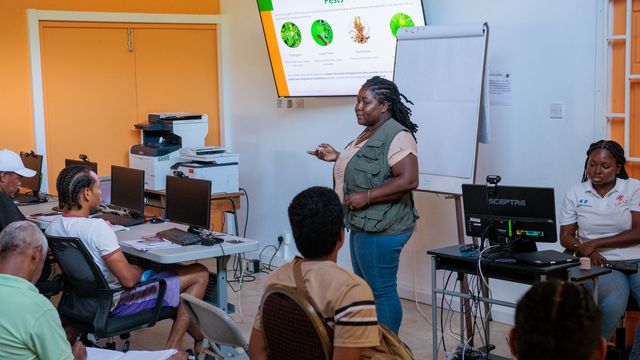
COL helps small states build resilience through skills for the green, blue and orange economies: a Farmer Field School in Dominica, four blue economy MOOCs with the University of Seychelles, and micro-credentials with The University of the West Indies, Mona, that help educators engage learners through creative expression.
“More than 6,000 learners from over 70 countries enrolled in these courses”
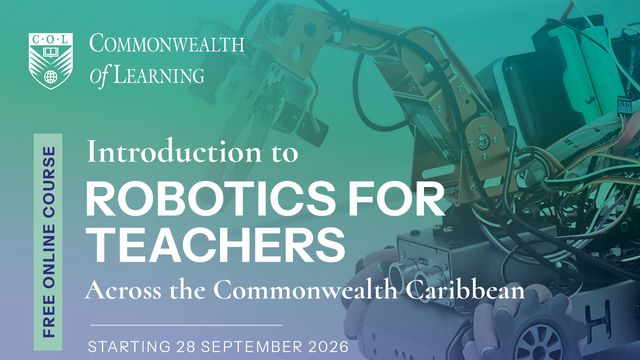
COL’s free 12-week online Introduction to Robotics for Teachers, part of its Youth Robotics for Blue-Green Resilience and Prosperity Project, is designed to help Caribbean educators integrate robotics into teaching and learning.
“COL’s Introduction to Robotics course has reached its full capacity of 500 participants, and registration is now closed”
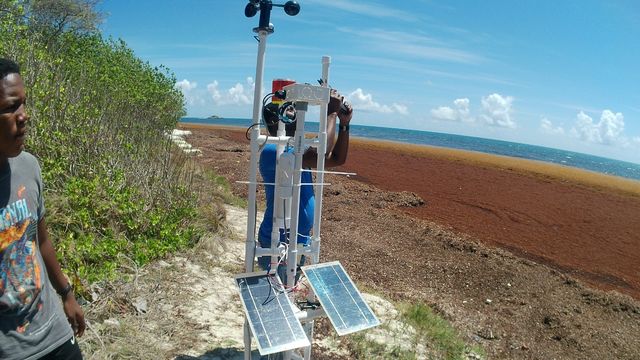
COL’s Youth Robotics for Blue-Green Resilience and Prosperity pilot has seven Caribbean youth robotics teams and a research, media and advocacy team, with selected participants to present at CHOGM in Antigua and Barbuda.
“The Robotics Design and Prototype stream consists of 49 young people aged 16 to 23 who will develop potential responses to challenges”
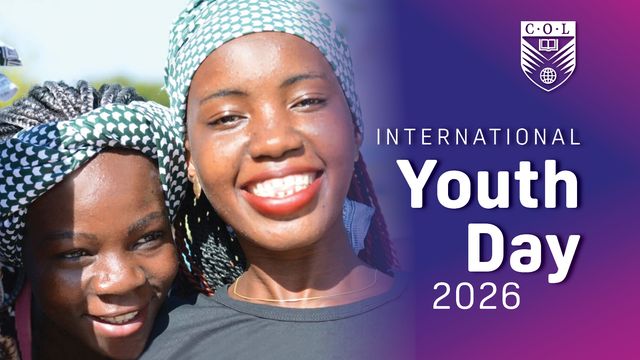
COL has partnered with the Centre for Global Education on a global youth digital-skills survey to shape OER, and plans a Youth Robotics Innovation Challenge for the CHOGM 2026 Youth Forum.
“Representing more than 60 per cent of the population across Commonwealth Member States, young people have an important role in building stronger, fairer, and more resilient societies.”
COL's Virtual University for Small States of the Commonwealth and the University of Seychelles launched a free five-week Blue Economy MOOC that drew more than 1,200 learners from over 70 countries.
“Participants come from over 70 countries, with the largest representation from the Pacific and Caribbean regions.”
Working in synergy
This talking point aligns with the Commonwealth Secretariat’s Economic and Climate pillars and the Commonwealth Foundation’s focus on economic inclusion and climate and environment justice.
Talking points on the same pillars
As printed in the talking point, followed by the further sources used for this site’s charts and diagrams.
Further sources for the charts and diagrams