of children in sub-Saharan Africa complete upper secondary
NeedUN DESA (2026)
Reaching beyond the classroom
Schooling must change
In 2024, 273 million children and young people were out of school: one in six of school age. In low-income countries, the number has risen by 29% since 2015.*
* Source: UN DESA (2026).
Opportunity for action
Members can accelerate in partnership
Recognise open schooling as a mainstream, funded route to 12 years of quality education for every young person.
The argument
School learning is pivotal to a resilient society, since investment in schooling leads directly to social stability and national productivity. But for much of the world, classrooms could never be built fast enough and qualified teachers are missing to close the gap in need. In sub-Saharan Africa, only 68% of children complete primary school, 47% lower secondary and 28% upper secondary (UN DESA, 2026).
Nor is simply being in school the same as learning.
Across 57 countries, the share of students reaching minimum proficiency in reading fell from 59% to 47% between 2012 and 2022. By 2030, the social cost of children leaving school without basic skills is estimated at US$10 trillion a year (UNESCO et al., 2024).
Even with unlimited budgets, conventional schooling would still fail learners who cannot reach a classroom, cannot stay, or need more flexible learning options to succeed. Rather than think of young people ‘dropping out’, we must admit that our systems are pushing them out, through economic marginalisation, social pressures and rigidity in our processes. The cost is human and financial, and we can change it.
Out-of-school children and young people of primary and secondary school age: low-income countries vs all other countries combined, 2015–2024; % change since 2015, or millions
Sources: Oesttveit & Antoninis (2026), World Education Blog, Figure 4.3 (GEM Report and UIS data; series derived by adding age groups); UN DESA (2026), The Sustainable Development Goals report 2026.
| Year | Series | Change since 2015 |
|---|---|---|
| 2015 | Low-income | 0% |
| 2016 | Low-income | 3% |
| 2017 | Low-income | 6% |
| 2018 | Low-income | 9% |
| 2019 | Low-income | 13% |
| 2020 | Low-income | 17% |
| 2021 | Low-income | 20% |
| 2022 | Low-income | 24% |
| 2023 | Low-income | 26% |
| 2024 | Low-income | 29% |
| 2015 | Rest of the world | 0% |
| 2016 | Rest of the world | −2% |
| 2017 | Rest of the world | −3% |
| 2018 | Rest of the world | −4% |
| 2019 | Rest of the world | −4% |
| 2020 | Rest of the world | −4% |
| 2021 | Rest of the world | −4% |
| 2022 | Rest of the world | −4% |
| 2023 | Rest of the world | −4% |
| 2024 | Rest of the world | −5% |
Open schooling narrows the gap: flexible, blended, technology-supported provision that offers a quality alternative and a second chance, while strengthening the conventional system it sits beside.
Proof points
Each card represents evidence in a strategic talking point, chosen because it shows the need or a result of COL’s work. Use the share button to copy a card as an image with a link back to this page.
of children in sub-Saharan Africa complete upper secondary
NeedUN DESA (2026)
new enrolments in open schooling courses developed with COL support, against a 15,000 target
ResultCOL
Case study
When COL first engaged with Eswatini’s Emlalatini Development Centre (EDC) in 2019, its open schooling model was struggling. Today open schooling is a key pillar of the Ministry’s forward-looking national strategy and attracts significant government investment (Maseko, as cited in Mays & Siafu, 2025).
COL’s support followed a deliberate path: policy and strategy first, then tutor and teacher capacity, then the move from print to digital and blended learning. Open schooling now improves alignment across the system, and the same resources strengthen conventional schools, especially during pandemics and natural disasters, and in districts where examination results have been poor.
The talking point’s model, in its own words. Compare the two systems, then select any part.
Source: the talking point (‘Basic schooling matters’, the Eswatini case study, the ask, milestones 1 and 5). A schematic: lengths and positions carry no numbers.
Eswatini also shows the Commonwealth advantage at work! In the early stages, teachers and learners used open resources created in Malawi. Meanwhile, Botswana Open University alerted classroom teachers to the open schooling Open Educational Resources it had developed, and its College of Open Schooling has since adopted a new strategic plan and business model with COL. What one Member Nation builds, others can adapt.
High-impact open schooling is a multi-year, multi-phase process of developing, piloting, scaling and then mainstreaming, until open schooling becomes a line item in a ministry’s own budget. Because every context is different, there is no cookie-cutter model. COL’s support is tailored: advisory in Nigeria, exploratory with new ministry partners such as Cameroon, Jamaica and Togo, and hands-on with Africa partners and Papua New Guinea.
Lesotho’s Distance Teaching Centre is becoming a College of Open and Distance Learning.
COL’s open schooling work aims for 12 years of quality schooling for every girl in the Commonwealth, with a special focus on sub-Saharan Africa. In Mozambique, open and innovative schooling has been implemented in 15 secondary schools (Cossa et al., 2021), showing how the model can strengthen, not replace, the conventional school.
Across COL’s open schooling partnerships in more than 20 countries, new enrolments in courses developed with COL support have reached 44,863 against a target of 15,000, for a very modest investment.
The next step is regional. In the Caribbean, where the disengagement among boys and young men is an enduring concern, COL proposes an open school offering dual certification, academic and vocational learning together, with built-in mentoring (Jha, 2025), and country case studies in Jamaica and St Kitts and Nevis have gauged the response. At the Caribbean Examinations Council conference in Jamaica in March 2026, Dominica’s Minister of Education, the Hon. Octavia Alfred, joined COL’s session, where participants backed an Innovative Open School for the region, to be piloted before it scales. New research on Caribbean young men who succeeded against the odds is helping to shape what that support should look like.
Places of impact
12 of the 56 Member Nations. Every member is one equal tile, so small states stay visible; select a tile to read what happens there.
Opportunity for action
Members can accelerate in partnership
Milestones
Recognise open schooling as a mainstream, equitable pathway, not a last resort, in national education sector plans.
Identify out-of-school and disengaged learners by district, gender and disability, and where open schooling can reach them.
GenderDisabilityLaunch blended open schooling with shared open resources, trained tutors and, where relevant, dual academic and skills certification.
Trained tutorsSkills certificationScale successful pilots and make open schooling a line item in the Ministry’s own budget.
Open and conventional schools share resources, teachers and credit as one coherent, resilient system.
We continue to act
COL will provide policy advice, open curriculum resources, tutor training and evidence. We connect countries so that what one builds, others can adapt.
From the newsroom
Stories from the Commonwealth of Learning that highlight this strategic talking point. Each opens on col.org.
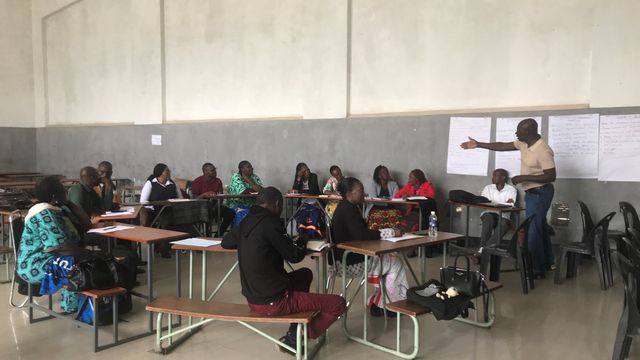
COL's ODL business-model approach has supported Botswana Open University's College of Open Schooling, a proposed Open University of Ghana whose model was approved in June 2026, and Zambia's ZACODE.
“Following subsequent capacity-building workshops with implementing staff, the new model is now being rolled out in eight districts in Copperbelt Province and one district in North-Western Province.”
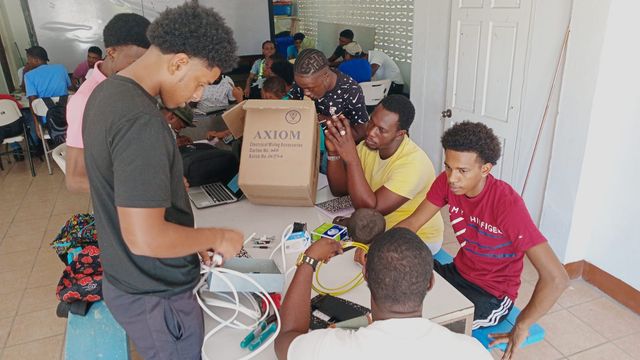
Research on men in the Caribbean who succeeded in education against the odds informed a COL open school concept addressing boys’ disengagement, which COL plans to pilot in selected Caribbean Member States.
“The model proposes integrating academic education with vocational training, alongside community- and peer-based mentoring and innovative learning activities, leading to dual certification.”
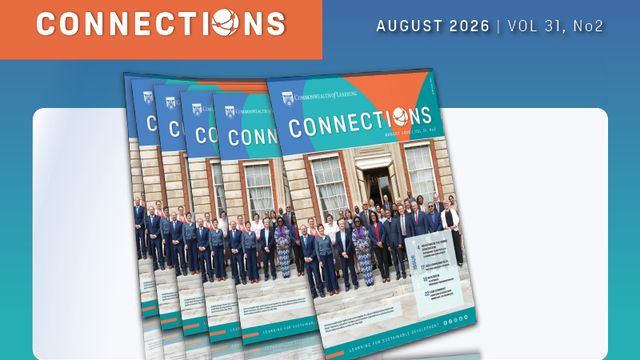
COL’s August issue of Connections covers youth innovation ahead of CHOGM 2026, the disengagement of boys and young men from education, pathways for women in science and technology, and livelihood-focused skills development.
“With young people representing more than 60 per cent of the Commonwealth’s population, this issue of Connections looks at the opportunities and barriers they face”
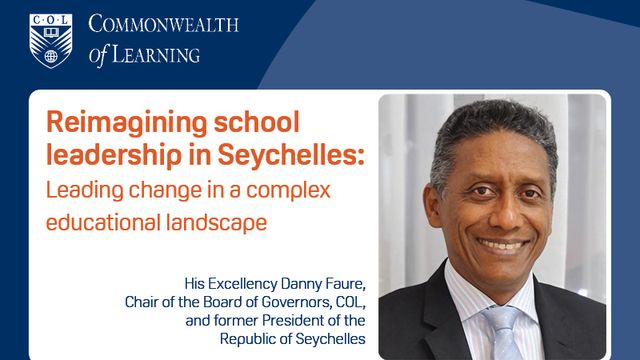
In a keynote to Seychelles headteachers, COL Board Chair Danny Faure proposed open schooling to reach young people not well served, including NEETs, and highlighted COL-supported teacher digital professional development.
“A cascading capacity-building model trained 71 Master Trainers, who subsequently trained 554 teachers nationwide from 37 schools.”
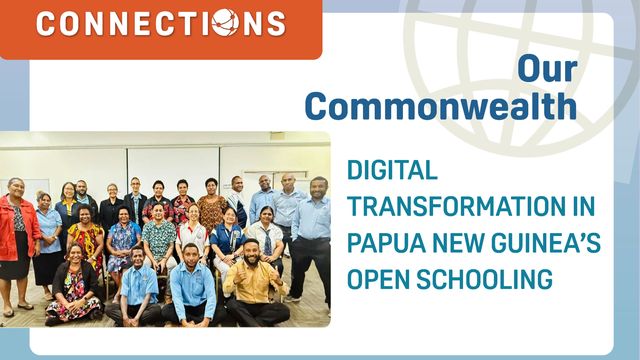
Through COL’s Contribution Agreements, Papua New Guinea’s FODE open schooling system has moved to its own platform and LMS and soft-launched Grade 11 LMS courses in two provincial centres in 2025.
“What has emerged is steady, deliberate progress — from an initial pilot in the second half of 2024 to the formal soft launch of an online platform in 2025”
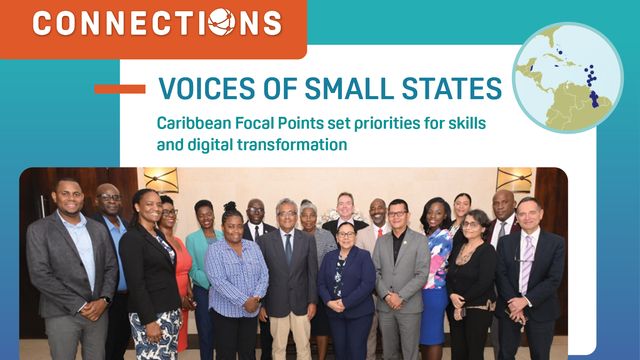
COL’s March 2026 Caribbean Focal Points Meeting in Kingston put teacher development at the top of regional priorities, drew interest in piloting innovative open schooling, and stressed collaboration among small states.
“Senior officials from 12 Caribbean Commonwealth countries, along with Malta, met to share their thoughts, work more closely together, and identify priorities for improving education and skills development”
Working in synergy
This talking point aligns with the Commonwealth Secretariat’s Democratic pillar and the Commonwealth Foundation’s focus on freedom of expression.
Talking points on the same pillar
As printed in the talking point, followed by the further sources used for this site’s charts and diagrams.
Further sources for the charts and diagrams