
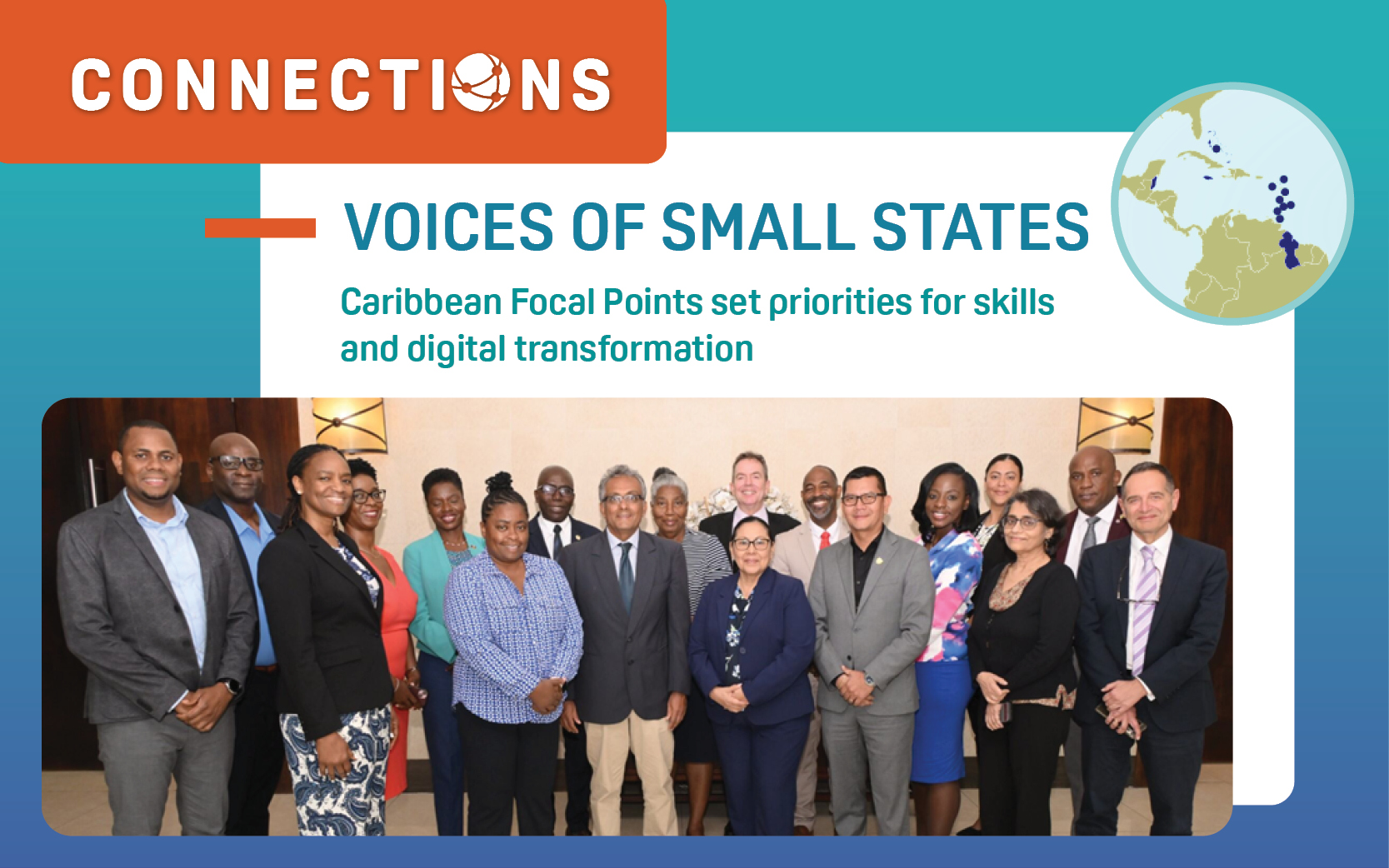
On the heels of the three-day CXC Inaugural Conference in Kingston, Jamaica, COL held its Caribbean Focal Points Meeting on 19–20 March 2026. Senior officials from 12 Caribbean Commonwealth countries, along with Malta, met to share their thoughts, work more closely together, and identify priorities for improving education and skills development in the region.
The Focal Points, nominated by Ministries of Education, act as a link between COL and Commonwealth Member States. Their role is especially significant in the Caribbean, where education systems operate within the realities of Small Island Developing States (SIDS), including high exposure to climate risks, constrained resources, migration pressures, and rapid technological change. Throughout the meeting, participants reaffirmed that these shared conditions require coordinated, flexible, and technology-enabled approaches to learning.
The participants agreed on a core set of priorities, with teacher development at the top. Across the region, Focal Points emphasised the urgent need to strengthen both pre-service and in-service training, with a particular focus on digital pedagogy, inclusive education, and curriculum leadership. The Bahamas, Belize, Grenada, Jamaica, and St Kitts and Nevis highlighted teacher capacity as the most critical lever for improving learning outcomes and strengthening system resilience.
Closely linked to this was the growing need for digital transformation in education. Antigua and Barbuda, Saint Lucia, Jamaica, and Malta all acknowledged the importance of building competence across education systems. This includes frameworks for digital teaching, national approaches to artificial intelligence in education, and the development of critical digital and AI literacy. The discussion went beyond access to technology, focusing on how systems can build trust, capability, and innovation in a changing digital landscape.
At the same time, the meeting highlighted the growing importance of skills development aligned with the region’s economic future. Several countries are repositioning TVET systems to respond to emerging opportunities in renewable energy, maritime services, agriculture, and tourism. Barbados pointed to new models such as the Oceana Innovation Hub, while Dominica and Trinidad and Tobago identified workforce gaps across both traditional trades and new sectors. There was a clear call for stronger alignment between education systems and the demands of the blue and green economy.
Evidence from national experiences demonstrated the transformative potential of COL’s mission in the region. In Guyana, the adoption of open and distance learning approaches significantly expanded teacher education capacity. Meanwhile, Antigua and Barbuda and Saint Lucia highlighted improvements in institutional resilience, digital delivery, and skills training through COL-supported initiatives — demonstrating how scalable, technology-enabled approaches can strengthen delivery in small-state contexts.
Beyond sectoral priorities, the meeting placed strong emphasis on strengthening the Focal Point Network. Participants called for structured communication, regular engagement, shared work plans, and clearer communication protocols for exchanging information and tracking progress. Proposals included coordination meetings, regional dashboards, and greater use of sub-regional platforms to enhance collaboration. These suggestions reflect a growing recognition that effective coordination is essential for turning priorities into sustained action in the region.
Discussions led by the COL team helped bring these inputs into a set of priority areas for collective action. These included teacher training and professional development, digital and AI literacy, skills for employment and entrepreneurship, strengthening learning — particularly in language and mathematics — and expanding opportunities in STEAM, TVET, and innovation. Building on discussions from the CXC conference workshop, Focal Points also expressed strong interest in advancing innovative open schooling, with several countries indicating readiness to participate in pilot initiatives.
What emerged from Kingston was a shared direction for the region: one that places teachers at the centre of transformation, connects digital innovation with inclusion and quality assurance, aligns skills development with economic transitions, and recognises the importance of collaboration among small states.
As COL continues to shape its work beyond 2027, the Caribbean Focal Points Meeting reaffirmed the value of the network as a platform for co-creation, ensuring that future programmes remain firmly grounded in the realities and aspirations of Commonwealth Member States.
This story was originally published in the April 2026 issue of Connections. Read the full issue: https://hdl.handle.net/11599/6130