of people in the Commonwealth are under 30
NeedCommonwealth Secretariat (2026)
Lifelong, open pathways for a young Commonwealth
Demand outpaces campuses
Higher education enrolment grew from about 100 million students in 2000 to 269 million in 2024. Yet the gross enrolment ratio is about 80% in Western Europe and North America, and just 9% in sub-Saharan Africa.*
* Source: UNESCO IESALC (2026).
Opportunity for action
Members can accelerate in partnership
Open up higher education through shared, quality-assured Commonwealth Open Degrees and pathways that learners can enter, leave and return to.
The argument
Demand for higher education is outpacing campuses, budgets, facilities and staff. In a Commonwealth where more than 60% of people are under 30 (Commonwealth Secretariat, 2026), the scale and cost of building upon a conventional campus model no longer makes sense alone.
The challenge is not only about places in classrooms. Learners need qualifications that lead to work, entrepreneurship and further study. Employers need graduates who can solve problems, communicate, adapt and use digital tools, including AI, responsibly. Countries also need sovereign research and innovation capacity to work on home-grown solutions to national challenges and opportunities. Yet tertiary change remains slow, and often starts from an elite model poorly suited to a world of technology-empowered learners.
Innovation in higher education allows us to reimagine a flexible, quality-assured open ecosystem rather than a single pathway through one institution: online and blended provision as a new normal, open educational resources, open science and scholarship, recognition of prior learning, micro-credentials, and authentic assessment that shows what learners can do when technology and AI are in the room (Prinsloo et al., 2026).
Once the territory of open universities, digital is becoming the mainstream response to equity, affordability and relevance. For conventional universities, the opportunity is not to replace degrees, but to open them: stackable, gender-responsive and accessible to learners whose lives do not fit traditional structures.
Proof points
Each card represents evidence in a strategic talking point, chosen because it shows the need or a result of COL’s work. Use the share button to copy a card as an image with a link back to this page.
of people in the Commonwealth are under 30
NeedCommonwealth Secretariat (2026)
learners enrolled in open and distance courses over five years
ResultCOL
regional or national policies and strategies for open learning, quality assurance and assessment
ResultCOL
institutional policies and strategies for open learning, quality assurance and assessment
ResultCOL
higher education staff supported through capacity building
ResultCOL
have graduated from the multi-country Commonwealth Executive MBA/MPA at the University of Guyana alone
ResultCOL
Case study
The Open University of Kenya (OUK) illustrates the Commonwealth opportunity: a national open university that widens access while encouraging the whole system to modernise. COL supported policy development and implementation, learner support, course design, the practical systems needed for quality open education and the effective use of micro-credentials. For Kenya, this extends beyond one institution. Open universities can drive change across a country and region and act as innovation hubs for the sector, while conventional universities move to dual-mode delivery by drawing on shared open resources, authentic assessment and flexible learner support.
OUK is part of a wider pattern. Under COL’s 2021–2027 strategy, partners have developed 29 regional or national and 68 institutional policies and strategies for open learning, quality assurance and assessment. Recent support has reached national bodies in Eswatini, The Gambia, Ghana, Lesotho, Malawi, Mauritius and Sierra Leone, and institutions from Nigeria and Jamaica to Tonga, on open resources, learner support, AI policy, business models and online course design. Tonga National University adopted an institutional ODFL policy in July 2025, and the Open University of Ghana’s business model was approved in June 2026. In St Vincent and the Grenadines, the Community College adopted an online teaching and learning policy and developed 27 online courses with COL, with more than 80 educators trained in online assessment and learner support.
Over five years, more than 51,000 learners have enrolled in open and distance courses, and more than 6,800 staff have received capacity building.
Mauritius shows the system view. COL is supporting the National Higher Education Strategy 2025–2035, whose priorities include teaching and learning, digital transformation, research excellence, internationalisation and industry engagement, and has worked with the Higher Education Commission on national guidelines for the use of AI in higher education. Universities are also asking how to stay resilient: a survey of 60 Commonwealth universities on economic resilience, by the Association of Commonwealth Universities and COL, was debated at the Palace of Westminster, UK, in May 2026.
Being open is not enough: partnership needs to be bigger, and change must include pathways. Building on its multi-country Commonwealth Executive MBA/MPA (at the University of Guyana alone, more than 150 students have enrolled and 89 have graduated), COL proposes transdisciplinary Commonwealth Open Degrees, co-designed by partners and awarded by each under its own business model, starting with sustainable entrepreneurship, climate and the green and blue economy, and primary health care.
Each degree would share a common, micro-credential-ready and competence-aligned design (COL, 2025), so learners can move between partners, stack credit, and step on and off as their lives require.
How a Commonwealth Open Degree would work, in the talking point’s words. Compare a single pathway with the open ecosystem, or choose a step to follow a learner; the partners are generic.
Source: the talking point; the design follows COL (2025), Towards a micro-credential framework for the Commonwealth, and the definition of stackability is quoted from its Commonwealth Micro-credential Framework for Lifelong Learning.
Places of impact
14 of the 56 Member Nations. Every member is one equal tile, so small states stay visible; select a tile to read what happens there.
Opportunity for action
Members can accelerate in partnership
Milestones
Support a Commonwealth Open Degrees initiative and invite universities and quality agencies to co-design it.
Set common standards: stackable, micro-credential-ready modules, open resources, authentic assessment and recognition of prior learning. Identify the test cases.
Micro-credentialsRecognition of prior learningOpen the first transdisciplinary programmes, each awarded by partner institutions under their own business models.
National quality agencies recognise shared modules, and conventional universities add dual-mode capacity.
Every learner can progress through portable, recognised pathways across Commonwealth institutions.
We continue to act
COL will convene partners, support policy and quality assurance, share open resources and track learner outcomes.
From the newsroom
Stories from the Commonwealth of Learning that highlight this strategic talking point. Each opens on col.org.
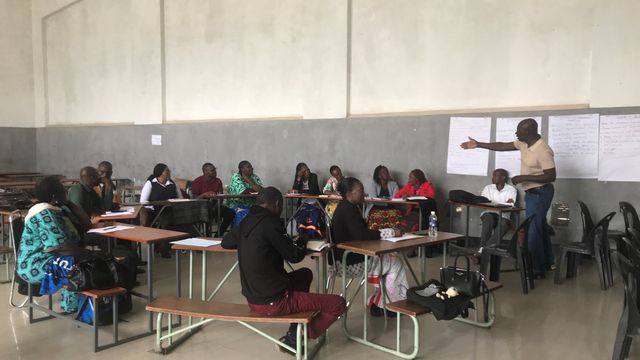
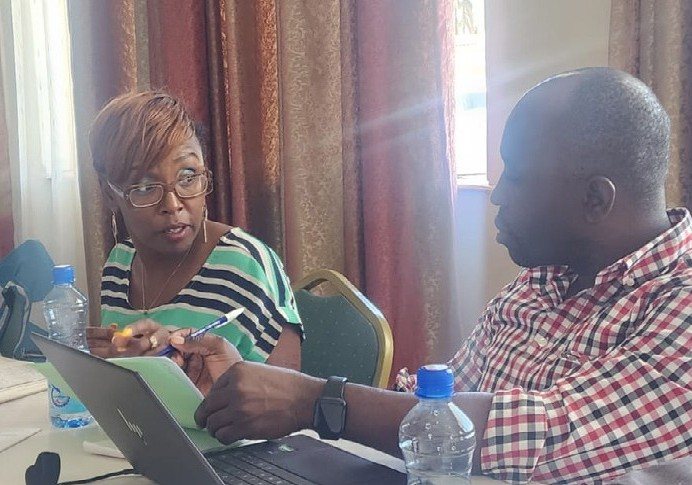
COL's ODL business-model approach has supported Botswana Open University's College of Open Schooling, a proposed Open University of Ghana whose model was approved in June 2026, and Zambia's ZACODE.
“Following subsequent capacity-building workshops with implementing staff, the new model is now being rolled out in eight districts in Copperbelt Province and one district in North-Western Province.”
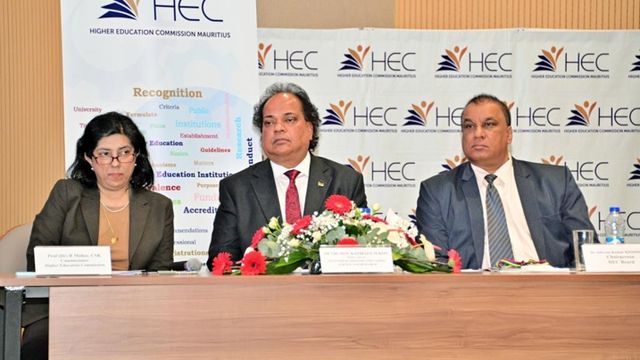
COL and HEC Mauritius convened a September 2026 national stakeholders’ workshop on Graduate Employability and Emerging Skills Study findings and will next work towards a national employability policy.
“the National Strategy for Higher Education, Science and Research 2025–2035, which identifies graduate employability as an important national priority”
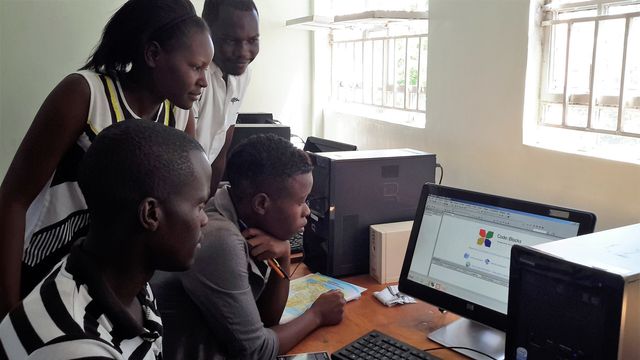
COL’s higher education adviser urges ODL institutions to embed metaliteracy as AI use grows, citing COL support for ethical-AI dialogue in South African teacher education and a higher education AI governance framework in Mauritius.
“UNESCO reports that globally at least 739 million adults still cannot read and write, two-thirds of them women.”
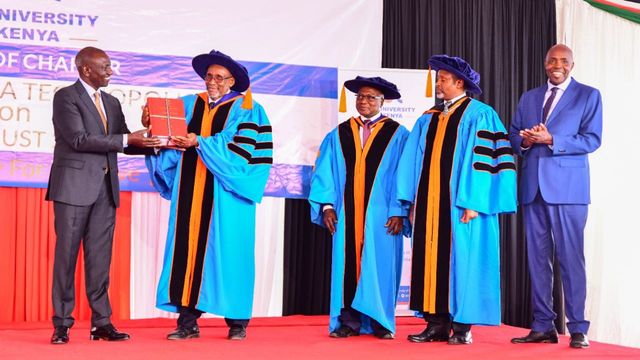
The Open University of Kenya, the country’s first fully online and specialised public university, offers Commonwealth lessons on expanding access through digital delivery, market-responsive programmes, partnerships and learner support.
“It has enrolled more than 30,000 learners from 79 countries”
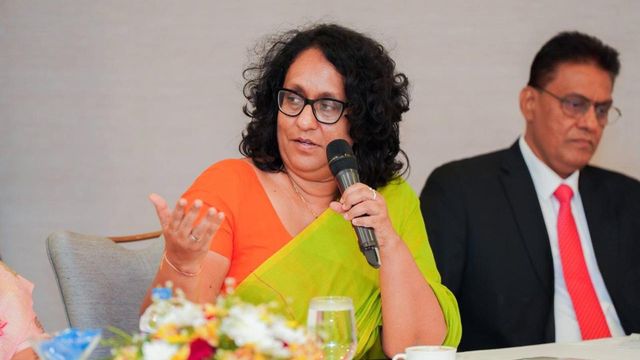
Sri Lanka is developing a national micro-credential framework with COL’s support, while COL’s Commonwealth Micro-credential Framework for Lifelong Learning guides policymakers and providers in building recognised, portable, quality-assured micro-credential systems.
“In April 2026, the Sri Lankan Cabinet approved an agreement between the Ministry of Education, Higher Education and Vocational Education and COL to develop and implement the national framework”
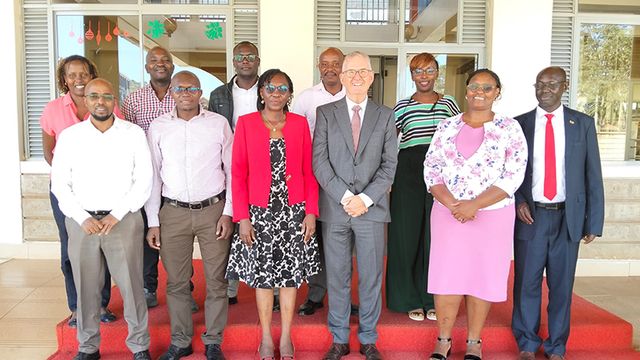
Partnering with COL, the Open University of Kenya hosted a February 2026 micro-credential policy and programme workshop, in an initiative that builds on COL's Commonwealth Micro-credential Framework for Lifelong Learning.
“Following the session, a group of academics from the education, science, and business schools at OUK further met to design and develop the institution‘s first set of micro-credentials.”
Working in synergy
This talking point aligns with the Commonwealth Secretariat’s Economic pillar and the Commonwealth Foundation’s focus on economic inclusion.
Talking points on the same pillar
As printed in the talking point, followed by the further sources used for this site’s charts and diagrams.
Further sources for the charts and diagrams