young people worldwide are not in employment, education or training
NeedILO (2026)
Learning to livelihoods for a prosperous Commonwealth
A young Commonwealth
More than 60% of the Commonwealth’s 2.7 billion people are under 30.* Whether that becomes a dividend depends on the skills young people can gain, prove and use.
* Source: Commonwealth Secretariat (2026).
Opportunity for action
Members can accelerate in partnership
Make 21st-century skills the Commonwealth’s shared investment aspiration, with the Commonwealth delivering as one.
The argument
A changing world demands new skills. Young people need learning that prepares them for employment, entrepreneurship and participation in their communities, with flexible routes through education, chances to return to learning, and qualifications that recognise what people can actually do.
The pressure is immediate. Employers expect 39% of core skills to change by 2030, and 59 in every 100 workers will need training (WEF, 2025). Yet one in five young people worldwide, more than 257 million, are not in employment, education or training (ILO, 2026). Conventional systems cannot be built fast enough, or cheaply enough, to close that gap on their own.
Youth NEET rate, world, % of people aged 15–24, 2016–2025, with ILO projections for 2026–27
Sources: ILO (2026), Employment and social trends 2026; ILO (2026), Global employment trends for youth 2026, Table A.3.
| Year | Series | Value |
|---|---|---|
| 2016 | All young people | 21.4% |
| 2017 | All young people | 21.4% |
| 2018 | All young people | 21.4% |
| 2019 | All young people | 21.3% |
| 2020 | All young people | 22.7% |
| 2021 | All young people | 21.4% |
| 2022 | All young people | 20.4% |
| 2023 | All young people | 19.7% |
| 2024 | All young people | 19.9% |
| 2025 | All young people | 20.0% |
| 2026 | All young people | 20.1% |
| 2027 | All young people | 20.2% |
21st-century skills combine foundational and technical learning with critical thinking, creativity, entrepreneurship, and digital and AI literacy, applied in the green, blue and orange economies where Commonwealth futures will be made.
Open, flexible and technology-enabled learning is how these skills reach people at scale.
No single Member Nation or institution can deliver this alone. The Commonwealth’s advantage is its ability to work as one family, in synergy.
Proof points
Each card represents evidence in a strategic talking point, chosen because it shows the need or a result of COL’s work. Use the share button to copy a card as an image with a link back to this page.
young people worldwide are not in employment, education or training
NeedILO (2026)
of core skills that employers expect to change by 2030
NeedWEF (2025)
workers will need training
NeedWEF (2025)
women and girls completing life-skills and vocational training through GIRLS Inspire
ResultCOL
learners in online skills scholarships
ResultCOL
Case study
On 21 May 2026, COL, the Commonwealth Secretariat and the Commonwealth Foundation brought together seven Ministers of Education, COL’s Board of Governors and Commonwealth Accredited Organisations at Marlborough House in London. The Roundtable, ‘Transforming Learning Futures: Skills, Inclusion and Gender Equity Across the Commonwealth’, asked a practical question: how can the Commonwealth family move education and skills from intention to delivery, together?
Participants agreed that the Commonwealth’s institutional ecosystem is strong, but that its collective value depends on coordination and shared outcomes. They saw COL’s distinctive contribution at the meeting point of open learning, skills development, educational technology and teacher support: an asset for countries moving from policy ambition to implementation (COL, 2026).
Three further messages stood out: gender equality, disability inclusion, rural access, youth disengagement and teacher capacity; they are not side issues, they decide whether reforms succeed. The roundtable agreed that skills must be tied to economic relevance, with stronger links to industry, entrepreneurship and local labour markets, especially for young people already outside formal pathways. And new technologies, including AI, must be combined with local knowledge and context.
Commonwealth Accredited Organisations brought their own diverse perspectives, underlining the critical value of synergy: the Association of Commonwealth Universities asked how universities can work more deliberately with COL on skills, innovation and teacher development; the Commonwealth Education Trust stressed affordable digital training and peer learning for teachers in low-resource settings; the Commonwealth Health Professions and Partners Alliance linked open and blended learning to health workforce training; and the Independent Forum of Commonwealth Organisations called for joint proposals rather than parallel effort.
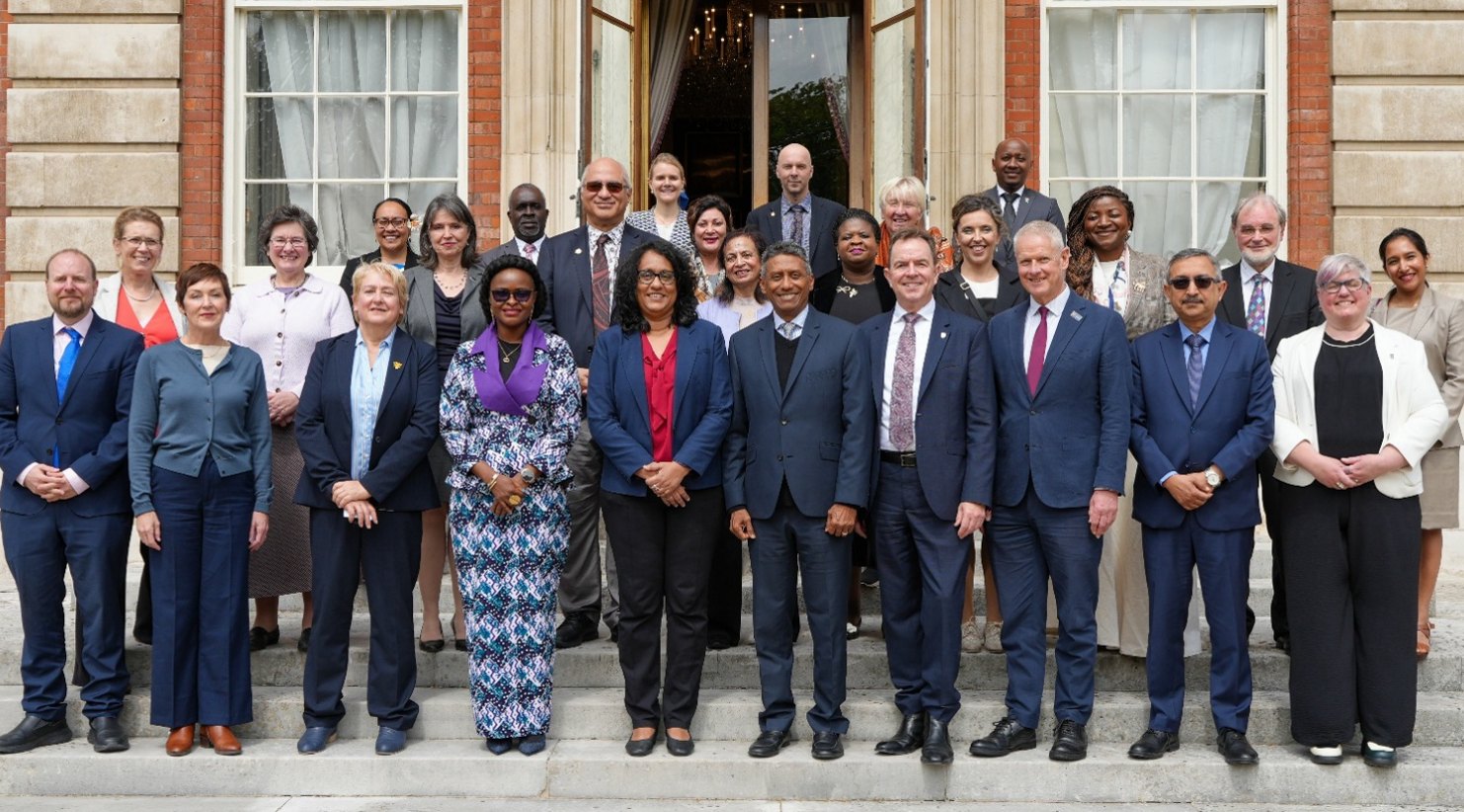
In her statement to the Roundtable, the Secretary-General framed the opportunity: where the mandates of the Commonwealth institutions meet, the space between them becomes a space for action.
The Transforming Learning Futures roundtable, Marlborough House, London, 21 May 2026. Select an institution or organisation to read its part.
Source: COL (2026), Report on the Commonwealth of Learning Board–Ministerial Roundtable on Transforming Learning Futures; wording from the talking point.
COL brings proven reach to that space: open schooling partnerships in more than 20 countries; 94,804 learners in online skills scholarships; 38,348 women and girls completing life-skills and vocational training through GIRLS Inspire; and more than 7,200 Pacific educators in professional development.
Moving now from the eight key talking points debated by the Roundtable and developing the strategic agenda for St John’s, we reflect on the opportunity to consult further on these issues and then influence the new strategy for the Commonwealth of Learning for 2027 onward. The talking points cover school, higher education and teachers; digital, green, blue and orange skills; transformative technology; and, as concepts that connect the set, climate action, women and girls, and small states.
“There can be no prosperous Commonwealth without a skilled Commonwealth. No resilient Commonwealth without educated citizens. No innovative Commonwealth without learners who are confident, connected and equipped for the present and future world of work.”
The Hon. Shirley Botchwey, Commonwealth Secretary-General, statement to the COL Board–Ministerial Roundtable, May 2026
Places of impact
9 of the 56 Member Nations. Every member is one equal tile, so small states stay visible; select a tile to read what happens there.
Opportunity for action
Members can accelerate in partnership
Milestones
Endorse learning-to-livelihoods as a Commonwealth priority.
Mobilise sovereign, private and partner co-financing behind proven models: open schooling, micro-credentials, community skills hubs and Frugal AI.
Open schoolingMicro-credentialsCommunity skills hubsFrugal AIReport results to Heads by gender, disability, location and small-state status.
GenderDisabilityLocationSmall-state statusMake flexible, recognised learning pathways a permanent, budgeted part of every national education and skills system.
We continue to act
COL will bring networks, open educational resources and technical expertise to every milestone, and publish the evidence of what works.
From the newsroom
Stories from the Commonwealth of Learning that highlight this strategic talking point. Each opens on col.org.
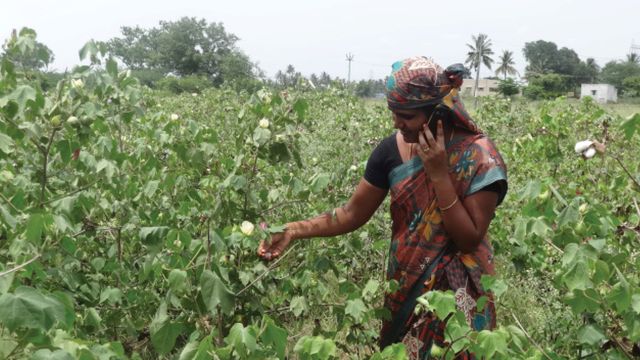
Building on Lifelong Learning for Farmers, COL is developing a three-pronged approach to agricultural green skilling and is exploring frugal, multilingual AI tools for learning.
“Looking ahead, COL is shaping its Future Skills interventions around a simple idea: helping member countries anticipate the skills their economies will need tomorrow and preparing youth, women, farmers and fishers for them today.”
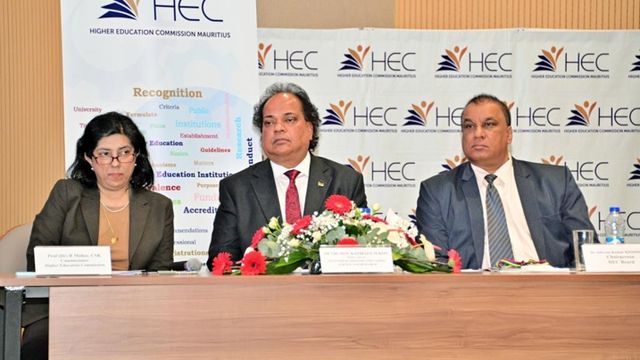
COL and HEC Mauritius convened a September 2026 national stakeholders’ workshop on Graduate Employability and Emerging Skills Study findings and will next work towards a national employability policy.
“the National Strategy for Higher Education, Science and Research 2025–2035, which identifies graduate employability as an important national priority”
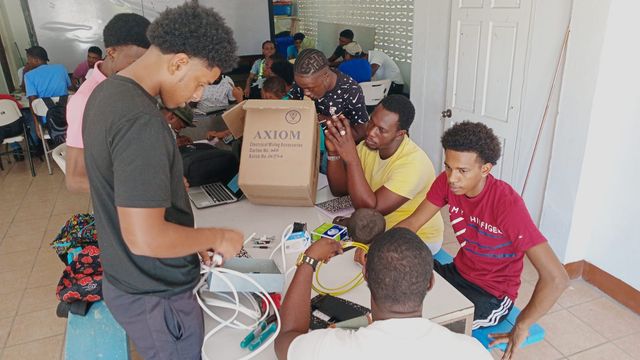
Research on men in the Caribbean who succeeded in education against the odds informed a COL open school concept addressing boys’ disengagement, which COL plans to pilot in selected Caribbean Member States.
“The model proposes integrating academic education with vocational training, alongside community- and peer-based mentoring and innovative learning activities, leading to dual certification.”
ITA and Science Fuse, in partnership with COL, organised a 25 September 2026 WiSE webinar on girls’ and young women’s interest in science, drawing on SSTR, an ITA–COL programme in peri-urban Lahore.
“The programme aims to translate young women’s strong aspirations to upskill, gain recognised certification and earn an income into tangible pathways to financial inclusion, entrepreneurship and sustainable livelihoods.”
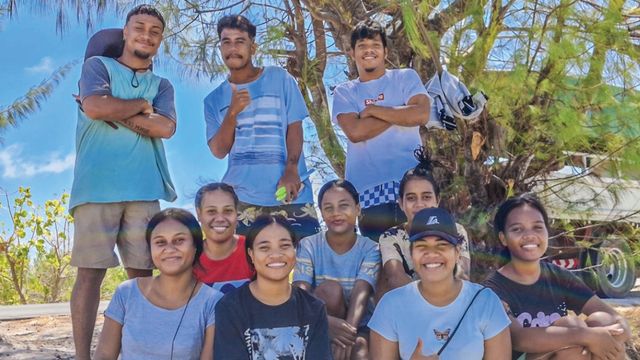
With New Zealand MFAT support, COL is launching Phase 2 of the Pacific Partnership for Open, Distance and Flexible Learning, a decade-long effort running 2026–2036 across ten Pacific Island countries.
“More than 7,200 educators enrolled in professional development to drive up the quality of open education.”
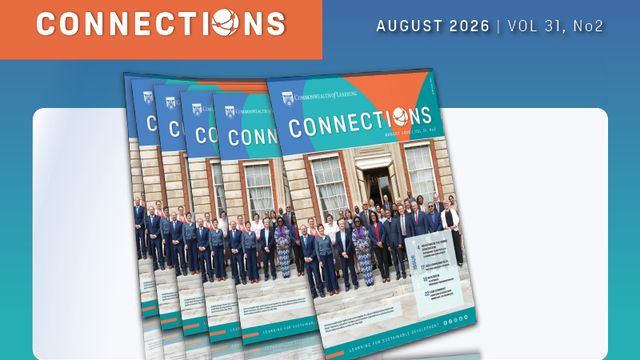
COL’s August issue of Connections covers youth innovation ahead of CHOGM 2026, the disengagement of boys and young men from education, pathways for women in science and technology, and livelihood-focused skills development.
“With young people representing more than 60 per cent of the Commonwealth’s population, this issue of Connections looks at the opportunities and barriers they face”
Working in synergy
This talking point aligns with the Commonwealth Secretariat’s Economic pillar and the Commonwealth Foundation’s focus on economic inclusion.
Talking points on the same pillar
As printed in the talking point, followed by the further sources used for this site’s charts and diagrams.
Further sources for the charts and diagrams