

A business model approach helps institutions move from ad hoc provision to a coherent, scalable, and sustainable model by clarifying how they create and deliver educational value, including whom they serve, how they provide learning, the resources and partnerships they require, and how they finance provision.
When they are clear and evidence-based, business models are the linchpin that turn policy intent into durable educational impact, aligning mission, markets, pedagogy, technology, governance, and finance; establishing realistic enrolment and cost assumptions; diversifying revenues; and embedding quality assurance, student support, and risk management. Without these models, institutions are likely to drift, overpromise access, underfund delivery, and erode trust.
With a business model in place, leaders can phase growth, safeguard academic standards, secure public and partner investment, and keep equity at the centre.
HOW COL SUPPORTS SUSTAINABLE ODL PROVISION
Working collaboratively with partners in diverse contexts, including Eswatini, The Gambia, Jamaica, Kenya, Malawi, Togo, Tonga, and Uganda, COL developed and piloted an organised, cost-effective, and methodical approach to ODL provision. The approach combines a comprehensive business model with a detailed and costed business plan.
Each business model is informed by a market analysis that identifies target learners, demand for learning, and potential programme offerings. It defines the technological requirements for ODL, such as learning management systems and other online platforms, and outlines the organisational structure, projected enrolment, and required academic and administrative staffing. The accompanying costing framework covers operational and investment costs, projected revenues, and risk management strategies, equipping policymakers and education leaders with the tools to anticipate potential challenges and make informed decisions about long-term sustainability and growth.
Following its piloting and refinement, COL has applied the approach to support a new Strategic Plan and Business Model for the College of Open Schooling (COS) at Botswana Open University (BOU), aligned with the institution’s wider strategic plan for 2025–28, a proposed Open University of Ghana, and a new decentralised delivery model for the Zambia College of Distance Education (ZACODE).
COLLEGE OF OPEN SCHOOLING, BOTSWANA OPEN UNIVERSITY
In August 2025, BOU and COL formalised a partnership to support the review and enhancement of open schooling functions within BOU and the broader national education context. In line with the agreement, a task team was appointed under the Office of the Vice Chancellor, with clearly defined deliverables to review current COS operations, content, and practices; identify institutional and systemic gaps affecting quality and sustainability; develop an updated COS strategy and business model; and provide recommendations for improved governance, financial sustainability, and programme relevance.
The resulting business model and plan were subsequently endorsed in principle by senior management. Projected next steps include disseminating the strategic plan and business model to key stakeholders; conducting a needs assessment and market analysis; engaging with relevant ministries to address structural alignment issues; and engaging with the Botswana Examinations Council to address administration issues related to examinations.
OPEN UNIVERSITY OF GHANA
A stakeholder dialogue on the Draft Ghana Open University Business Model was convened by the Ghana Tertiary Education Commission (GTEC), with support from COL, on 25 February 2026. Held in a hybrid format, the dialogue brought together senior representatives from government ministries, agencies, and tertiary education institutions.
The Ghana Open University (GOU) is a flagship intervention under Ghana’s Education Strategic Plan (ESP), designed to significantly expand equitable access to quality tertiary education, particularly for underserved, disadvantaged, and non-traditional learners. The proposed GOU is aligned with Sustainable Development Goal 4 on inclusive and equitable quality education and supports Ghana’s national ambition to increase its Gross Enrolment Ratio (GER) as a catalyst for human capital development and economic transformation.
The Draft Business Model presented at the dialogue was developed using lessons drawn from previous ODL initiatives in Ghana, international best practices, and Ghana’s prevailing socio-economic realities. It outlines a sustainable institutional, governance, financing, and delivery framework aimed at achieving critical ESP targets, including a 40 per cent GER, 50:50 gender parity, admission of 100 per cent of qualified disadvantaged applicants, and 35 per cent participation by students from the two poorest quintiles and deprived areas. The new business model was approved in June 2026 and is ready for implementation.
ZAMBIA COLLEGE OF DISTANCE EDUCATION
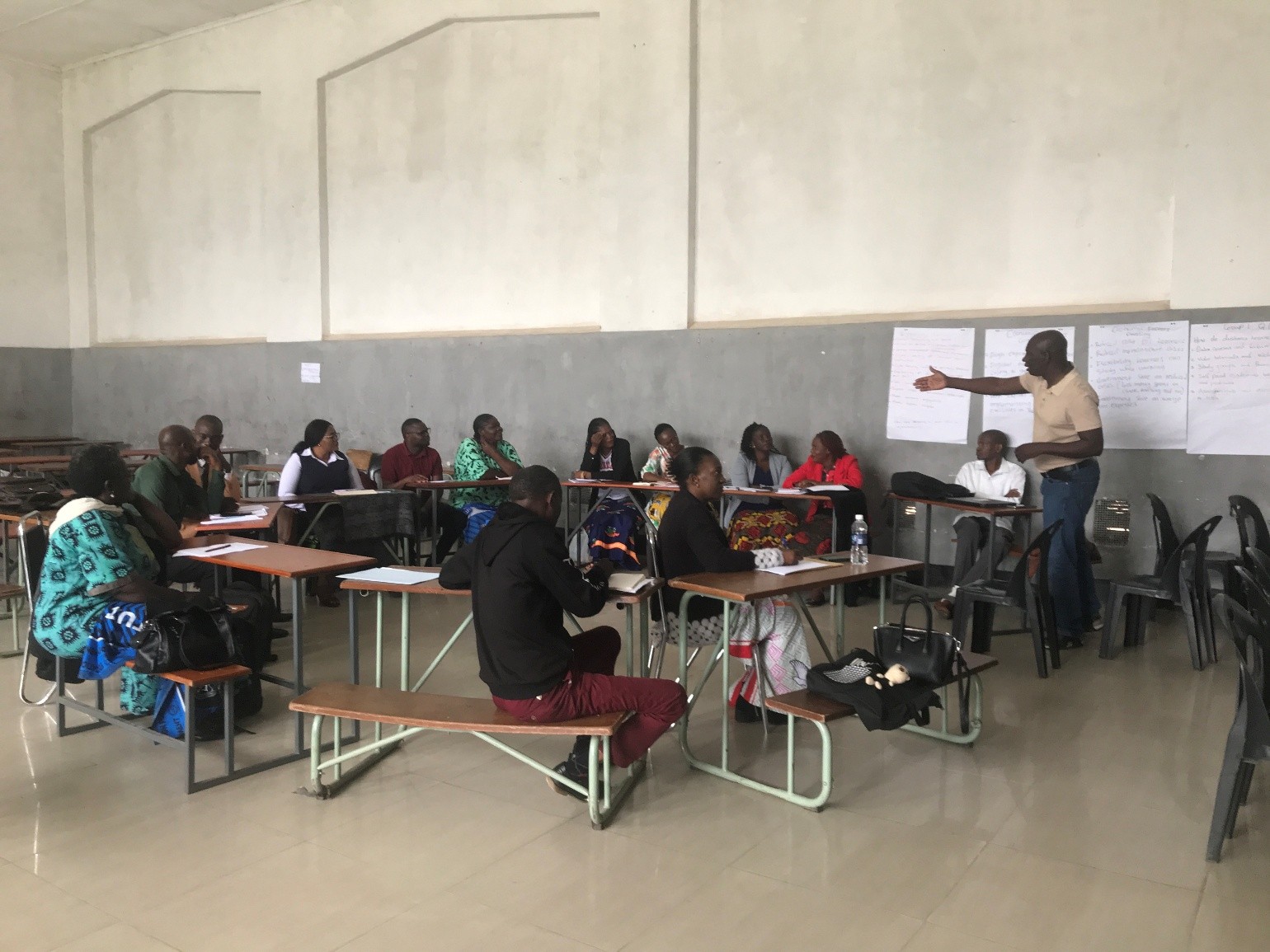
In February 2025, a workshop was held to explore the rationale for developing a decentralised ODL business model to address gaps in ZACODE’s delivery. Drawing on the scale and reach of decentralised ODL systems in countries such as Botswana and Namibia, the session examined lessons from comparable Southern African contexts and approaches for meeting the needs of diverse learners.
The Principal Education Officer from the ministry headquarters delivered a detailed presentation on education statistics in Zambia, highlighting the need to roll out ODL at the school level. The presentation helped establish a shared understanding of the rationale for developing the new decentralised ODL business model.
Following subsequent capacity-building workshops with implementing staff, the new model is now being rolled out in eight districts in Copperbelt Province and one district in North-Western Province. Lessons from the implementation experience will inform the next phase of scaling the approach.