teachers worldwide lacks the minimum required qualifications, rising to 30–40% in sub-Saharan Africa
NeedUN DESA (2026)
Empowering teachers for digital-age learning
Extending teacher capacity
Universal primary and secondary education by 2030 needs 44 million additional teachers, 15 million of them in sub-Saharan Africa, and about US$120 billion a year to pay for the new posts.*
* Source: UNESCO & International Task Force on Teachers for Education 2030 (2024).
Opportunity for action
Members can accelerate in partnership
Make digital-age teacher development a shared Commonwealth enterprise: regional, recognised and affordable.
The argument
Teachers are the lifeblood of education. Their commitment shapes the human capital on which every country’s future depends. Yet around one in five teachers worldwide lacks the minimum required qualifications, rising to 30–40% in sub-Saharan Africa (UN DESA, 2026). Shortages are most acute in rural areas, refugee settings and disadvantaged communities, and in secondary STEM subjects.
We also need to rethink what teaching means in the 21st century. Learners need teachers who can design for digital, blended and AI-supported learning, who can model critical thinking and creativity, who can adapt when disruption happens, and who can help young people use powerful new tools safely and well.
Traditional face-to-face training cannot reach these numbers in time, and the countries that need it most do not have the budgets to build it. Governments need collaborative, technology-enabled approaches: open and distance learning, open educational resources and digital pedagogies that combine pre-service and in-service development, communities of practice and recognised micro-credentials, at a fraction of the cost and at national scale, building teacher digital skills at the same time.
Additional teachers needed by 2030 for universal primary and secondary education, and the yearly cost of the new posts as a share of education spending, by SDG region (estimates)
Source: UNESCO & International Task Force on Teachers for Education 2030 (2024), Global report on teachers, Tables 2.3 and 6.3.
| SDG region | Additional teachers needed by 2030 (millions) | Note |
|---|---|---|
| Sub-Saharan Africa | 15.0m | 9.4 million new posts, more than the 8.5 million teachers in post in 2022, plus 5.6 million to replace teachers who leave |
| Southern Asia | 7.8m | 4.7 million new posts and 3.1 million to replace teachers who leave; 15.0 million teachers in post in 2022 |
| Europe and Northern America | 4.8m | 310,000 new posts and 4.5 million to replace teachers who leave; 12.6 million teachers in post in 2022 |
| South-Eastern Asia | 4.5m | 524,000 new posts and 4.0 million to replace teachers who leave; 6.8 million teachers in post in 2021 |
| Northern Africa and Western Asia | 4.3m | 1.8 million new posts and 2.5 million to replace teachers who leave; 6.2 million teachers in post in 2022 |
| Eastern Asia | 3.3m | 1.0 million new posts and 2.3 million to replace teachers who leave; 15.5 million teachers in post in 2022 |
| Latin America and the Caribbean | 3.2m | 361,000 new posts and 2.8 million to replace teachers who leave; 7.2 million teachers in post in 2022 |
| Central Asia | 0.7m | 343,000 new posts and 404,000 to replace teachers who leave; 1.2 million teachers in post in 2022 |
| Oceania | 0.3m | 79,000 new posts and 196,000 to replace teachers who leave; based on 2017 data, teachers in post not reported; secondary excludes Australia and New Zealand |
Teachers also need time and recognition. Professional development that counts towards registration and promotion is far more likely to be taken up, completed and sustained.
Proof points
Each card represents evidence in a strategic talking point, chosen because it shows the need or a result of COL’s work. Use the share button to copy a card as an image with a link back to this page.
teachers worldwide lacks the minimum required qualifications, rising to 30–40% in sub-Saharan Africa
NeedUN DESA (2026)
teachers trained overall through COL’s teacher education work
ResultCOL
of COL’s Teacher-in-the-Loop AI training count towards teachers’ mandatory annual professional development in India
ResultCOL
educators and ministry staff in sub-Saharan Africa trained, 66% women, through micro-courses and CPD
ResultJob et al. (2026)
teachers in Barbados, Dominica and Grenada earned COL-endorsed micro-credentials (2026)
ResultCOL
master teachers in Togo, trained in digital and pedagogical skills, reached 125 more educators
ResultCOL
Case study
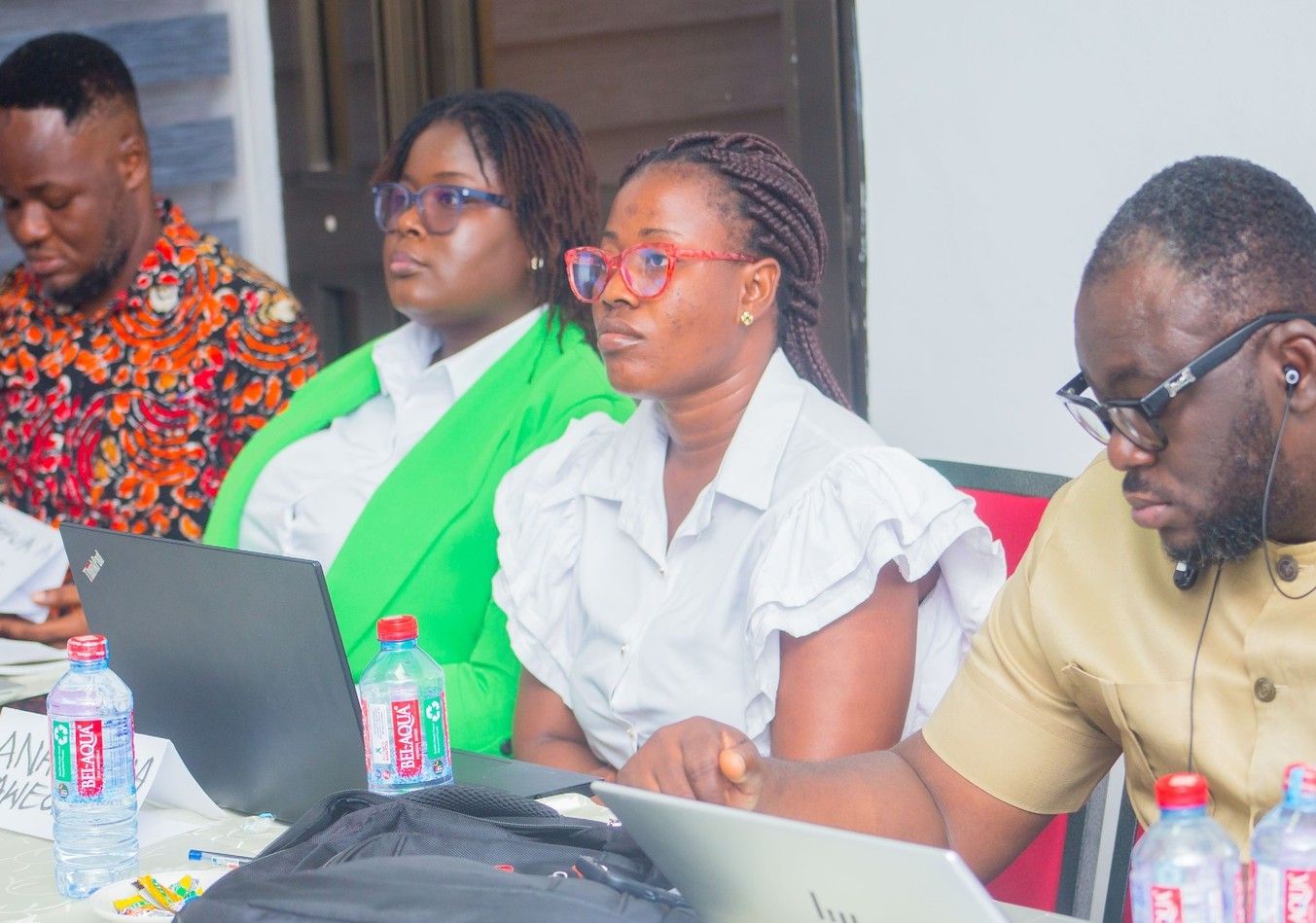
In Ghana, COL worked with the Centre for National Distance Learning and Open Schooling (CENDLOS) and Wesley College of Education to develop a co-creative mentoring model for pre-service teachers. Introduced at a national AI workshop, it blends traditional and reverse mentoring with peer collaboration, gender-responsive pedagogy and the guided use of generative AI to co-create inclusive, curriculum-aligned resources (Adu-Manu et al., 2026).
The model moves through four stages (preparation, co-creation, implementation, and reflection and sustainability), so that colleges can adopt and scale it themselves. Trainee teachers learn digital pedagogy by doing it, with mentors who learn alongside them.
The co-creative mentoring model for pre-service teachers, developed in Ghana by COL, CENDLOS and Wesley College of Education. Select a stage, or a part of the blend, to read it.
Source: Adu-Manu et al. (2026), A co-creative mentoring model for pre-service teacher education, Figures 1–3, with the loop drawn as in Figure 1; stage names and the blend in the talking point’s words.
Across the region, COL’s Beyond Numbers partnership with the Africa Federation of Teaching Regulatory Authorities has worked with teacher regulators in Botswana, Nigeria, Seychelles and South Africa on a shared open and distance learning framework for teacher development (COL & AFTRA, 2026). The South African Council for Educators, which represents more than 500,000 teachers, has worked with COL since 2024 on digital and pedagogical competencies, gender-responsive approaches and communities of practice.
More than 1,500 educators and ministry staff have been trained, 66% of them women, through 13 micro-courses and five CPD courses (Job et al., 2026).
Between December 2025 and April 2026, 4,896 teachers enrolled in a course on integrating virtual laboratories into STEAM teaching. In Seychelles, a cascade model trained 71 master trainers, who in turn reached 554 teachers from 37 schools. In the Caribbean, more than 950 teachers in Belize and Jamaica took part in COL’s STEAM Teachers Initiative between December 2025 and February 2026.
Overall, COL’s teacher education work has trained more than 15,000 teachers, supported 15 ministries and national agencies and developed more than 110 open and distance courses, strengthened by the Network for Open Teacher Education in sub-Saharan Africa. Recognition is following: in India, 40 hours of COL’s Teacher-in-the-Loop AI training now count towards teachers’ mandatory annual professional development.
Regional collaboration is turning teacher development into a shared, affordable Commonwealth enterprise.
Places of impact
16 of the 56 Member Nations. Every member is one equal tile, so small states stay visible; select a tile to read what happens there.
Opportunity for action
Members can accelerate in partnership
Milestones
Recognise teachers’ digital and AI-ready pedagogy as central to every education and skills commitment.
Adopt competency frameworks for digital pedagogy, including AI literacy and inclusive, gender-responsive teaching.
AI literacyGender-responsive teachingOffer open and distance CPD with micro-credentials that count towards registration and promotion, co-designed with teacher regulators.
Micro-credentialsPool courses, open resources and mentors regionally so that every teacher can access quality development.
Make communities of practice and mentoring funded, permanent features of national teacher systems.
We continue to act
COL will co-design courses and frameworks with ministries and regulators, share open resources and mentoring models, and track teacher and learner outcomes.
From the newsroom
Stories from the Commonwealth of Learning that highlight this strategic talking point. Each opens on col.org.
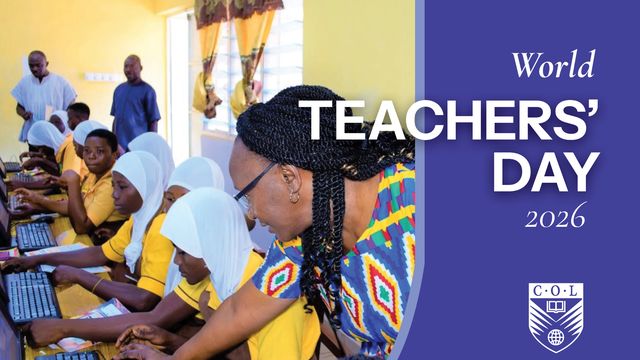
COL supports teachers through AI for Teacher Education, Teacher-in-the-Loop AI, STEAM virtual labs with AFTRA and other partners, and micro-credentials guided by its Commonwealth Micro-credential Framework for Lifelong Learning.
“Micro-credentials offer one way to do this, providing more flexible and transparent pathways for lifelong learning.”
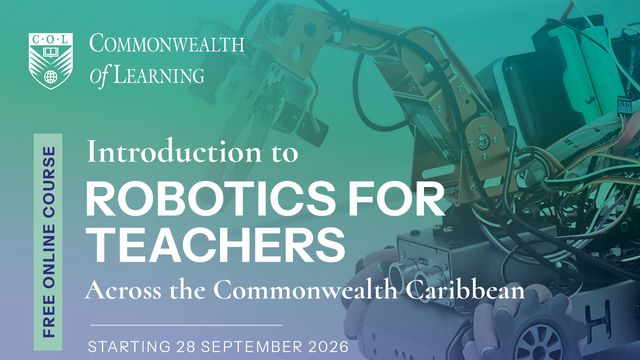
COL’s free 12-week online Introduction to Robotics for Teachers, part of its Youth Robotics for Blue-Green Resilience and Prosperity Project, is designed to help Caribbean educators integrate robotics into teaching and learning.
“COL’s Introduction to Robotics course has reached its full capacity of 500 participants, and registration is now closed”
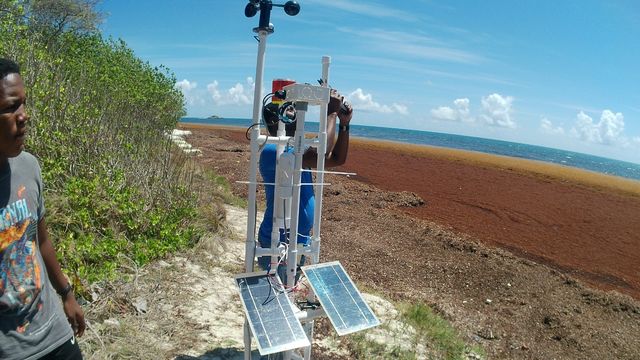
COL’s Youth Robotics for Blue-Green Resilience and Prosperity pilot has seven Caribbean youth robotics teams and a research, media and advocacy team, with selected participants to present at CHOGM in Antigua and Barbuda.
“The Robotics Design and Prototype stream consists of 49 young people aged 16 to 23 who will develop potential responses to challenges”
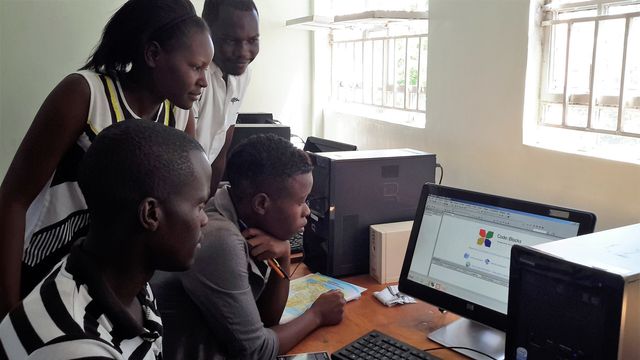
COL’s higher education adviser urges ODL institutions to embed metaliteracy as AI use grows, citing COL support for ethical-AI dialogue in South African teacher education and a higher education AI governance framework in Mauritius.
“UNESCO reports that globally at least 739 million adults still cannot read and write, two-thirds of them women.”
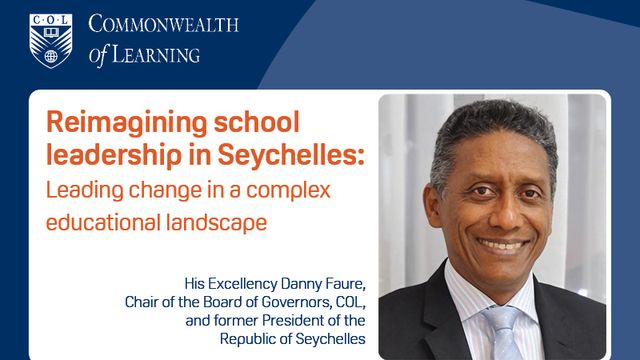
In a keynote to Seychelles headteachers, COL Board Chair Danny Faure proposed open schooling to reach young people not well served, including NEETs, and highlighted COL-supported teacher digital professional development.
“A cascading capacity-building model trained 71 Master Trainers, who subsequently trained 554 teachers nationwide from 37 schools.”
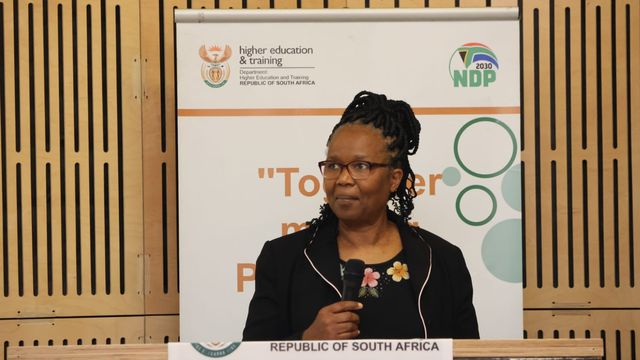
At a national workshop on AI in teacher education convened by South Africa’s DHET with COL, participants developed a principle-based national policy and established a national task team to support implementation.
“MRTEQ is currently silent on AI and must mainstream AI literacy so that it becomes a core attribute of teacher education graduates.”
Working in synergy
This talking point aligns with the Commonwealth Secretariat’s Democratic pillar and the Commonwealth Foundation’s focus on freedom of expression.
Talking points on the same pillar
As printed in the talking point, followed by the further sources used for this site’s charts and diagrams.
Further sources for the charts and diagrams