Commonwealth of LearningCHOGM26 · Talking points

Frugal Educational AI

Affordable AI, under local control

10

Talking point 10Commonwealth of Learning
infocol.org

AI is concentrated

Five companies held an estimated 71% of the world’s AI computing capacity at the end of 2025, up from 63% in early 2024.* That concentration limits education systems’ influence over price, terms and control.

* Source: Epoch AI (2026).

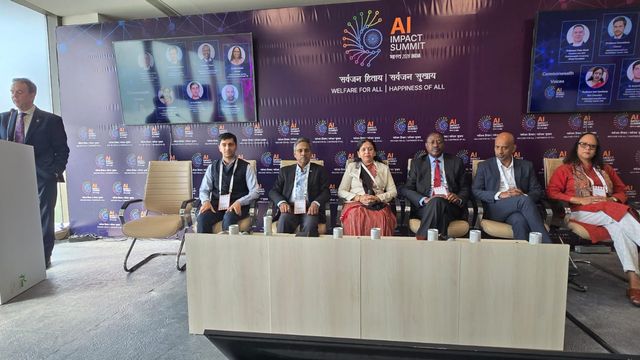
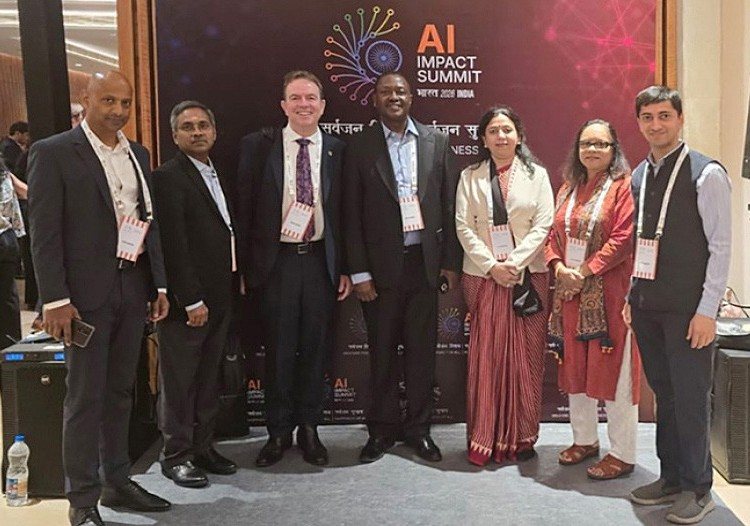
Seven speakers, men and women, stand together in front of an AI Impact Summit backdrop.
AI Impact Summit speakers after a discussion on Frugal AI convened by COL’s President, New Delhi, February 2026.

Opportunity for action

Members can accelerate in partnership

Join the Gaborone to New Delhi Compact and explore how shared Frugal AI capability can lower costs and strengthen national capacity.

The argument

Simplicity matters

Artificial intelligence opens new possibilities for teaching, learning and education administration. Whether it is affordable depends on fiscal space and national capacity.

When institutions rely on overseas AI services, per-user and per-query charges become a recurring foreign exchange outflow that rises with use. Cloud-only tools also need reliable, high-bandwidth connectivity that many schools lack. Access alone is also not a benefit: the UN’s Independent International Scientific Panel on AI (2026) finds that access to AI tools does not produce equal benefit without accompanying investment in data, skills, workflows and institutions.

COL’s Frugal AI approach positions AI in education as a digital public good and starts from the capability a task requires and the infrastructure institutions already have in place (COL, 2026a). A college, ministry or open university can host an open model on a workstation or modest server, turning an open-ended running cost into a planned investment in equipment and skills that stay in the country. Cloud services remain an option where they add value, while keeping humans in the loop.

Agentic AI raises the stakes. Systems that browse, use tools, and act with limited human oversight need stronger institutional controls than acceptable-use guidance alone.

Case study

From Gaborone to New Delhi

At the India AI Impact Summit in February 2026, COL launched the Gaborone to New Delhi Compact on teacher-led, localised and frugal AI for equitable education (COL, 2026b). Signatories endorse its principles, appoint policy and technical focal points, and join or observe a 12-month pilot with reviews at months six and twelve.

A technical annex sets out a sovereign education-AI reference architecture: open and interoperable, low-cost, locally governable and teacher-mediated. It describes eight layers, three tiers of risk-based teacher oversight and four hosting options, so that institutions can match controls to the stakes of each activity.

Match the controls to the stakesIllustrative model

The Compact’s reference architecture, from its technical annex (v1, February 2026). Choose an activity to see the teacher oversight it needs; open a layer or a hosting option to read about it.

A technical annex sets out a sovereign education-AI reference architecture with eight layers, three tiers of risk-based teacher oversight and four hosting options, so that institutions can match controls to the stakes of each activity.

Source: COL (2026b), Gaborone to New Delhi Compact and technical annex: Sovereign education-AI reference architecture (v1, February 2026). Layer, tier and hosting names and wording from the technical annex; plain-language approval rules from the Compact.

Mauritius offers the first example. With COL support, the Higher Education Commission has issued national guidelines on AI in higher education, developed benchmarks for technology-enhanced learning and worked on a national higher education strategy for 2025–2035. COL has since trained an initial team of the Commission’s technical staff to build, test and maintain AI-enabled applications under institutional authority.

The Mauritius experience could be codified as a support package for higher education commissions, quality assurance agencies and higher education institutions across the Commonwealth.

The potential uses are practical. A ministry could build locally governed dashboards that draw on several education databases, or a regulator could query policy and administrative records, without sensitive data leaving national or institutional control.

Institutions and agencies in Malaysia, Samoa and Vanuatu have also formally engaged, and partners are consulting stakeholders and testing pilots to establish value for money. India is a co-development partner, and COL’s Teacher-in-the-Loop AI already works with its national examination boards. In Jamaica, a scoping mission with the Vocational Training Development Institute and CANTA explored Frugal AI for TVET in February 2026, and the University of the South Pacific endorsed the approach at the Compact’s launch, where COL’s session also brought in leaders from Fiji, Kenya and Mauritius.

Commonwealth cooperation can pool development costs and share software via open licences, training and experience, instead of each country buying similar services separately.

COL’s role complements the Commonwealth Artificial Intelligence Consortium: the Consortium focuses on compute, skills and partnerships; COL on education, implementation and local capability.
Places of impact

Member Nations named in this talking point

8 of the 56 Member Nations. Every member is one equal tile, so small states stay visible; select a tile to read what happens there.

  1. MUS
    MauritiusFirst example: with COL support, the Higher Education Commission issued national guidelines on AI in higher education
  2. MYS
    WSM
    VUT
    Malaysia, Samoa, VanuatuInstitutions and agencies have formally engaged
  3. IND
    IndiaCo-development partner; COL’s Teacher-in-the-Loop AI works with its national examination boards; the Compact launched in New Delhi
  4. JAM
    JamaicaA scoping mission with the Vocational Training Development Institute and CANTA explored Frugal AI for TVET
  5. FJI
    FijiLeaders at COL’s session at the Compact’s launch, where the University of the South Pacific endorsed the approach
  6. KEN
    KenyaCOL’s session at the Compact’s launch brought in leaders from Kenya

Opportunity for action

Members can accelerate in partnership

Join the Gaborone to New Delhi Compact and explore how shared Frugal AI capability can lower costs and strengthen national capacity.

CHOGM26 · 1–4 November 2026

Milestones

  1. At CHOGM26Join

    Encourage ministries and universities to sign the Compact and name policy and technical focal points.

  2. By end 2027Pilot

    Run 12-month pilots in two or three countries using the reference architecture: open models, local hosting and teacher oversight.

    Open modelsTeacher oversight
  3. By CHOGM28Report

    Publish pilot costs and value for money, and use the results to decide whether pooled procurement, open-source software and training are worthwhile.

    Open-source software

We continue to act

COL will supply the architecture, curation, training and assurance; every system we support must belong to the Member Nation, within their defined governance and team capacity.

From the newsroom

We are already moving

Stories from the Commonwealth of Learning that highlight this strategic talking point. Each opens on col.org.

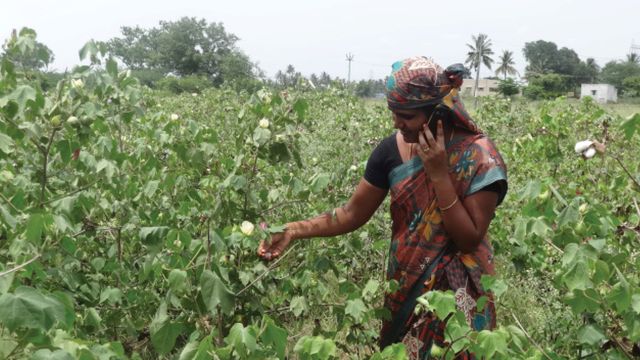
Woman farmer on a mobile phone inspecting cotton plants in a field

From AI to agriculture: Rethinking skills for the future

Building on Lifelong Learning for Farmers, COL is developing a three-pronged approach to agricultural green skilling and is exploring frugal, multilingual AI tools for learning.

“Looking ahead, COL is shaping its Future Skills interventions around a simple idea: helping member countries anticipate the skills their economies will need tomorrow and preparing youth, women, farmers and fishers for them today.”

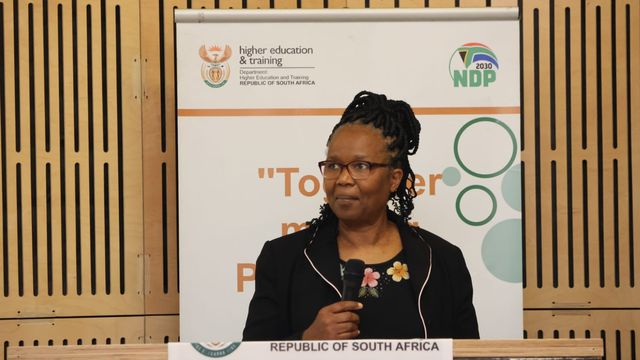
Speaker with a microphone in front of a South African Department of Higher Education and Training banner

From AI literacy to action: South Africa charts a path forward for teacher education

At a national workshop on AI in teacher education convened by South Africa’s DHET with COL, participants developed a principle-based national policy and established a national task team to support implementation.

“MRTEQ is currently silent on AI and must mainstream AI literacy so that it becomes a core attribute of teacher education graduates.”

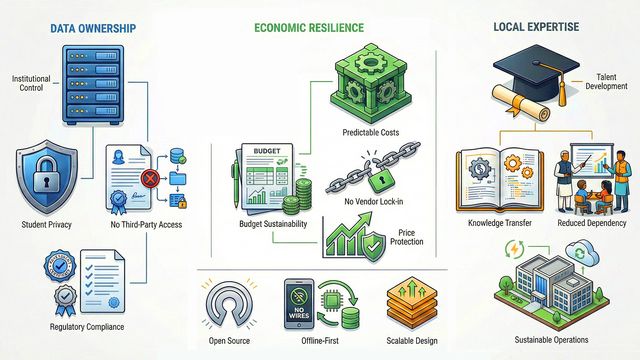
Frugal AI infographic on data ownership, economic resilience and local expertise

Frugal AI: Bringing Practical, Locally Governed AI Within Reach

COL’s Frugal AI reference architecture uses open-weights models where appropriate; properly designed, locally hosted AI can help institutions keep learner records within national or institutionally controlled systems, and COL’s AI-agent trials follow a Teacher-in-the-Loop approach.

“Institutions and agencies in Mauritius, Malaysia, Samoa and Vanuatu have formally engaged with COL’s Frugal AI work, and capacity building is under way with the Higher Education Commission of Mauritius.”

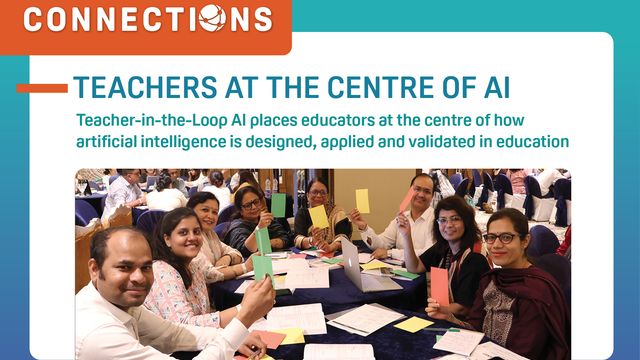
Connections banner reading Teachers at the centre of AI, with teachers at workshop tables holding up coloured cards

Teacher-in-the-loop AI places educators at the centre of how artificial intelligence is designed, applied and validated in education

COL’s TiL-AI project in India saw 180 secondary mathematics teachers improve Generative AI use and act as co-designers, validators and quality filters of AI-generated resources, reinforcing that AI should augment, not replace, teacher expertise.

“Forty hours of TiL-AI training have been formally recognised toward the mandatory 50-hour annual teacher professional development requirement in India.”

COL's panel session on stage at the India AI Impact Summit 2026 in New Delhi

Beyond the Classroom: Frugal AI in TVET as a roadmap in skills training

COL's Frugal AI approach lets TVET institutions adopt open-source, offline-capable, low-cost AI, and its Teacher-in-the-Loop AI project supports practitioners from India, Jamaica, Kenya, Ghana and Nigeria in curating training resources.

“the project curated more than 2,000 training resources for biology, mathematics, fashion design, and science laboratory technology, aligned with national occupational standards and curricula, in just three months”

References

Sources (4)

Show the sources

As printed in the talking point.