

As AI becomes an inevitable part of classrooms and teacher education, we have an opportunity to move beyond asking whether it will be used and instead focus on how it can be guided, and by whom.
Teachers need more than the ability to operate AI tools. They need the judgement to decide when tools add value, when their outputs should be challenged, and how they can be adapted to the realities of different learners and local contexts. With strong AI literacy, teachers can create more personalised and inclusive learning experiences while ensuring that students remain active as participants in their own learning.
“Our task is not simply to put AI tools in teachers’ hands, but to strengthen their agency to decide when, why and how AI can improve teaching and learning,” says Dr Betty Ogange, Education Specialist: Teacher Education, COL.
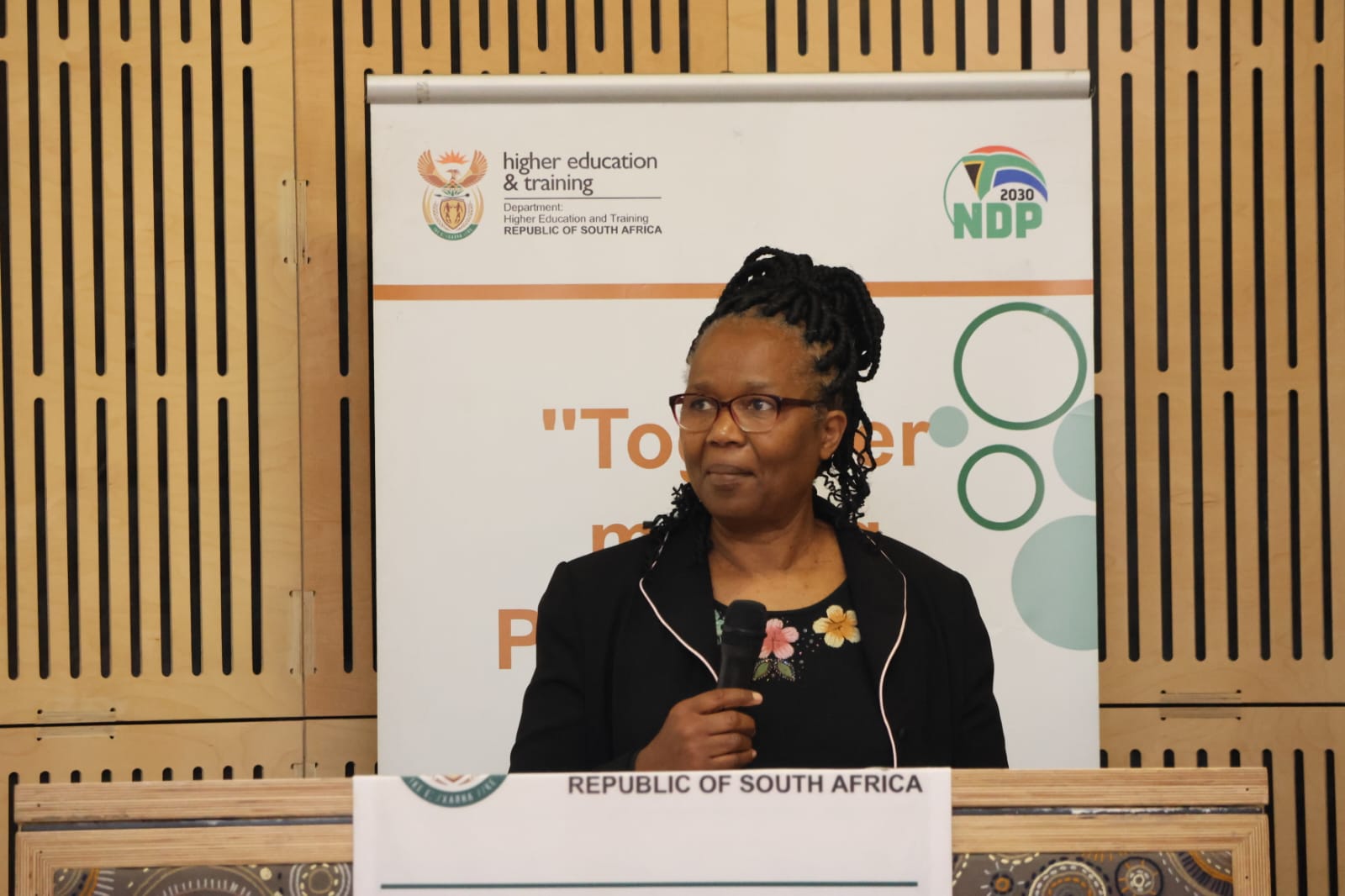
This belief in the vital role of teachers in shaping AI use grounded the recent National Workshop on Artificial Intelligence in Teacher Education, hosted at the University of Pretoria’s Future Africa campus. Convened by South Africa’s Department of Higher Education and Training (DHET) in partnership with the Commonwealth of Learning (COL), the event explored how AI should be positioned within teacher education policies and systems.
The two-day session brought together educators, policymakers and system leaders to strengthen national AI literacy and develop evidence-based recommendations for the ongoing review of the Minimum Requirements for Teacher Education Qualifications (MRTEQ).
Several leaders from across the country opened the event with key framing around what ethical AI use should look like and the critical role of institutions in ensuring its responsible integration. Mr Phillip Tshabalala, Chief Director: Teaching, Learning and Research Development at DHET, urged institutions to be explicit about what ethical AI use means rather than relying on vague descriptions.
Professor Dick Ng’ambi, Educational Technology at the University of Cape Town, delivered a keynote that presented AI not as a gadget, but as a form of literacy and a “thinking companion.”
“AI is only as good as the person behind the screen,” he observed. “If you cannot think it, you cannot do it,” Ng’ambi said.
His recurring nudge to delegates, a simple “so what, and now what,” became a quiet refrain throughout the sessions, reminding participants of the need to move from talking about AI to acting on it.
The various perspectives on AI landed on a shared conclusion: MRTEQ is currently silent on AI and must mainstream AI literacy so that it becomes a core attribute of teacher education graduates.
Following breakout discussions that shifted the focus from policy to practice and explored AI governance, ethics, quality assurance, curriculum integration, digital infrastructure, research, and teacher development, participants developed a flexible, principle-based national policy informed by an AI Assessment Scale and established a national task team to support implementation through a cascading model of accountability. The discussions also demonstrated a significant shift in approaches to assessment, with greater emphasis on evaluating the learning process rather than only the final product.
A practice showcase brought several of these ideas to life. Thabo, an AI teaching-practice companion, was presented as a tool to support student teachers’ professional development rather than provide a shortcut around it. Participants also learned about plans for a national, open-access repository of AI-integrated resources, to be developed with the technical support of COL.
Closing the workshop, Dr Justinus Setshedi, Assistant Director in the Teacher Education Directorate, called for its outcomes to feed directly into the MRTEQ consultation process. He urged participants to view the working session not as an endpoint, but as the first step towards a co-ordinated national framework for AI in teacher education, encouraging sustained momentum through continued professional development, stronger research partnerships and ongoing attention to how AI is shaping the sector.
The activities and outcomes of this workshop put into practice the Gaborone Statement’s calls for ethical and inclusive AI and for teachers to be skilled agents of change through professional development and communities of practice. This work is also being advanced through complementary efforts: COL’s Frugal AI approach, which supports responsible and resource-efficient uses of AI in education, and the newly launched Southern Africa Node of the Network for Open Teacher Education in Sub-Saharan Africa (NOTES), which provides a regional platform for sustained collaboration, OER co-creation and professional learning.
The challenge ahead is to turn that momentum into lasting change across teacher education systems, ensuring that AI strengthens the agency of teachers and expands meaningful learning opportunities for all.