women and girls have completed training through GIRLS Inspire since 2021
ResultCOL
From connection to livelihoods
Nearly three in ten
In 2025, an average of 27.9% of young people in low-income countries were not in employment, education or training.*
* Source: ILO (2026).
Opportunity for action
Members can accelerate in partnership
Equip 10 million young people with digital and entrepreneurial skills, starting with those not in employment, education or training.
The argument
For most young people, including those who are excluded, the internet arrives through a phone. In 2025, three in four people were online, but only 34% in the least developed countries, and 280 million more men than women (UN DESA, 2026). But connection alone does not create opportunity! Young people need digital skills that turn access into income, learning and participation.
The world of work is moving fast. Employers expect 39% of core skills to change by 2030 (WEF, 2025), and AI is reshaping entry-level jobs first. Digital fluency is now the gateway to entrepreneurial, green, blue and creative pathways, and to safe participation in democratic life.
The Commonwealth Secretary-General has pledged to advocate for funding so that COL can expand its digital skills education to more than 10 million young people (Commonwealth Secretariat, 2025). Reaching them means learning that is mobile-first and low-bandwidth; self-paced in short, stackable units; applied to real tasks such as listing a product, taking a digital payment or keeping records; and recognised by employers and national qualifications.
Safety matters as much as skill. Every learner needs basic cyber-hygiene, data protection and the confidence to recognise scams, misinformation and abuse online. Young women, rural youth and young people with disabilities are least likely to be online, so programmes must be designed around them from the start.
Proof points
Each card represents evidence in a strategic talking point, chosen because it shows the need or a result of COL’s work. Use the share button to copy a card as an image with a link back to this page.
women and girls have completed training through GIRLS Inspire since 2021
ResultCOL
course completions recorded in India by the COL–Coursera–Google Skills Online Programme
ResultCOL
learners from at least 25 Commonwealth countries took part in online skills scholarships, 2021–2024
ResultCOL
Case study
COL has already shown that digital and community-based skills can reach young people at scale. When COVID-19 closed classrooms, COL’s partnerships with Coursera, Udemy and Grow with Google provided online skills scholarships across the Commonwealth, giving immediate access to employment-oriented learning. Between 2021 and 2024, 94,804 learners from at least 25 Commonwealth countries took part. In India alone, the COL–Coursera–Google Skills Online Programme has recorded 77,018 course enrolments and 21,945 course completions, and learners in St Vincent and the Grenadines have earned 1,957 certificates through Skills Online.
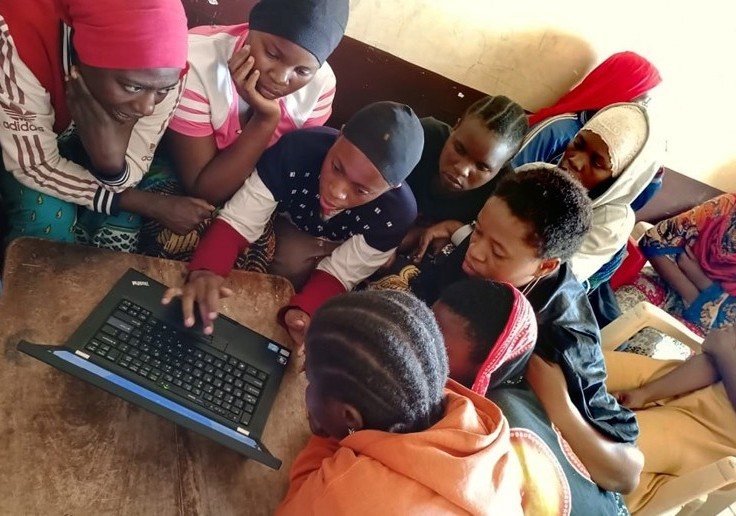
For those furthest from opportunity, community support made the difference. Through GIRLS Inspire, COL and partners combined life skills, vocational preparation, community mobilisation, links to employers and access to credit: 38,348 women and girls have completed training since 2021. Through Lifelong Learning for Farmers, mobile learning has reached more than 1 million farmers.
Platforms bring scale, but people bring change. Digital skills land when learners also have local facilitation, mentoring, recognition, and routes into work or enterprise.
Countries are ready to build on this. In Papua New Guinea, the Department of Education’s Flexible Open and Distance Education team has already scoped the skills that disengaged young people most need as a basis for national learning pathways. In Grenada, the National Training Agency has brought more than 40 stakeholders from government, industry and civil society together to shape the digital transformation of TVET with COL support, and Grenada is emerging as a model for other small states.
COL’s design for the next stage follows the evidence: short modules in local languages, built for mobile and low bandwidth; community learning hubs and peer mentors; basic cyber-hygiene, data protection and safe conduct for every learner; credentials recognised by national frameworks; placements with small businesses that need digital help; and an inclusion premium that rewards reach to young women, rural and island communities and young people with disabilities.
Success should be measured by completion, certification, income and enterprise, not by enrolments alone.
Figures keep their own units and are not comparable across programmes; none is drawn as a share of another.
Source: the talking point (COL programme results).
“… to advocate for funding of our core priorities as well as for partners, such as the Commonwealth of Learning, to expand its digital skills education to over 10 million young people.”
The Hon. Shirley Botchwey, Commonwealth Secretary-General, opening remarks to the Commonwealth Finance Ministers Meeting, October 2025
Places of impact
5 of the 56 Member Nations. Every member is one equal tile, so small states stay visible; select a tile to read what happens there.
Opportunity for action
Members can accelerate in partnership
Milestones
Back the Secretary-General’s call to equip 10 million young people with digital skills, working with COL.
Deliver mobile-first, recognised modules with mentors and online safety built in.
Recognised modulesOnline safetyLink graduates to placements, apprenticeships and enterprise support, co-financed with private partners.
Reach and verify 10 million young people, at least half of them young women, with measured gains in income and enterprise.
Young womenWe continue to act
COL will provide open courseware, technical design, quality assurance and an evidence framework, working with governments, institutions and civil society.
From the newsroom
Stories from the Commonwealth of Learning that highlight this strategic talking point. Each opens on col.org.
COL has partnered with the Centre for Global Education on a global youth digital-skills survey to shape OER, and plans a Youth Robotics Innovation Challenge for the CHOGM 2026 Youth Forum.
“Representing more than 60 per cent of the population across Commonwealth Member States, young people have an important role in building stronger, fairer, and more resilient societies.”
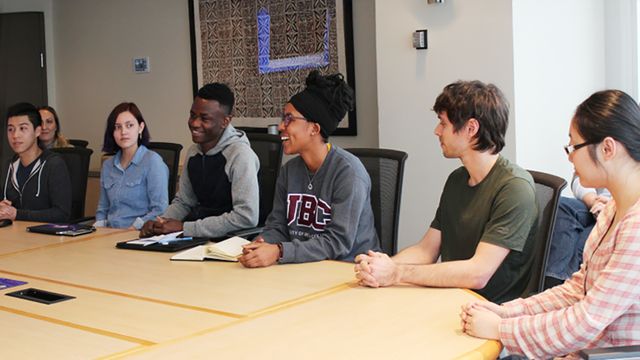
A new two-phase project by COL and the Centre for Global Education will involve a global survey on digital skills by youth themselves, followed by Open Educational Resources addressing the needs expressed.
“With over 60 per cent of the Commonwealth’s population under the age of 30”
Working in synergy
This talking point aligns with the Commonwealth Secretariat’s Economic and Democratic pillars and the Commonwealth Foundation’s focus on economic inclusion and freedom of expression.
Talking points on the same pillars
As printed in the talking point, followed by the further sources used for this site’s charts and diagrams.
Further sources for the charts and diagrams