

By Dr Tony Mays, Director: Education, COL
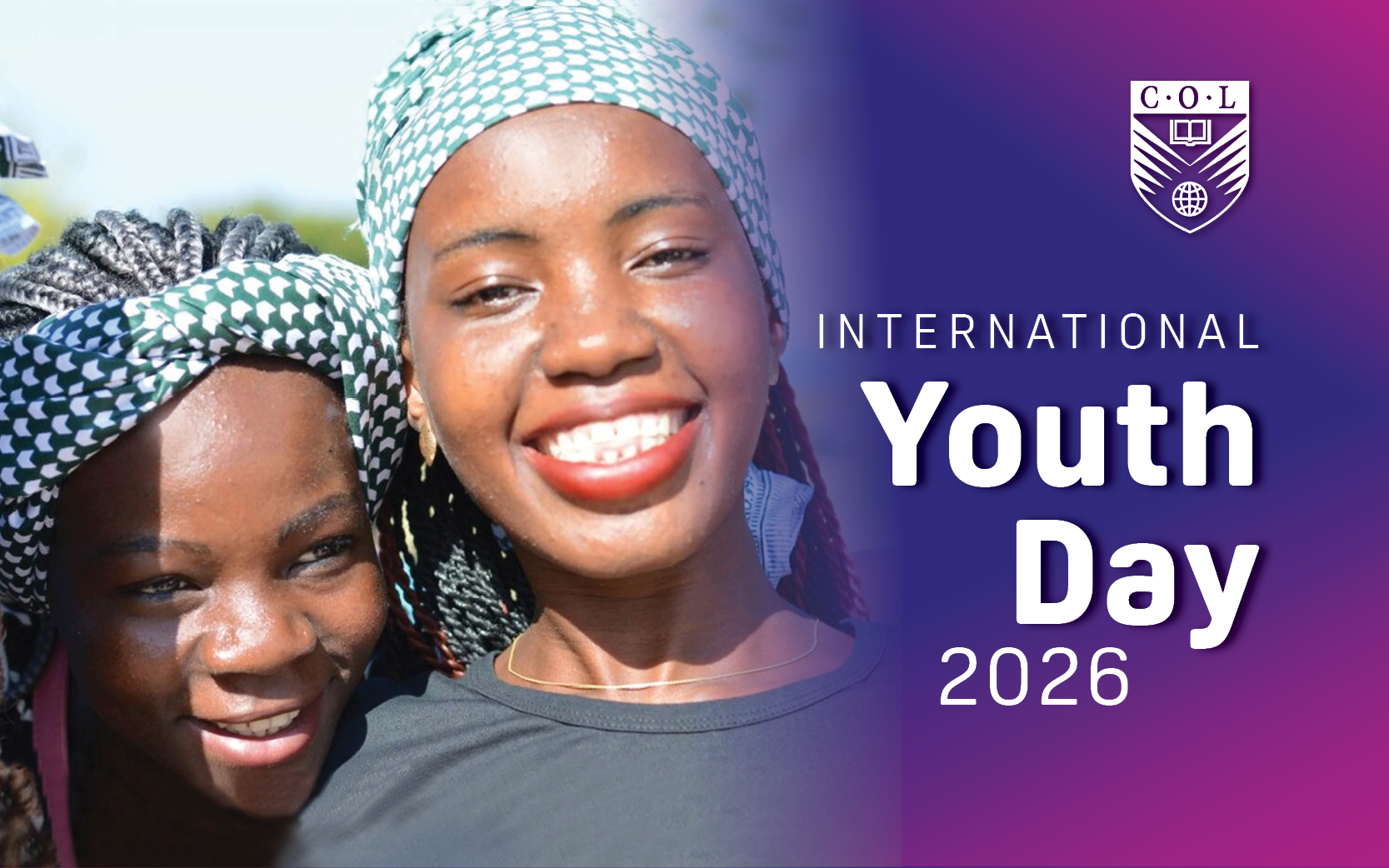
Across the Commonwealth, young people are navigating profound changes in education, work, and technology. On International Youth Day, COL highlights why their voices, skills and leadership must be at the centre of efforts to build a more inclusive and resilient future.
The future of the Commonwealth will be shaped by its rising generation. Representing more than 60 per cent of the population across Commonwealth Member States, young people have an important role in building stronger, fairer, and more resilient societies. Equipping them with the knowledge, skills and opportunities to lead, participate and contribute is therefore essential to shaping the Commonwealth’s path ahead.
These efforts must respond to the realities of a rapidly changing world. Young people are navigating persistent inequalities in access to education and employment, confronting the accelerating effects of climate change, and seeking to understand how technological innovation and artificial intelligence will reshape learning, work and civic life. While young people are often among the most active users of technology, access remains uneven, with many lacking the digital skills, confidence and guidance needed to participate safely and productively in digital environments.
As technology becomes increasingly embedded in education, employment, and public life, digital inclusion must go beyond access to devices and connectivity. It should also equip young people, especially those living in Small Island Developing States and Least Developed Countries, to become confident, responsible users of digital and educational technologies, while ensuring they have a meaningful role in shaping the policies, practices and learning opportunities that affect them.
COL’s commitment to youth
COL has long recognised the importance of empowering young people to help shape responses to global challenges, especially youth living in the margins. By supporting youth engagement in areas such as climate action, gender equality and sustainable development, COL has used inclusive open and distance learning (ODL) and technology-enabled learning (TEL) to expand access to lifelong learning pathways. These approaches open doors for young people whose geographic location or social circumstances have restricted access to conventional, in-person education.
Acknowledging the continuing effects of gender inequality, as well as the disproportionate number of young women who are not in employment, education or training, COL has focused on empowering women and girls through education, skills development and economic participation. Through COL initiatives such as GIRLS Inspire and the Empowering Women and Girls project, young women and girls have gained opportunities to continue their education, build skills, and contribute to economic and social transformation within their communities. Other efforts have combined academic learning, skills development, mentorship and flexible delivery to address the growing disengagement of boys and young men, particularly those who have dropped out of formal education or are at risk of being left behind.
Building on this work, COL is now seeking to involve young people more directly in determining which skills matter and how they should be taught. To advance this agenda, COL has partnered with the Centre for Global Education on a two-phase project that places young people’s voices at the centre of the process. The project begins with the development, deployment, and analysis of a global survey on young people’s digital skills, followed by the creation or curation of open educational resources that respond to the needs they identify.
Alongside demographic information, the survey explores young people’s access to the internet, digital devices, and AI tools. It explores how they use technologies ranging from low-bandwidth applications to publicly available AI tools for learning and social media interaction, as well as the guidance they may need to make informed and responsible choices.
The Commonwealth youth agenda
Listening to young people is an essential first step, but collaboration across the broader Commonwealth ecosystem is critical to sustaining impact and achieving scale, especially if young people are to influence policy and shape development priorities.
This year’s Commonwealth Heads of Government Meeting (CHOGM), scheduled to take place from 1 to 4 November 2026 in Antigua and Barbuda, will include a Youth Forum that provides young leaders from across the Commonwealth with a platform to engage directly in dialogue on the issues shaping their present and future. Alongside forums focused on business, gender equality and people-centred governance, the Youth Forum is designed to strengthen young people’s participation in Commonwealth decision-making on climate resilience, education, digital transformation, entrepreneurship and social inclusion.
One activity that is planned for the Youth Forum is COL’s Youth Robotics Innovation Challenge, which invites young people aged 16 to 23 from across the Caribbean to develop practical solutions to challenges such as climate resilience, food security, oceanography and waste management. Selected participants will receive mentorship and have the opportunity to present their ideas to leaders at CHOGM.
The emphasis on youth at this year’s CHOGM reflects the Commonwealth’s broader commitment to equipping young people with the skills and opportunities they need to navigate increasingly complex education systems and labour markets.
Building the future
From this point forward, youth participation should not be limited to a single event, survey or consultation. It must be embedded across Commonwealth policies, programmes and institutions, with clear opportunities for young people to influence decisions and help design solutions.
The next step is to move beyond consultation to create sustained opportunities for young people, including women, girls, and youth with disabilities, to shape the decisions that affect their lives. The Commonwealth’s strength lies in its diversity and capacity for cooperation. By connecting young people across countries, sharing knowledge and expanding access to learning, Commonwealth institutions can help create an environment in which youth ideas, experiences and innovations contribute to collective progress.