Talking point 05Commonwealth of Learning infocol.org
Change via small credit-able things
94% of employers are willing to offer higher starting salaries to graduates with micro-credentials, and twice as many students are likely to enrol in a programme offering credit-bearing micro-credentials (71%) as in one with none (35%).*
* Source: Coursera (2026), a survey of more than 3,500 learners, employers and university leaders.
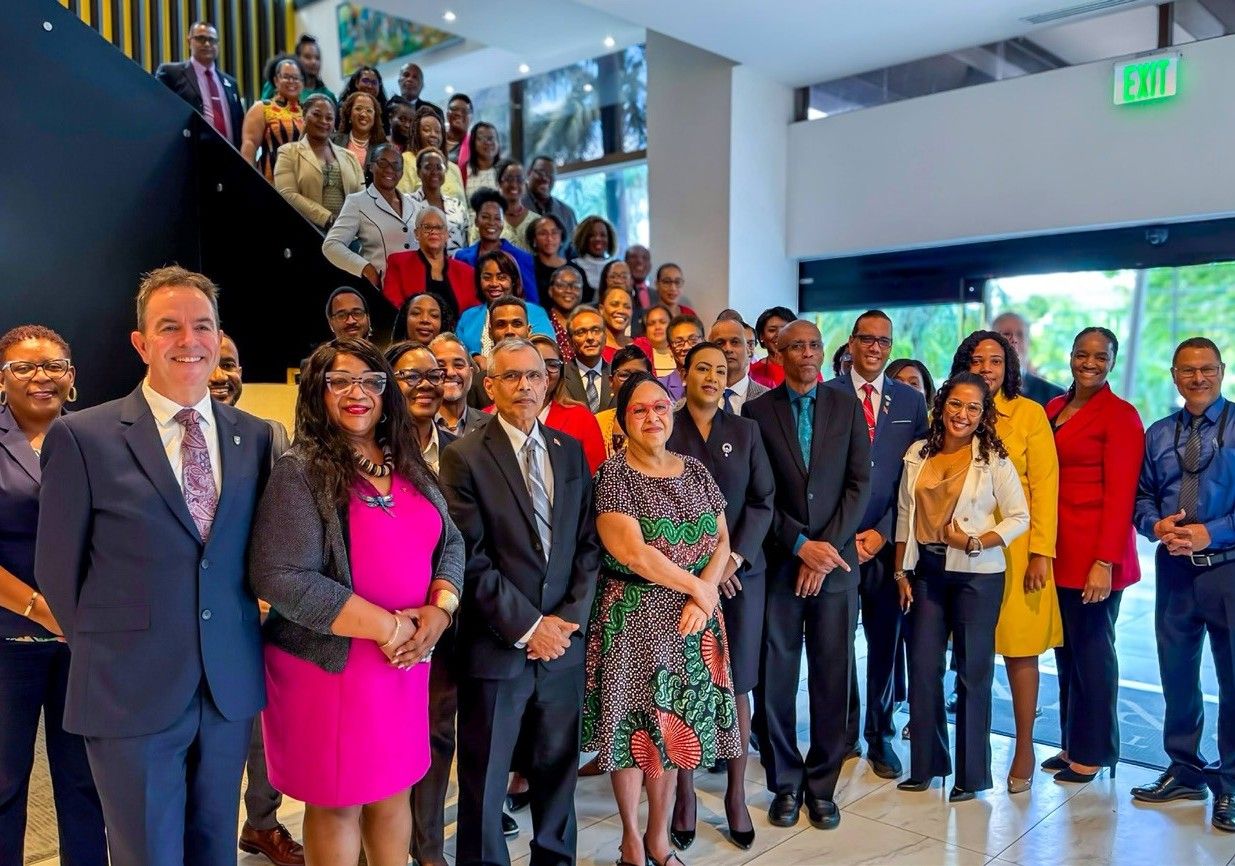
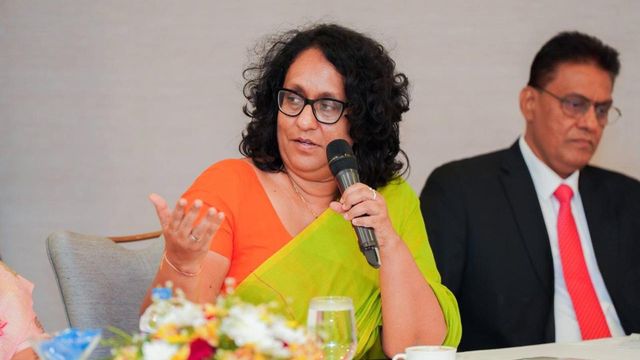
The Caribbean convenes in Trinidad and Tobago, March 2026, to work on a regional micro-credential framework, standards and registry.
Opportunity for action
Members can accelerate in partnership
Make learning count everywhere: adopt a common micro-credential framework and connect trusted registries, so that credentials travel with learners.
While institutions favour large programmes, with credit locked into a single institution, learners increasingly need shorter, flexible, affordable and work-relevant learning they can take while they earn, care for others, and move across borders. Employers require credible evidence of specific competences.
Learning is citizenship: every learner should have the right to have knowledge recognised, however it was gained. Micro-credentials will not solve structural pressures alone, but they can make post-secondary education more responsive. A learner may evidence a skill, stack it towards a larger award, or use it for recognition of prior learning at a university, college or TVET institution (UNESCO, 2022).
Trust is the currency.
The Commonwealth Micro-credential Framework for Lifelong Learning provides a shared language, metadata and quality assurance for trust across institutions, sectors and borders (COL, 2025), and a new guide helps governments and regulators implement it (Palmer et al., 2026). Verifiable digital credentials then let learners carry proof of their skills with them, under their own control, and credentials co-designed with industry deepen trust and create frictionless transitions between learning and work (OECD, 2026).
For small states, shared frameworks matter even more. No single country can maintain every specialist programme, but trusted credentials let learners combine learning from many providers.
Case study
The Caribbean
In March 2026, Caribbean partners met in Trinidad and Tobago to work on a regional micro-credential framework, common standards and a registry, so a short course completed in one country can be trusted in another and across the CARICOM Single Market and Economy.
The OECS Commission, under a 2025 MOU with COL, took an active part in drafting and validating the sub-regional micro-credentials framework, and ten micro-credential courses and a policy will be developed at Dominica State College.
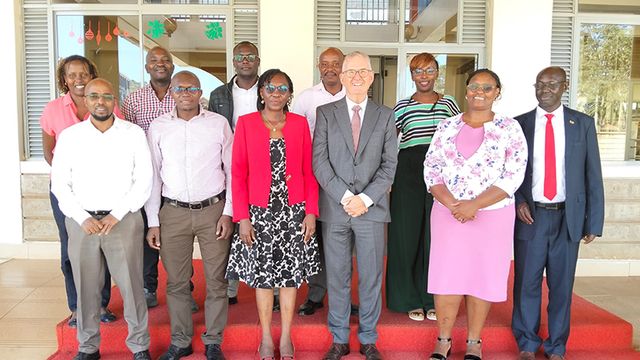
In June 2026, a COL study tour took participants from Barbados, Canada, Namibia, St Kitts and Nevis and Trinidad and Tobago to see the infrastructure in action. VerifyTT, Trinidad and Tobago’s national digital credential platform, is built on the W3C Verifiable Credentials standard: approved organisations issue tamper-proof credentials that individuals hold in a digital wallet and share with employers, including through EmployTT. The University of Trinidad and Tobago uploads awards directly through a system link, and the National Energy Skills Centre is building stackable micro-credentials and digital badges for its technical programmes.
The lesson was clear: technology is the easy part. Trust depends on governance, learner consent, data protection and institutional readiness, built through regional cooperation.
VerifyTT already supports certificates of character and employment verification letters, and iGovTT is exploring links to the national identification system and offline verification: one trusted platform serving education, government and employers. Participants agreed to keep the network going, sharing lessons on governance, technical standards and interoperability.
Technology is the easy part
How a credential travels on VerifyTT, Trinidad and Tobago’s national digital credential platform, and what trust depends on. Select any part to read more.
Approved organisations issue tamper-proof credentials that individuals hold in a digital wallet and share with employers. The lesson: technology is the easy part; trust depends on governance, learner consent, data protection and institutional readiness.
Source: the talking point (pp. 9–10): the Caribbean case study and the argument above. Role names issuer, holder and verifier from Sporny et al. (2025), Verifiable credentials data model v2.0 (W3C Recommendation).
COL’s status review of micro-credentials across the Commonwealth found flexibility to be the strongest national motivation, followed by lifelong learning, employability and industry-linked provision. The barriers were equally clear: weak incentives for providers, quality assurance, industry recognition and supporting policy (COL, 2025).
Flexibility is the strongest national motivation
Commonwealth governments and quality assurance agencies responding to COL’s survey: % citing each reason for interest in micro-credentials, more than one allowed; reported 2025
Source: COL (2025), Towards a micro-credential framework for the Commonwealth, Figure 3.10.
report wording: ‘Recognise training provided by industry’
Quality of short courses
59%
report wording: ‘Assure quality of short courses’
Efficiency and quality of learning
56%
report wording: ‘Increase the efficiency and quality of learning’
Teacher and trainer development
37%
report wording: ‘Improve teacher/trainer professional development’
More quality training providers
32%
report wording: ‘Increase the number of quality training providers’
Lower cost of learning
27%
report wording: ‘Reduce the cost of learning’
The Commonwealth framework responds directly, with shared essentials that each country can adapt.
Framework implementation is also under way in Eswatini, Kenya, Nigeria, Sierra Leone and Sri Lanka, with a Pacific framework in planning. Sierra Leone validated a draft national framework with more than 80 stakeholders in December 2025, and Sri Lanka’s Cabinet has approved an agreement with COL on a national framework. Implementation will follow in ten post-secondary institutions, each developing at least ten micro-credentials, with quality assurance also being further explored with Mauritius.
The Commonwealth framework: essentials
Clear definitions and quality-assured assessment.
Recognition of prior learning and stackable pathways.
A registry, shared metadata and digital verification.
Credentials co-designed with employers, so learning is trusted.
Room for each country to adapt, while keeping the essentials intact.
Places of impact
Member Nations named in this talking point
12 of the 56 Member Nations. Every member is one equal tile, so small states stay visible; select a tile to read what happens there.
TTO
Trinidad and TobagoCaribbean partners met here, March 2026; VerifyTT is its national digital credential platform
DMA
DominicaTen micro-credential courses and a policy will be developed at Dominica State College
BRB CAN NAM KNA
Barbados, Canada, Namibia, St Kitts and NevisParticipants in the June 2026 COL study tour to see the infrastructure in action
SWZ KEN NGA
Eswatini, Kenya, NigeriaFramework implementation under way
SLE
Sierra LeoneFramework implementation under way; a draft national framework validated with more than 80 stakeholders, December 2025
LKA
Sri LankaFramework implementation under way; Cabinet has approved an agreement with COL on a national framework
MUS
MauritiusQuality assurance being further explored
Opportunity for action
Members can accelerate in partnership
Make learning count everywhere: adopt a common micro-credential framework and connect trusted registries, so that credentials travel with learners.
CHOGM26 · 1–4 November 2026
Milestones
1At CHOGM26Endorse
Recognise the Commonwealth Micro-credential Framework for Lifelong Learning as a shared reference for national systems.
2By mid-2027Align
Link micro-credentials to national qualifications frameworks and make recognition of prior learning a practical entitlement.
3By end 2027Pilot trust
Pilot verifiable digital credentials and a regional registry, starting with the Caribbean, with employers co-designing priority credentials.
4By CHOGM28Recognise each other
Agree mutual recognition among participating states and quality assurance agencies.
5By 2030Portable for life
A learner’s verified skills travel with them across the Commonwealth, for work and further study.
We continue to act
COL will support framework adaptation, quality assurance, institutional implementation and regional registries, sharing guides and open tools.
From the newsroom
We are already moving
Stories from the Commonwealth of Learning that highlight this strategic talking point. Each opens on col.org.
Trinidad and Tobago's VerifyTT, built on the open-source Inji stack, verifies credentials in seconds, and NESC Technical Institute plans to adopt it for its micro-credentials.
“Credentials, including micro-credentials, are here to stay, and it is important to have mechanisms that allow all, including certificate-awarding institutions and employers, to verify these credentials, easily, quickly, and credibly.”
COL supports teachers through AI for Teacher Education, Teacher-in-the-Loop AI, STEAM virtual labs with AFTRA and other partners, and micro-credentials guided by its Commonwealth Micro-credential Framework for Lifelong Learning.
“Micro-credentials offer one way to do this, providing more flexible and transparent pathways for lifelong learning.”
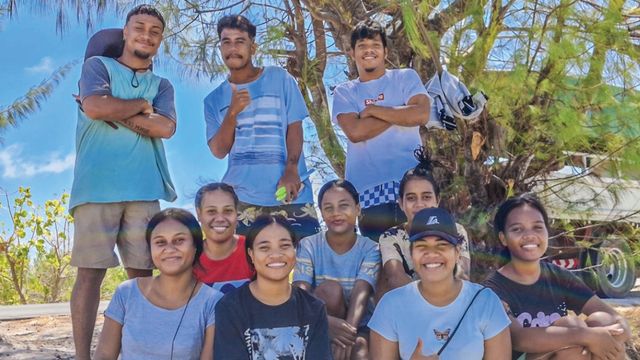
With New Zealand MFAT support, COL is launching Phase 2 of the Pacific Partnership for Open, Distance and Flexible Learning, a decade-long effort running 2026–2036 across ten Pacific Island countries.
“More than 7,200 educators enrolled in professional development to drive up the quality of open education.”
Zambia’s Open TVET Expo drew more than 80 policymakers, regulators and practitioners from 21 institutions, and COL presents Zambia’s aligned policy, regulation and blended competency-based training as a model for scaling Open TVET.
“With support from COL, the Technical Education, Vocational and Entrepreneurship Training Authority (TEVETA) in Zambia implemented national ODFL Standards in 2025, providing a framework for accrediting flexible and blended provision.”
Sri Lanka is developing a national micro-credential framework with COL’s support, while COL’s Commonwealth Micro-credential Framework for Lifelong Learning guides policymakers and providers in building recognised, portable, quality-assured micro-credential systems.
“In April 2026, the Sri Lankan Cabinet approved an agreement between the Ministry of Education, Higher Education and Vocational Education and COL to develop and implement the national framework”
Partnering with COL, the Open University of Kenya hosted a February 2026 micro-credential policy and programme workshop, in an initiative that builds on COL's Commonwealth Micro-credential Framework for Lifelong Learning.
“Following the session, a group of academics from the education, science, and business schools at OUK further met to design and develop the institution‘s first set of micro-credentials.”
Organisation for Economic Co-operation and Development. (2026). International review of micro-credential systems: From fragmentation to alignment. OECD Publishing. doi.org/10.1787/bd913f1c-en
Palmer, W., Olivier, J., & Mohee, R. (2026). The Commonwealth micro-credential implementation and quality assurance guide. Commonwealth of Learning. doi.org/10.56059/11599/6144 · OASIS
Sporny, M., Thibodeau, T., Jr., Herman, I., Cohen, G., & Jones, M. B. (Eds.). (2025). Verifiable credentials data model v2.0 [W3C Recommendation]. World Wide Web Consortium. Role definitions: issuer, holder, verifier. www.w3.org/TR/2025/REC-vc-data-model-2.0-20250515/ (accessed 2026-10-19)