Talking point 09Commonwealth of Learning infocol.org
Creativity at work
Cultural and creative industries provide more than 48 million jobs, almost half held by women: 6.2% of all employment and 3.1% of global GDP. No sector offers opportunities to more young people under 30.*
* Source: United Nations (n.d.), citing UNESCO data.
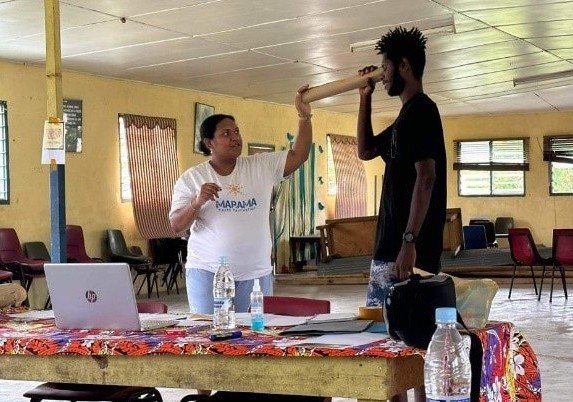
Young people develop creative business ideas in YUT PAWA, run by V-Lab, Youth Challenge Vanuatu and the Marama Youth Foundation, Efate, Vanuatu, 2023. Credit: Marama Youth Foundation.
Opportunity for action
Members can accelerate in partnership
Build recognised pathways from creative talent to livelihoods, starting with a few priority value chains in each region.
The orange economy turns creativity, culture and ideas into livelihoods through arts, design, music, film, animation, fashion, heritage and digital content. World exports of creative services reached US$1.4 trillion in 2022, up 29% since 2017 (UNCTAD, 2024).
For small states and young people, it offers low capital and high reach: a phone and a skill can reach a regional or global market. Creative skills are also among the most motivating routes back into learning for disengaged young people, including boys and young men in difficult social conditions. Cultural production can also earn income while keeping identity and heritage alive (UNESCO, 2023a).
Talent is not the constraint. The gaps are in the systems around it: financing, protection of intellectual property, distribution, data, and institutional support (UNESCO, 2023b). Education must nurture and grow creative capability, not simply certify knowledge (Easton & Djumalieva, 2018). Developing learners’ creative confidence, critical thinking, digital production, collaboration, entrepreneurship, financial capability and an understanding of intellectual property and markets must start in school, well before occupational training. Teachers and trainers need support to achieve this.
Generative AI also raises the stakes and offers huge potential to democratise participation. Creators need the skills to use new tools, and to protect and earn the rewards of their own work.
Case study
Creative pathways in small states
Community-based youth programmes in the Pacific show what is possible. In Vanuatu, the YUT PAWA youth challenge programme brought together young people who were outside education and work to develop creative business ideas, combining their talent with enterprise skills.
In the Caribbean, COL is working with partners on the next step: a connected pathway from creative talent to recognised capability, and from capability to employment, enterprise and further learning. The emphasis is on a pathway, not another collection of courses. The Caribbean Association of National Training Authorities (CANTA) is already curating training resources on fashion design.
Such a pathway can connect early exposure to creative and digital production in schools; modular occupational and enterprise learning; portfolios and practical assessment; mentoring, apprenticeships and work-based projects; micro-credentials where useful; intellectual property, financial and business skills; and access to commissions, enterprise support and markets.
Rather than begin with an over-specified regional programme, COL proposes pathfinders: two or three priority creative value chains, such as digital media and content, animation and gaming, music and audiovisual production, fashion and design, or cultural heritage. Each is chosen on evidence of market opportunity, mapped from school to market, and tested with explicit measures of livelihood progression.
A pathway, not another collection of coursesIllustrative model
The elements a creative pathway can connect, in the talking point’s order, from school to market. Select one to read it; choose two or three value chains as pathfinders.
A connected pathway from creative talent to recognised capability, and from capability to employment, enterprise and further learning, built first for two or three priority creative value chains.
Source: the talking point; sentences matched to elements by this site. Commonwealth examples: UNCTAD (2024), Creative economy outlook 2024, Boxes 1 and 4, matched to value chains by this site.
The first step is a scoping process that brings education, training, culture, youth, business and trade institutions together with creative practitioners, employers, regional bodies and potential financing partners. It would map the occupations, capabilities, existing programmes and missing links in each value chain, and decide which elements should be national and which should be shared regionally.
Small states can combine regional cooperation with national ownership, using hybrid provision to overcome limited scale, dispersed populations and connectivity constraints. The aim is to move from celebrating creative talent to developing, protecting and commercialising it, so that young people can build livelihoods while projecting their region’s identity and ideas to the world.
Just 0.6% of creators’ royalties are collected in Africa
Share of the royalties collected worldwide for creators by CISAC member societies, by region, 2022, %
Source: UNCTAD (2024), Creative economy outlook 2024, citing CISAC (2023).
Region
Share of global collections, 2022
Note
Europe
54.8%
North America
24.5%
Asia Pacific
15.0%
UNCTAD gives this share as 15%
Latin America and the Caribbean
5.1%
Latin America was the fastest-growing region in 2022, up 66.1% on the year before
Africa
0.6%
At CHOGM26, the Commonwealth Business Forum’s new focus on the orange economy offers a platform to connect creative industries, investors and skills providers. Local-language digital content is part of the opportunity: it is the content that makes digital platforms useful in-country.
Pathfinder value chains to consider
Digital media and content
Animation and gaming
Music and audiovisual production
Fashion and design
Cultural heritage
Places of impact
Member Nations named in this talking point or the report it cites
7 of the 56 Member Nations. Every member is one equal tile, so small states stay visible; select a tile to read what happens there.
VUT
VanuatuEfate: YUT PAWA brought together young people outside education and work to develop creative business ideas
ATG
Antigua and BarbudaCHOGM26: Commonwealth Business Forum’s orange economy focus offers a platform to connect creative industries, investors and skills providers
JAM
JamaicaCaribbean Animation Business Model: collaboration across Caribbean studios over a virtual platform (UNCTAD (2024), Box 4)
TTO
Trinidad and TobagoMusic, film and fashion identified as critical industries for export promotion (UNCTAD (2024), Box 1)
LKA
Sri LankaAcademy of Design: study programmes in fashion and textile design, motion graphics and animation (UNCTAD (2024), Box 1)
MYS
MalaysiaMakyung in Metaverse combines traditional performing arts with augmented and virtual reality (UNCTAD (2024), Box 4)
MUS
MauritiusDodo Expedition augmented-reality app: a new way to engage with the extinct dodo at the Natural History Museum (UNCTAD (2024), Box 4)
Opportunity for action
Members can accelerate in partnership
Build recognised pathways from creative talent to livelihoods, starting with a few priority value chains in each region.
CHOGM26 · 1–4 November 2026
Milestones
1At CHOGM26Recognise
Recognise creative skills as economic skills and invite regions to lead orange economy pathfinders.
2By mid-2027Choose value chains
Select two or three priority creative value chains on evidence of market demand and existing strengths.
3By end 2027Map and design
Map occupations and gaps; design flexible pathways from school through training and mentoring to enterprise and markets.
4By CHOGM28Demonstrate
Run modest demonstrations that measure income, enterprise and progression, including for disengaged young men.
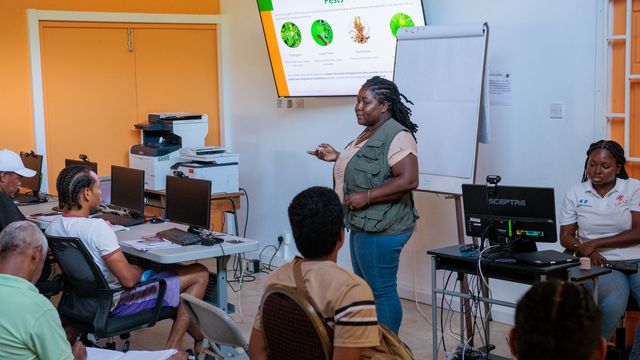
COL helps small states build resilience through skills for the green, blue and orange economies: a Farmer Field School in Dominica, four blue economy MOOCs with the University of Seychelles, and micro-credentials with The University of the West Indies, Mona, that help educators engage learners through creative expression.
“More than 6,000 learners from over 70 countries enrolled in these courses”
A workshop convened by COL, CANTA and the National Training Agency of Trinidad and Tobago validated blended learning courseware for Caribbean Vocational Qualifications, including Animation and Dance Instruction.
“Participants at the workshop validated critical courseware for competency-based training and assessments using blended learning approaches.”
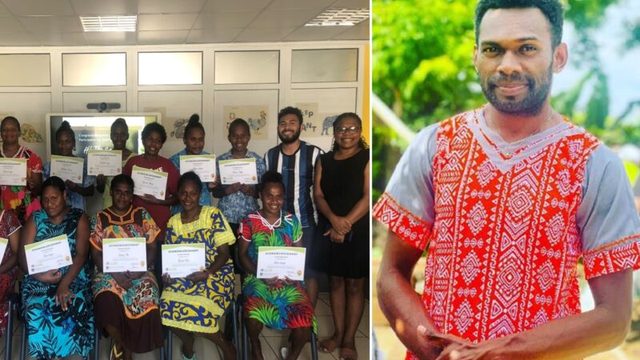
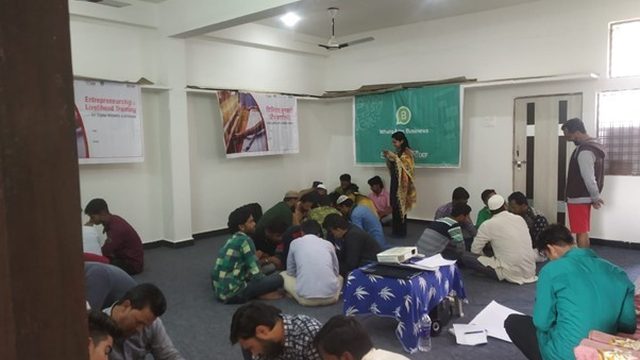
With COL’s partners V-Lab and Youth Challenge Vanuatu, 50 youths completed entrepreneurship training in the Ready for Business programme, among them a 26-year-old clothing business owner.
“he gained skills which would help provide more control over his finances, leverage online marketing, and wisely manage his time and customer relationships”
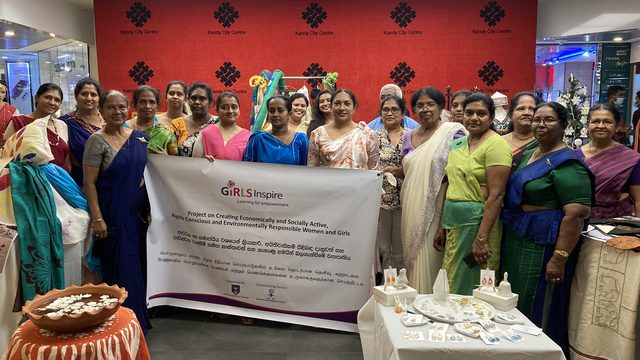
COL’s GIRLS Inspire partners in Pakistan and Sri Lanka facilitated women and girls’ participation in the Behbud Art & Craft Bazaar in Islamabad and the ‘Femme Creatif’ exhibition in Kandy, promoting their handmade products.
“Exhibitions and arts and craft fairs can be a great way for artisans to sell their work, connect with customers and build reputation.”
COL supported the Digital Empowerment Foundation to build the digital skills of 2,000 artisans and weavers from marginalised communities in India, from cataloguing and design platforms to digital payments and e-commerce.
“With dedicated online pages, they are now able to reach wider audiences and increase their sales, especially during the lockdown.”
This talking point aligns with the Commonwealth Secretariat’s Economic and Democratic pillars and the Commonwealth Foundation’s focus on economic inclusion and freedom of expression.