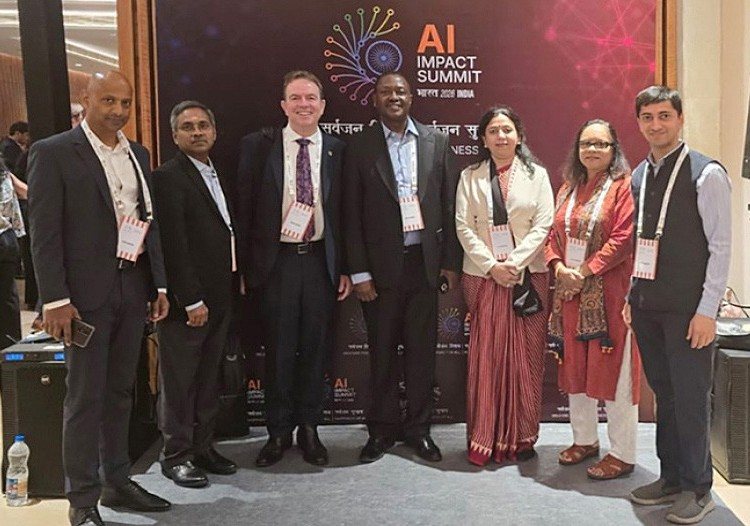
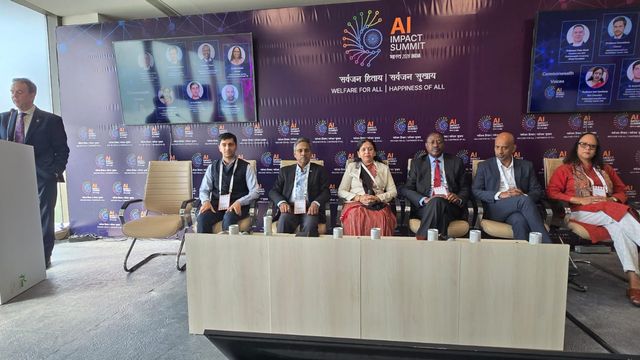
At the India AI Impact Summit in February 2026, COL launched the Gaborone to New Delhi Compact on teacher-led, localised and frugal AI for equitable education (COL, 2026b). Signatories endorse its principles, appoint policy and technical focal points, and join or observe a 12-month pilot with reviews at months six and twelve.
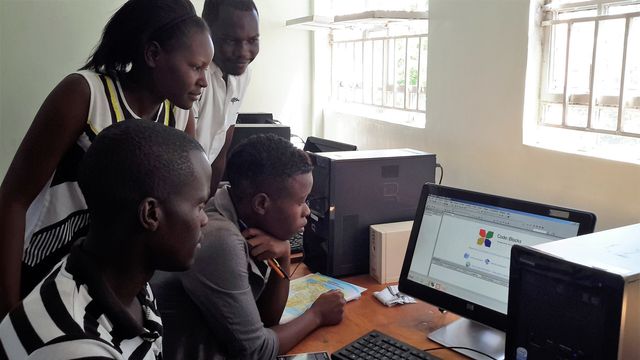
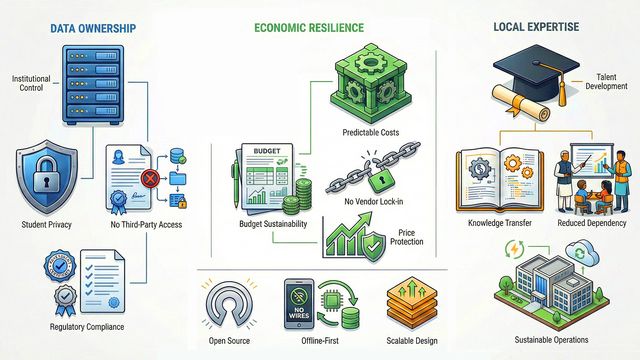
A technical annex sets out a sovereign education-AI reference architecture: open and interoperable, low-cost, locally governable and teacher-mediated. It describes eight layers, three tiers of risk-based teacher oversight and four hosting options, so that institutions can match controls to the stakes of each activity.
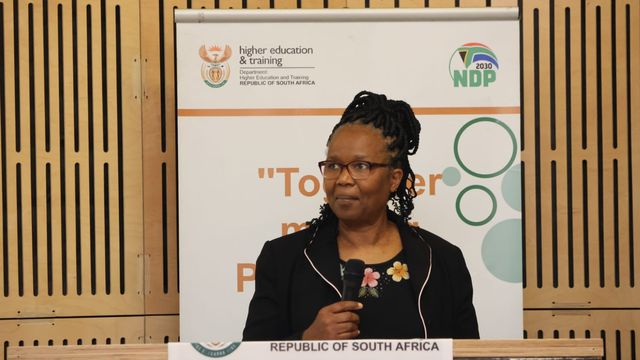
Mauritius offers the first example. With COL support, the Higher Education Commission has issued national guidelines on AI in higher education, developed benchmarks for technology-enhanced learning and worked on a national higher education strategy for 2025–2035. COL has since trained an initial team of the Commission’s technical staff to build, test and maintain AI-enabled applications under institutional authority.
The Mauritius experience could be codified as a support package for higher education commissions, quality assurance agencies and higher education institutions across the Commonwealth.
The potential uses are practical. A ministry could build locally governed dashboards that draw on several education databases, or a regulator could query policy and administrative records, without sensitive data leaving national or institutional control.
Institutions and agencies in Malaysia, Samoa and Vanuatu have also formally engaged, and partners are consulting stakeholders and testing pilots to establish value for money. India is a co-development partner, and COL’s Teacher-in-the-Loop AI already works with its national examination boards. In Jamaica, a scoping mission with the Vocational Training Development Institute and CANTA explored Frugal AI for TVET in February 2026, and the University of the South Pacific endorsed the approach at the Compact’s launch, where COL’s session also brought in leaders from Fiji, Kenya and Mauritius.
Commonwealth cooperation can pool development costs and share software via open licences, training and experience, instead of each country buying similar services separately.
COL’s role complements the Commonwealth Artificial Intelligence Consortium: the Consortium focuses on compute, skills and partnerships; COL on education, implementation and local capability.