

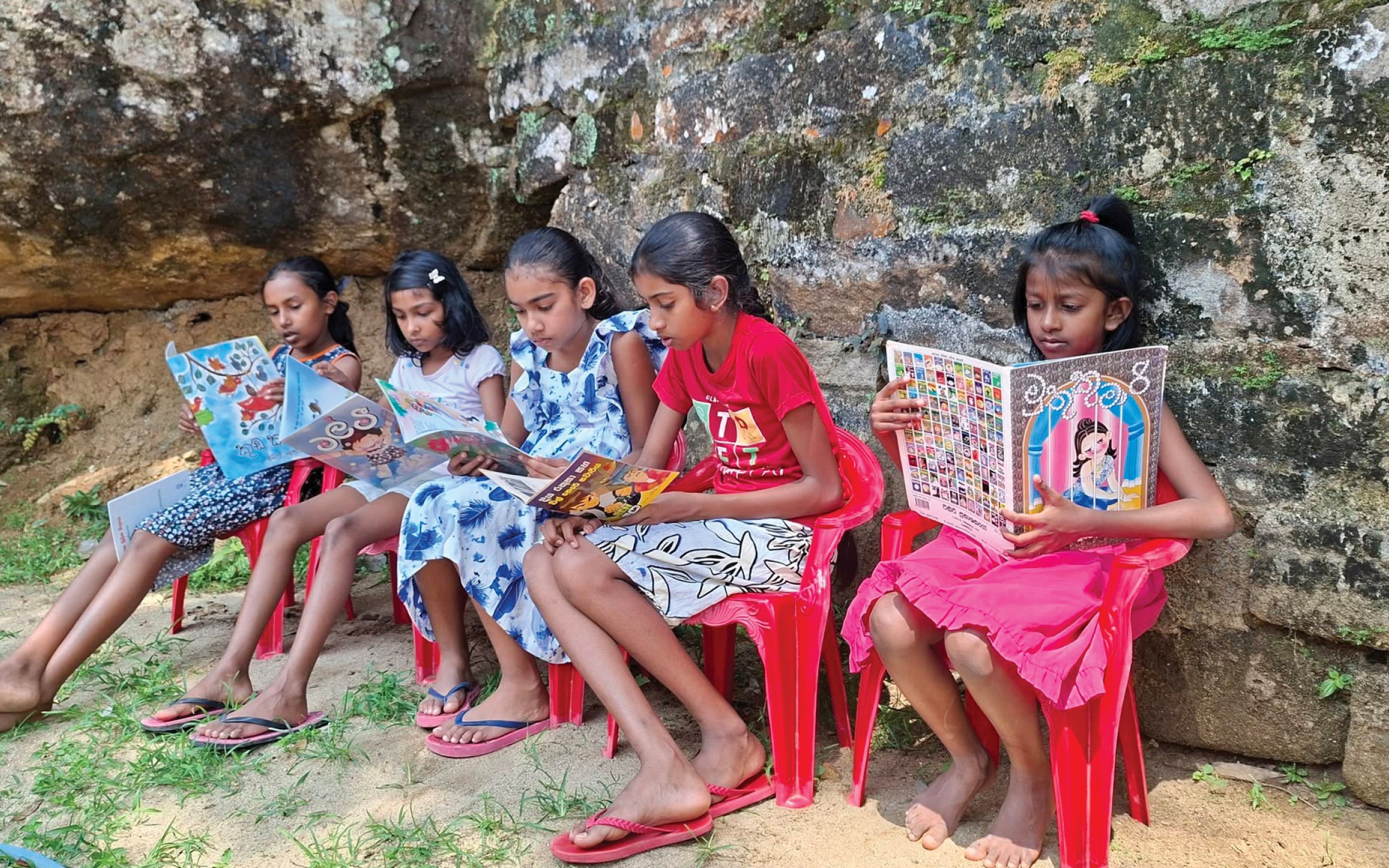
By Frances Ferreira, Senior Adviser: Women and Girls, COL
In Jessore, Bangladesh, a 22-year-old mother of three, pulled out of school at 13 to be married, now struggles to help her own children with their homework. In Punjab, Pakistan, a 15-year-old girl facing an arranged marriage by her parents confides in a friend and seeks help from a local women’s rights organisation.
These are real stories that represent only a small fraction of the experiences of millions of women and girls around the world today.
Every year, on 11 October, the International Day of the Girl Child recognises the rights, opportunities and potential of girls around the world. This year’s theme makes a global call to end child, early and forced marriage (CEFM) and increase investment in girls’ rights.
With continued support from Global Affairs Canada, the Commonwealth of Learning (COL) began working to end CEFM over a decade ago. Through the Girls Inspire project, a multi-country initiative implemented in Bangladesh, Mozambique, Pakistan and Tanzania, COL set out to reach 25,000 women and girls with life skills and vocational training to expand their educational and employment opportunities and reduce their vulnerability to CEFM. The project engaged communities, employers and local partners to challenge harmful social norms, strengthen women’s and girls’ economic independence and support their continued education, contributing to the prevention of more than 1,180 child marriages.
Building on this work, COL’s Empowering Women and Girls in the Commonwealth (EWG) project now continues to advocate for the rights of women and girls, working with partners across Bangladesh, Malawi, Mozambique, Pakistan and Sri Lanka. Child marriage remains a significant challenge across these countries, with more than half of women in Mozambique (53%) married before the age of 18, followed by 47% in Bangladesh, 39% in Malawi, 18% in Pakistan and 10% in Sri Lanka.
Yet sustained advocacy can lead to systemic change. Over the past year, following more than 10 years of work by COL and its partners, including the Society for the Protection of the Rights of the Child (SPARC) and BEDARI in Pakistan, three Child Marriage Restraint Bills were passed in Islamabad (2025), Balochistan (2025) and Punjab (2026). These reforms reflect years of advocacy by civil society organisations, government partners, and individuals working to challenge systemic inequalities and protect girls’ rights.
Creating the conditions for change
Ensuring that girls know their rights is an important part of ending CEFM. But knowing their rights does not always mean they can exercise them. Women and girls also need the resources, agency and supportive environments to make their own decisions. In July 2026, a girl from Bangladesh shared that although she knew her rights, she could not act on them because her father made the decisions in her household.
Her experience highlights why empowerment cannot rest with women and girls alone. Families, communities, institutions and wider society all have a role in creating the conditions for girls to exercise their rights and make decisions about their futures. That’s why preventing CEFM and empowering women and girls to exercise their rights requires a collective, holistic approach to gender transformation.
Recognising that lasting change requires action at individual, community and systemic levels, EWG engages women and girls, men and boys, community leaders, women’s rights organisations, policymakers and civil society networks. Over the past three years, EWG has reached more than 465,000 women and girls through awareness-raising activities on human rights, legal protections and personal agency. More than 4,900 community leaders have received training on women’s and girls’ rights, while over 770 clubs for men and boys have been convened to challenge harmful gender norms.
COL also introduced Tiene Toa, an interactive game available in physical and digital formats that uses real-life scenarios to encourage family and community discussions on women’s rights and gender-based violence. This approach helps bring sensitive issues into everyday conversations and encourages broader participation in advancing gender equality.
When a community chooses to act
A local WRO challenges harmful CEFM practices to prevent the marriage of a 15-year-old girl and support her continued schooling in Pakistan, 2024.
The experience of the 15-year-old girl in Punjab, introduced earlier, offers a real example of how collective action can turn awareness of rights into meaningful protection.
When her parents arranged her marriage, the girl confided in a friend, whose family alerted a local women’s rights organisation (WRO). The WRO intervened, engaging both families and the marriage registrar to explain the legal, health and educational consequences of early marriage. The WRO also uncovered a fraudulent birth certificate used to misrepresent the girl’s age, highlighting the risks faced by girls whose births are not officially registered. After several discussions, her parents agreed to postpone the marriage, allowing her to return to school.
Recognising the wider implications, the WRO then partnered with local authorities and health officials to launch a birth registration campaign, identifying 14 girls without official birth records. It also engaged other families to raise awareness of girls’ rights and legal protections. What began with one girl seeking help from a friend grew into wider community action to protect girls’ rights and address the systemic barriers that place them at risk.
The experience of the 22-year-old mother in Bangladesh, married at just 13, reminds us of what is at stake when girls are denied the opportunity to make decisions about their own futures.
This International Day of the Girl Child, as we call for an end to CEFM and greater investment in girls’ rights, we must continue to act together. By strengthening communities, challenging harmful norms and creating environments where girls can exercise their rights, we can help ensure every girl has the opportunity to stay in school, make her own choices and shape her future.