

When it comes to gender equality, promising headlines of encouraging change don’t always tell the full story. Research on women’s access to STEM education may point to progress, for example, but those gains may not extend to women’s STEM-related employment or leadership. Access tells us who gets through the door, while the remaining gaps raise deeper questions about who advances, who leads, and how systems are shaped.
Around the world, women make up only 35 per cent of STEM graduates and hold only about a quarter of jobs in science, engineering, and ICT. Even where education enrolment may suggest gender parity, inequitable hiring practices, workplace cultures, career progression pathways, and care responsibilities continue to narrow opportunities for women. In this context, greater access to STEM education for women has not translated into equal opportunity in employment, career advancement or leadership.
When women are excluded from STEM learning, employment and decision-making, countries risk losing more than half of the diverse and skilled technical workforce they need to advance national resilience and sustainable development. This is both a development challenge and an education challenge.
To adapt alongside rapid digital transformation, changing labour markets, accelerating climate change, and increasing threats to public health, COL believes that all learners, regardless of gender, geography, or ability, have the right to access STEM learning, technical skills development, and career pathways needed to participate fully in shaping our future world.
Tackling the entire STEM ecosystem
WiSE, COL’s Women in STEM initiative, addresses this challenge by bringing research, policy, and practice into the same conversation. Recognising no single pathway to more equitable STEM outcomes, WiSE brings together governments, institutions and civil society partners to identify barriers in their own contexts, adapt and test gender-responsive approaches, reimagine progress indicators, and share lessons for more inclusive policy and practice.
The goal is not to take a single model from one country and reproduce it elsewhere, but instead to identify sound principles, generate credible evidence, and connect local innovation to institutional and policy change. Working across the entire STEM ecosystem, WiSE empowers universities, TVET providers, community learning centres, non-formal programmes, teachers, mentors, employers, and policymakers to strengthen the conditions for women to participate, progress, and lead.
Laying the groundwork for future action
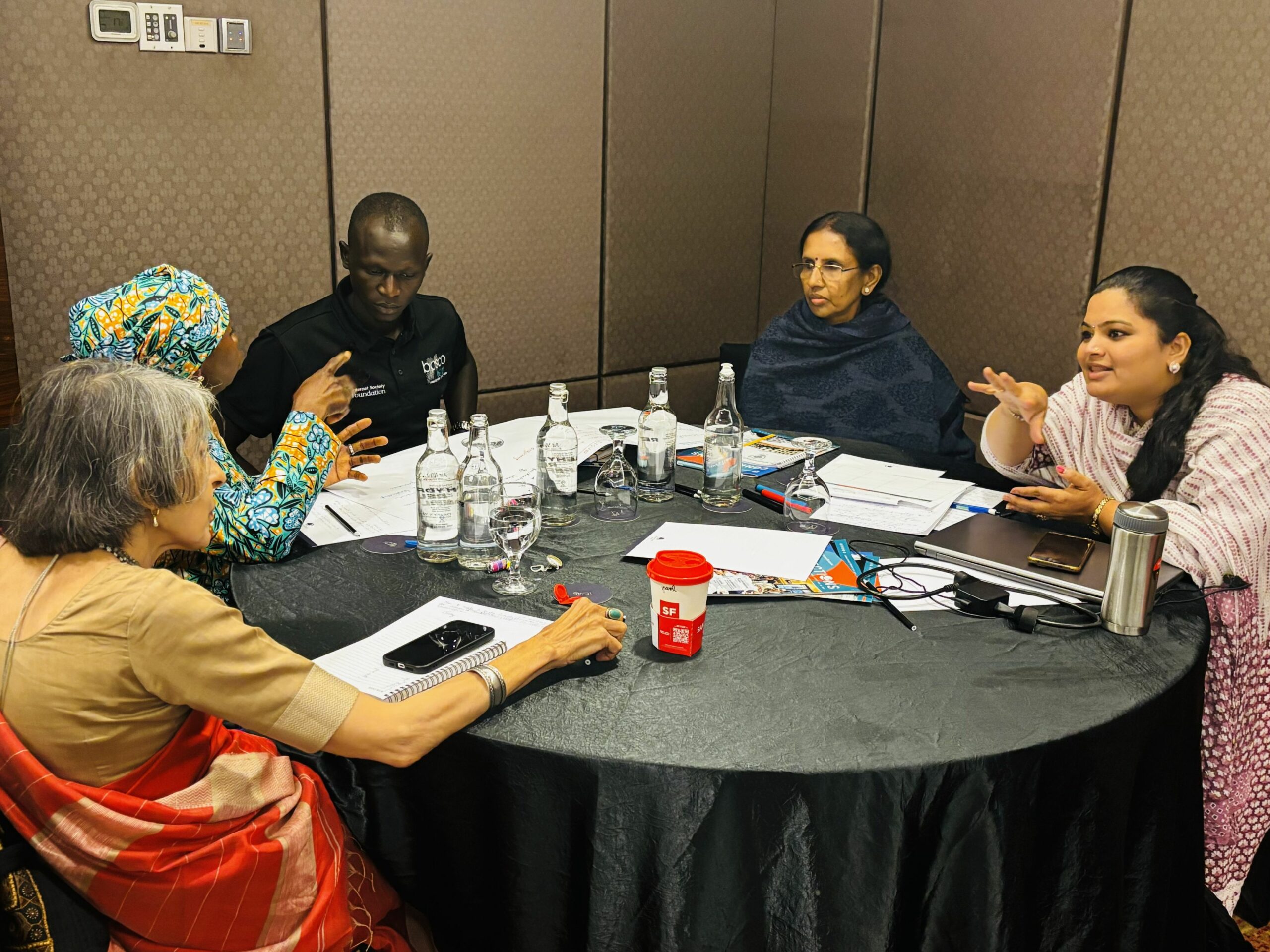
WiSE recently hosted its first international activity with a Women in STEM workshop in Kuala Lumpur, Malaysia. For four days, government officials, researchers, educators, women leaders and civil society representatives from Brunei, India, Malaysia, Pakistan, The Gambia and Uganda came together to examine how to turn progress into meaningful and sustainable change for women.
Research and scoping studies from Brunei, Malaysia and India encouraged participants to look beyond national averages and institutional success stories. The phrase “good is not good enough” urged participants to consider why high participation rates may be incomplete without data on retention and employment rates, confidence and recognition, or movement into positions of leadership and influence.
The conversation also moved beyond programmes and policies to the experiences of women themselves. Participants considered how teaching approaches, mentorship, safer learning environments and more inclusive institutional practices can help create the conditions for women to succeed, and women leaders reflected on their own journeys, highlighting the value of allies, mentors, and supportive professional networks. Civil society partners also showcased how community-based and digital approaches are helping young women and girls outside formal education build technical skills and create pathways to employment.
By the end of the session, stakeholders from around the Commonwealth had identified priorities for the coming year, the changes they hoped to see, the evidence that could demonstrate progress, and the partnerships and support needed to progress their work. A Community of Practice was also established to sustain collaboration, giving partners a space to exchange knowledge, troubleshoot implementation, share resources, and develop joint initiatives.
Closing the event, Malaysia’s Ministry of Higher Education reinforced its commitment to women in STEM by announcing dedicated funding for research and new collaborations with workshop partners. By backing local innovation with policy support and resources, the ministry’s actions offer a strong example for other Commonwealth countries looking to make similar investments.
These efforts sit at the intersection of COL’s strategic priorities to progress education, skills, and gender equality. They also build on some of the collective actions set out in the Gaborone Statement, advancing equity with quality at scale, expanding skills for productive and resilient lives, and progressing some of the cross-cutting commitments that open opportunities for underserved learners.
With COL support, governments, education and training institutions, employers, researchers and civil society must now sustain the actions set out in Kuala Lumpur to test what works, track what changes, and share evidence to help reform the systems shaping women’s opportunities in STEM. This means looking beyond the gains that are easiest to count and asking what gains can truly translate into lasting opportunities for women.