

By Mr Robert Okinda, Adviser: Skills
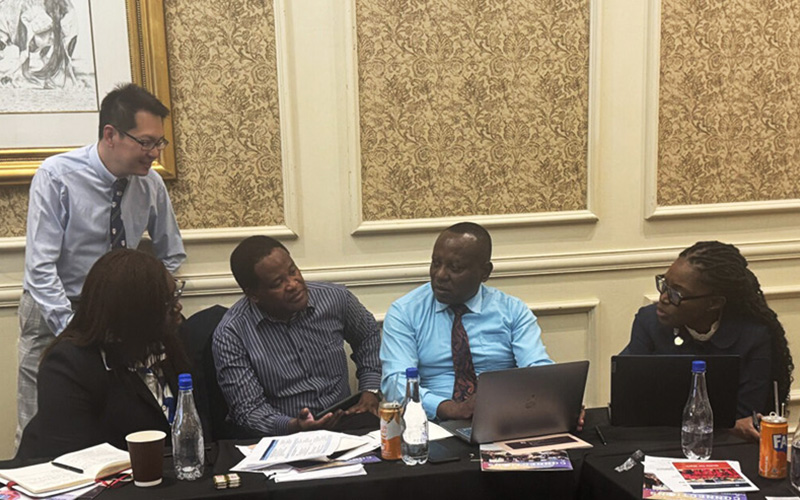
Resilience and adaptability are imperatives for Technical and Vocational Education and Training (TVET) and the future of work. The recent pre-forum session at the Pan-Commonwealth Forum on Open Learning (PCF11) held in Gaborone brought together participants from ministries and TVET institutions across the Commonwealth, including from Botswana, Fiji, Grenada, Jamaica, Kenya, Namibia, Nigeria, the UK, and Zambia, to discuss how blended TVET can be designed to develop skills for productive and resilient lives.
During the pre-forum session, discussions focused on strengthening resilience within TVET policy and collaborative practice, ensuring that TVET systems adapt to changing labour-market demands, while considering inclusion and gender responsiveness, emerging technologies, industry perspectives, and stakeholder management. The session highlighted the importance of delivering training that integrates digital and physical environments, supporting quality, affordable skills development through blended approaches and technologies across the informal, non-formal, and formal sectors. For resilient TVET systems, flexibility, inclusivity, accessibility, and openness are essential.
To ensure flexibility in delivery, a blend of face-to-face, self-paced, online, resource-based, and distance learning modalities, with flexible attendance patterns, should be implemented. TVET practitioners in Eswatini, Mauritius, Rwanda, Nigeria, Botswana, Kenya, Jamaica, Ghana, Zambia, Namibia, and Samoa have applied COL’s Competence Standards for Blended TVET to guide the design and implementation of blended training approaches. These initiatives place particular emphasis on leveraging technology to enhance training quality and strengthen skills development.
The promotion of inclusivity and accessibility in competency-based training and assessments requires their design to intentionally engage a broader spectrum of trainees, including those from marginalised communities and remote areas with limited access to conventional TVET institutions. Facilitating equitable access to quality, affordable skills development across emerging sectors such as the green, blue, digital, and creative (orange) economies is essential to enhancing employability in decent work and advancing Sustainable Development Goal 4 (SDG 4). COL’s Gender Strategy guides mainstreaming of gender in blended TVET programmes, while Assistive Technology in Blended TVET Guidelines provides tips for inclusion. These strategies create an environment that encourages inclusivity and accessibility in blended TVET.
To foster openness, TVET practitioners should prioritise the use of free, openly licensed training resources, recognise prior and current competencies, and adopt competency-based, blended TVET to facilitate micro-credentialing opportunities while reducing costs for both trainees and institutions. COL’s micro-credentials framework guides TVET institutions in creating flexible, targeted, and cost-effective pathways that allow trainees to acquire specific, industry-relevant skills and competencies quickly. COL’s TVET Online Toolkit includes micro-learning resources available both online and offline that support self-directed learning. COL is currently developing a framework for Assessor Training, Verifier Training, and Recognition of Prior Learning (RPL) in blended TVET to improve the quality and consistency of assessment processes while recognising competencies acquired through formal and informal learning pathways, thereby enhancing overall credibility and effectiveness of blended TVET assessments. COL’s Frugal AI initiative, being planned at the Vocational Training Development Institute in Jamaica, aims to provide innovative solutions for open, offline, and affordable access to artificial intelligence technologies. These strategies aim to improve accessibility, affordability, and quality of TVET through open, technology-enabled approaches.
These initiatives also resonate with the resulting PCF11 conference statement, which outlined a compelling vision under the theme ” Skills for Productive and Resilient Lives.” It called for expanding accessible, work-relevant learning opportunities, aligning micro-credentials and recognition of prior learning with employment trends, and embedding green, blue, digital, and orange economy skills in training programmes. These initiatives can enhance the portability of skills and employability in decent jobs, while also promoting sustainable trade and investment within the Commonwealth through policy and collaborative practice.
The pre-forum session and the other sessions at PCF11 will help drive collective action by TVET practitioners to promote economic transformation and environmental stewardship, thereby leading to productive, resilient lives. To build resilient TVET systems, policy makers and regulators who attended PCF11 have since established a Commonwealth-wide community of practice and learning for practitioners overseeing monitoring and evaluation, quality, standards, and accreditation of blended TVET programmes, centres and trainers. Maintaining this momentum, Technical and Vocational Teacher’s College (TVTC) in Zambia recently hosted the Open TVET Expo in November 2025 as part of TVTC’s Golden Jubilee celebrations. COL’s President, Professor Peter Scott, delivered a keynote at the event, which was officially opened by Dr Brilliant Habeenzu, Permanent Secretary, Ministry of Technology and Science. A key highlight was the launch of a competency-based curriculum for the blended delivery of pre-service and in-service TVET training, developed with COL’s support.
Resilient TVET stems from frameworks that recognise, value, and validate each learner’s pathway and skills, whether acquired formally or informally; where adaptability fosters opportunities; and where training empowers lifelong learners to build sustainable futures that benefit both community and Commonwealth.
#BlendedLearning #FutureOfWork #SkillsDevelopment #SkillsForWork #ResilientTVET