

Launched by COL in 2020 with support from New Zealand’s Ministry of Foreign Affairs and Trade (MFAT) and regional leadership from PACFOLD at the University of the South Pacific, the Partnership for Open, Distance and Flexible Learning (ODFL) set out to strengthen Pacific education systems and expand access for those most often left behind, youth and women. Five years on, the partnership has worked across nine island countries, engaging more than 7,200 teachers, around 100 officials and well over 5,000 youth — becoming a regional model for flexible, inclusive learning and crisis-ready systems.
From Vision to Action
Designed in 2019 through a multistage consultative process, ODFL was officially launched in November 2020 with PACFOLD as the regional coordination hub. Early delivery coincided with COVID-19, and COL mobilised quickly through country Focal Points. In the early months, a rapidly growing OER collection, now over 300 Pacific-contextualised resources, helped teachers keep learning going, which provided immediate, practical support.
Consultations with ministries and providers also shaped an online TVET Toolkit that would later be refreshed for Pacific culture and low bandwidth use. Regular regional coordination included discussions that built on PCF10’s focus on resilient systems.
Training Teachers, Empowering Learners
Delivery was guided by three pillars: (1) teachers; (2) TVET educators, and; (3) youth. A suite of MOOCs and regional workshops were offered throughout the period, reaching more than 7,000 educators. Completion and satisfaction data were continuously collected and used to inform ongoing improvements.
Targeted micro-credentials and short policy courses helped education officials understand how to integrate ODFL approaches into planning and policy frameworks across the region. Innovative, AI-supported OER tools piloted with STEM teachers enabled educators to co-create culturally relevant lessons at speed and share them across the region.
Courses were delivered in blended, in-person, online, and offline modes so remote teachers could participate despite connectivity gaps.
Youth and Women at the Heart of Change
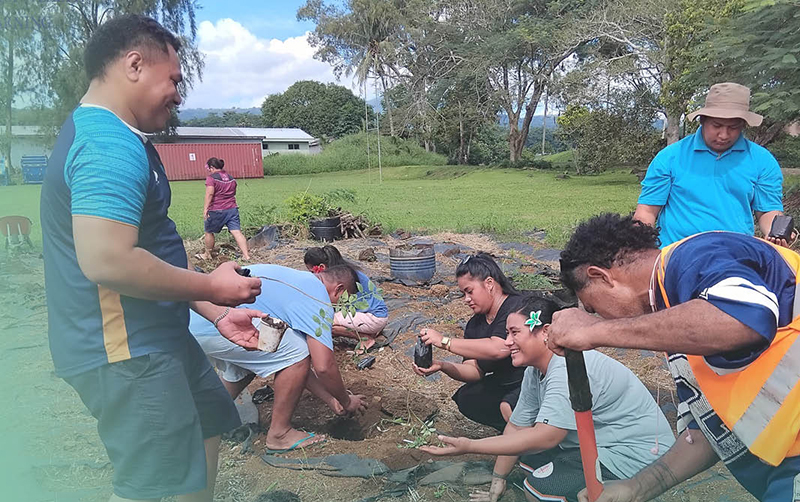
Community outreach, delivered through a network of local NGOs, brought practical skills to young people, especially women. Training covered entrepreneurship, small business basics, and digital skills. Local facilitators also mentored learners to apply what they learned. Reflections in the project, with two-thirds of participants being women, showed tangible livelihood gains. Among FRIEND Fiji graduates, 55 percent found employment and 27 percent started a business — a pattern echoed in other sites where cohorts reported new jobs or microenterprises.
Technology and Evidence for Resilience
The partnership also invested in tools and know-how that protect education data and services during crises, while respecting data sovereignty. As ministries’ preferences evolved, COL shifted from a cloud-first concept to hybrid solutions (e.g., in-country backups, power protection, and targeted training) and supported recovery efforts, such as deploying MoodleCloud to quickly restore teaching after disruptions.
Alongside, OER repositories were consolidated for easier search and use, and a regional habit of data-informed, participatory learning took root, which strengthened policy and planning across the islands.
A Lasting Impact
An independent final evaluation was conducted against MFAT aligned criteria for efficiency, effectiveness, relevance, inclusion, and resilience. The evaluation found that the initiative not only met, but in many cases exceeded targets, in particular delivering strong value for money. Most importantly, these outcomes leave behind lasting gains in enhanced digital literacy, improved teacher competence, and more resilient systems from the community level to ministry leadership.
This story was originally published in the November 2025 issue of Connections. Access the full issue here.
Image Caption: Youth participants engage in practical techniques as part of the Basic Agriculture Skills course at the National University of Samoa, Upolu, Samoa, 2025.