

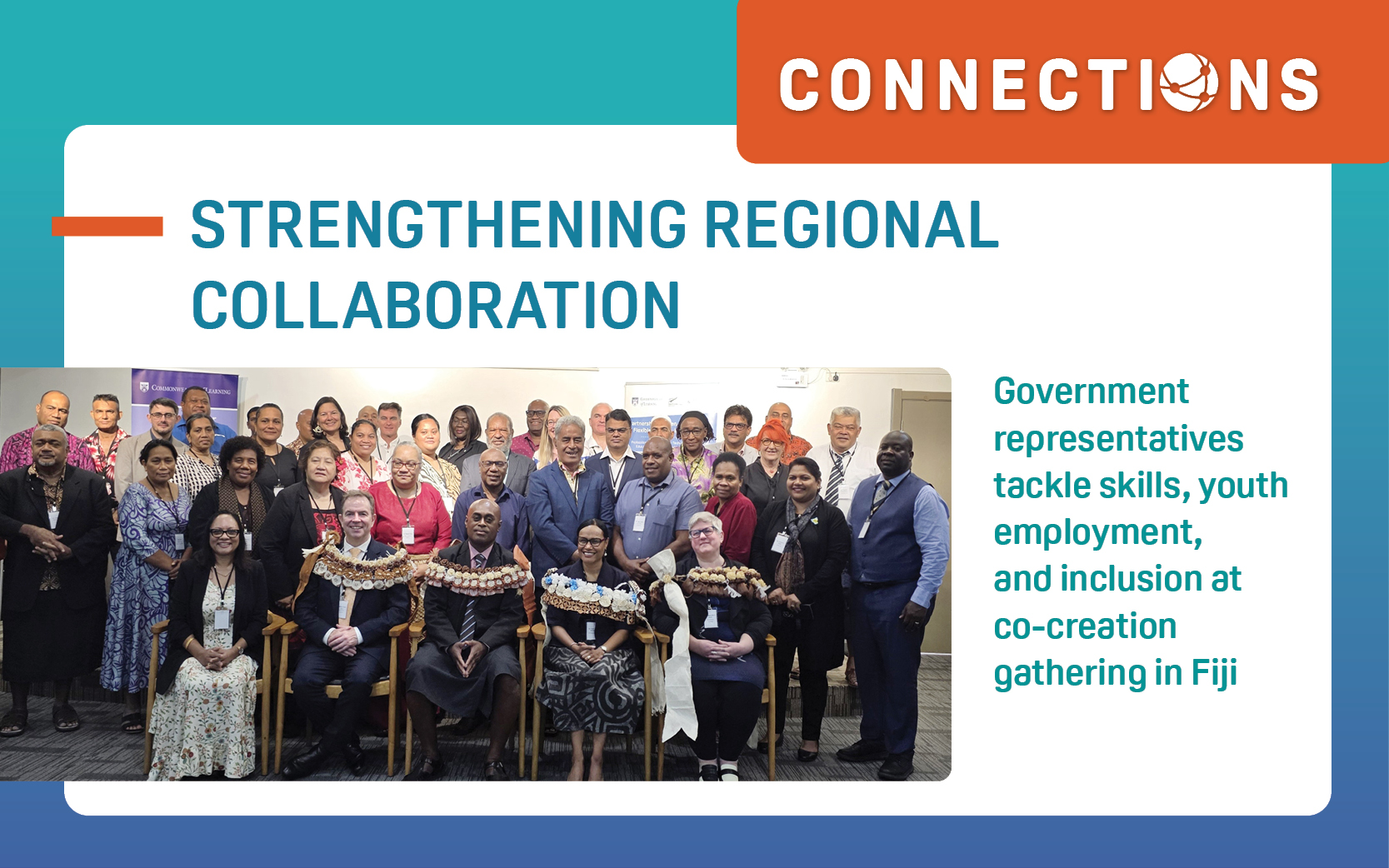
As part of COL’s ongoing commitment to strengthening regional collaboration and aligning with the national education priorities of Commonwealth countries in the region, Focal Points were brought together for a meeting in Nadi, Fiji, on 27 February 2026.
Focal Points are senior officials nominated by ministries of education, who play a key role in ensuring alignment between COL’s programmes and their country’s national priorities, supporting co-ordination, and keeping ministries informed of ongoing work.
UNDERSTANDING THE NEEDS OF SMALL STATES
While the Pacific region presents unique challenges, it also offers learning opportunities for other regions. Central to COL’s work is maintaining a deep understanding of the education needs of Small Island Developing States, such as the impacts of natural disasters and climate change, rapid technological change, and the growing digital divide.
Across much of the Commonwealth, demand for skills development and broader access to non-formal learning opportunities is growing, as technical and vocational education and training (TVET) reshape the educational landscape.
Ahead of the Focal Points Meeting, COL, in partnership with its PACFOLD centre at the University of the South Pacific, convened the Regional Design Consultations for Phase 2 of the Pacific Partnership for Open, Distance and Flexible Learning (ODFL). Hosted by the Fiji Ministry of Education and supported by New Zealand’s Ministry of Foreign Affairs and Trade, the consultations brought together more than 40 senior officials, academics, and technical experts from 11 Commonwealth countries, including Australia and New Zealand, as well as a delegate from the Marshall Islands.
Opening the consultations, the COL team outlined a forward-looking vision for education in the Pacific, highlighting a range of critical priorities, including strengthening STEM teaching capacity, expanding TVET pathways, addressing the needs of youth not in employment, education, or training, advancing gender equality, disability, and social inclusion, and building climate resilience.
STRENGTHENING REGIONAL TIES
Building on the momentum of the 2025 Pacific Focal Point Meeting in Solomon Islands, the Pacific Focal Points Meeting was attended by representatives from Fiji, Kiribati, Nauru, New Zealand, Papua New Guinea, Samoa, Solomon Islands, Tonga, Tuvalu, and Vanuatu.
While the preceding workshops provided deep engagement with national representatives from across education organisations, the Focal Points Meeting provided an opportunity to reconnect, exchange perspectives, and strengthen regional ties among Focal Point representatives.
Focal Points shared briefings on national experiences, education priorities, and progress updates, building on discussions from the previous year that highlighted issues such as teacher professional development, open educational resources, microcredentials, skills education, inclusion, and the growing influence of AI in education.
Through the Focal Points network, government representatives strengthened collaboration by co-creating and aligning programmes with COL to address national priorities while advancing shared Commonwealth education goals across the region. This collective effort will help shape COL’s immediate initiatives and inform its next strategic plan.
AN OPPORTUNITY FOR CO-CREATION
The meeting reaffirmed the value of COL’s Focal Points network as a vital platform for collaboration and co-creation in open learning initiatives. It enables COL and Member States to jointly shape programmes that respond to national priorities while advancing broader Commonwealth education priorities across the region.
Insights from the gathering will not only inform COL’s immediate work but also contribute to the development of its next strategic plan, ensuring that COL’s efforts remain firmly grounded in the evolving needs of Commonwealth countries.
This story was originally published in the April 2026 issue of Connections. Read the full issue: https://hdl.handle.net/11599/6130