

As the world of work continues to evolve, Technical and Vocational Education and Training (TVET) remains a key pathway for developing the practical skills demanded by today’s labour market. Through lifelong learning, TVET empowers youth and adults with the hands-on skills to participate in local economies, strengthen livelihoods, and contribute to community and national growth.
As trades shift with the emergence of new technologies, TVET systems must adapt to keep pace. The digital transformation of TVET ensures its continued relevance while simultaneously broadening access, reaching learners who have traditionally been unable to participate in face-to-face training.
At COL, we support ministries responsible for TVET and other regulatory bodies at the national and regional level in overseeing the quality and standards of blended learning across institutions and workplaces.
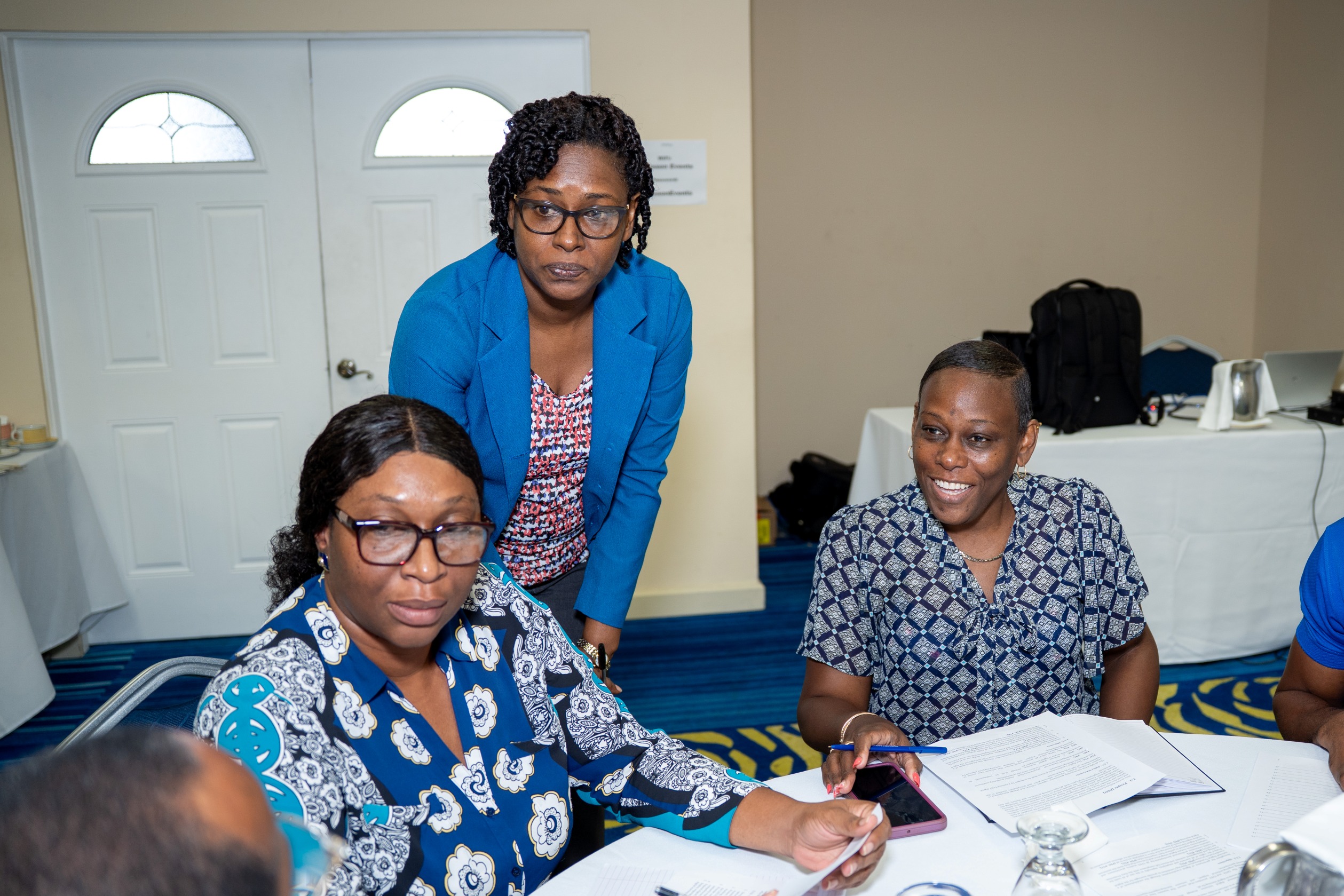
One country that has recently made significant strides towards digitally transforming its TVET system is Grenada. Recently, the Grenada National Training Agency (GNTA), collaborating with its Board, the Grenada Council for Technical and Vocational Education and Training (GCTVET) and the Ministry of Education convened a session attended by over 40 stakeholders, including representatives from the Ministry of Education; the Division of Youth; the Ministry of Mobilisation, Implementation and Transformation; the Digital Transformation Agency; the Division of ICT; the Caribbean Digital Transformation Project (CARDTP); the chair and other directors of the GCTVET; the entire staff of the GNTA; the Grenada National Council for the Disabled; His Majesty’s Prison; non-governmental organisations; private and public training providers; and other industry leaders. COL’s focal point for Grenada, Mr Kade De Coteau, also participated in the session.
As the first major TVET initiative supported by COL in Grenada, the workshop adopted a thematic approach, bringing structure, coherence, and practical focus to what is otherwise a complex, cross-cutting reform effort. National actors and sectoral representatives were introduced to the 9P’s, foundational themes critical to the successful transformation of TVET systems. In considering purpose, policy, people, process, price, partnerships, performance, project, and platform, the 9P’s ensure digital transformation is purposeful, balanced, and sustainable. They also bring people, systems, and technology into alignment, setting clear priorities, timelines, and impact indicators.
In his opening remarks, Mr Elvis Morain, Permanent Secretary at the Ministry of Education, reiterated the foundational importance of the 9P’s. “They work together as a complete system. Without all of them aligned, TVET reforms cannot be sustainable or effective.” Dr Kemoy Edwards, the Chief Executive Officer of the GNTA, added that digital transformation succeeds when technology enables institutional change, empowers learners, and scales skills development to meet evolving workforce demands.
Stakeholder involvement from key sectors during policy development is imperative for ensuring effective implementation. In this context, Roy McEwen, Head of Grenada’s Digital Transformation Agency, described the initiative as timely, important, and in alignment with Grenada’s national digital agenda. Marlene Abraham-Finlay, who coordinated the GNTA policy and strategy development team, similarly welcomed the strong stakeholder support for shaping a clear, inclusive roadmap to transform TVET and strengthen the workplace.
Robert Okinda, Adviser: Skills, COL, highlighted the significance of Grenada’s efforts, “The digital transformation of TVET enables open access, strengthens knowledge sharing, and enhances skills and competencies, while democratising opportunity to build more inclusive and resilient education systems.” He also added that the new policy will serve as a successful case study for other Small States wanting to transform their TVET systems.
COL positions digital transformation as a central enabler of resilient, inclusive, and sustainable education and training systems. Through close partnerships with governments and institutions, we are strengthening institutional, social, and economic resilience, particularly in Commonwealth Small States.