

As the gap between education and employment widens, universities are rethinking how learning translates into real-world opportunity. Against this backdrop, a new phase in strengthening graduate employability is underway at Yashwantrao Chavan Maharashtra Open University (YCMOU) in Nashik, India, through its collaboration with COL’s Higher Education Initiative and the Commonwealth Educational Media Centre for Asia (COL-CEMCA).
As part of this sustained partnership, YCMOU is implementing a phased graduate employability initiative to improve learner outcomes and strengthen institutional capacity. This collaborative effort reflects the shared commitment of COL-CEMCA to enhancing the quality, relevance, and responsiveness of higher education through open, distance, and technology-enabled approaches.
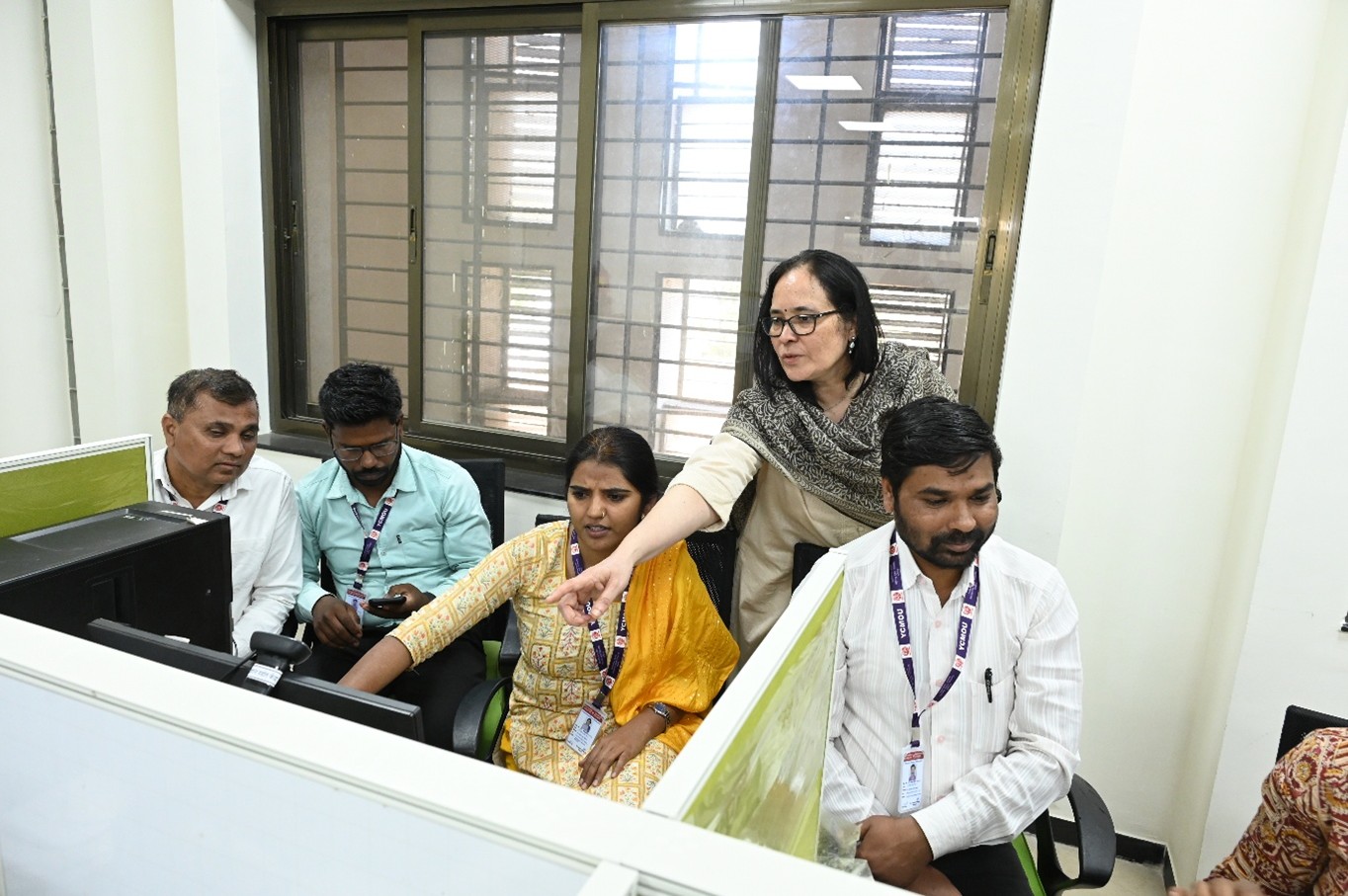
So far, the COL-CEMCA and YCMOU partnership has supported an institutional employability readiness survey, the development of an employability framework to guide strategic implementation, and the use of Results-Based Management to strengthen monitoring, evaluation, accountability, and learning. As part of this work, a session on course enhancement for graduate employability was recently held at the YCMOU campus in Nashik, which was inaugurated by Professor Sanjeev Sonawane, Honorary Vice-Chancellor, YCMOU.
With a central focus on the shift from traditional content-driven teaching to outcome-based education, participants were guided through curriculum mapping and the review of existing courses to ensure alignment with employability indicators, technical competencies, and workplace expectations. They also explored assessment approaches that emphasise real-world work challenges rather than memorisation. As a result, several courses, including AI for Teachers, Digital Literacy, Entrepreneurship Development, and Introduction to Fintech, were strengthened through competency and employability alignment, skill-based design, and clearer links between learning outcomes and career pathways.
Reflecting on the significance of the initiative, Dr Basheerhamad Shadrach, Director, CEMCA, noted, “Graduate employability must be intentionally built into curriculum, pedagogy, and assessment.”
This emphasis was echoed in reflections from workshop participants. Dr Vidya Ahire, Academic Coordinator, School of Digital Education, YCMOU, highlighted the value of the sessions in advancing innovative teaching approaches, effective curriculum design, and the integration of digital resources in higher education.
Similarly, Dr Dhammaratna Jawale, Assistant Professor in Journalism and Mass Communication, School of Humanities and Social Sciences, YCMOU, observed that the workshop focused on the meticulous process of curriculum mapping. “We learned to align every module with specific professional competencies, technical skills, and employment readiness indicators. The workshop also introduced an innovative approach to assessment design, moving beyond rote testing toward evaluations that reflect authentic workplace challenges.”
This project aligns strongly with the Gaborone Statement adopted at the Eleventh Pan-Commonwealth Forum on Open Learning held in Botswana last year, which calls for equity with quality at scale, skills for productive and resilient lives, and authentic, competency-based assessment. The COL-CEMCA and YCMOU collaboration demonstrates how higher education institutions can respond to evolving workforce demands while promoting inclusion, relevance, and future readiness.
“This partnership reflects our shared commitment to inclusive, skills-oriented, and future-ready higher education,” said Professor Jane-Frances Agbu, Adviser: Higher Education at COL. The initiative marks an important step toward embedding employability within higher education systems across the Commonwealth.