

By Dr Betty Obura Ogange, Education Specialist: Teacher Education, COL
As generative AI rapidly reshapes how educational content is created, adapted and shared, teacher education faces a deeper question than access alone.
For many years, conversations on OER focused primarily on free materials, open licences and reducing costs. These aspects remain important, but in teacher education, the more urgent challenge is now one of agency.
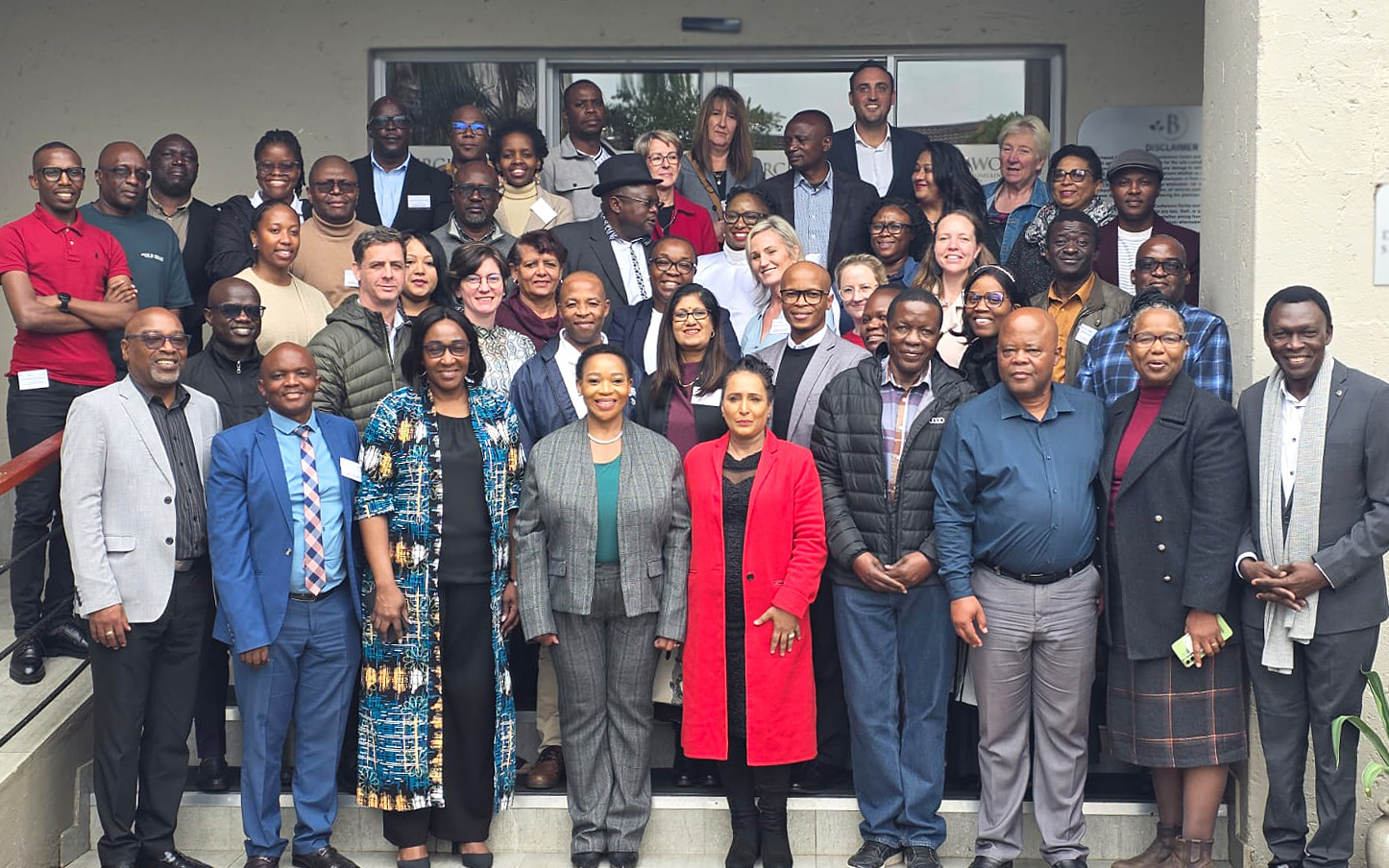
Who produces knowledge? Whose contexts shape the resources used in classrooms? How do teacher educators move from being users of content to becoming co-designers, adapters and contributors to a shared professional knowledge base? These questions shaped the recent Regional Workshop on OER and Artificial Intelligence (AI) in Teacher Education, held in Johannesburg, South Africa, in April 2026.
Co-hosted by the Commonwealth of Learning; the Department of Higher Education and Training (DHET), South Africa; the Wits School of Education, University of the Witwatersrand; and the African Deans of Education Forum (ADEF), the session brought together 59 policymakers, teacher educators, quality assurance bodies and regional partners from across Southern Africa to explore how OER and AI can support more collaborative, locally grounded approaches to teacher education.
Building on the incubation phase of COL’s Network for Open Teacher Education in Sub-Saharan Africa (NOTES), the meeting marked an important transition from exploration to co-ordinated regional action. Its purpose was not simply to introduce OER, but to consolidate a shift from isolated OER activities toward institution-led, collaborative implementation across teacher education systems in the region.
This challenge is important because education innovations tend to remain at the project-level and are commonly dependent on individual champions, temporary funding or short-term enthusiasm. NOTES is being shaped differently: as a network for ministries, institutions, deans, teacher educators and partners in various regions to work together more sustainably over time.
This strategic approach aligns with the UNESCO Recommendation on OER (2019), which calls for action in five areas: building capacity, developing supportive policy, encouraging inclusive and equitable access to quality OER, nurturing sustainability models and promoting international cooperation. In Johannesburg, these principles were translated into practical conversations around open licensing, quality assurance, repository workflows, policy alignment and institutional implementation.
The inclusion of AI gave the discussions an important contemporary dimension. Generative AI is already changing how educators search for, adapt and create teaching materials. It can support lesson planning, translation, localisation, assessment design and rapid prototyping of resources, especially in multilingual and under-resourced contexts. At the same time, participants avoided the easy excitement that often surrounds new technologies. AI was positioned as a support tool, and not as a replacement for educators. Participants explored prompt design, AI-supported adaptation and methods for critically evaluating outputs across different AI tools.
The convergence of OER and Generative AI creates opportunities and risks for teacher education. While AI can accelerate the speed of content creation, it cannot guarantee educational value. Teacher educators still need to determine whether resources are accurate, inclusive, curriculum-aligned, culturally relevant and pedagogically sound. They must also recognise the risks of bias, misinformation and overdependence on automated systems. In this sense, the session placed AI where it belongs: within the professional practice of educators, guided by ethics, quality assurance and local knowledge.
Questions of implementation and sustainability were also explored. COL’s Review and Improvement Model (COL RIM) was referenced as a practical tool for supporting the sustainable implementation of OER. Acknowledging that advocacy alone isn’t sufficient to support implementation, the COL-RIM Handbook guides post-secondary institutions through a structured self-review process, with best practices for evidence-based improvement and implementation planning. The Handbook helps institutions assess their current capacity, identify gaps, strengthen quality assurance processes and monitor progress over time.
Participants also engaged with COL’s Framework for OER in Teacher Education, reviewing its domains to consider how it could support implementation of a Network of Practice across diverse institutional settings. Discussions focused on how teacher educators can find, evaluate, adapt, co-create and openly license resources, particularly in low-resource contexts where digital infrastructure remains uneven. The NOTES digital workspace and regional repository workflows were also introduced as mechanisms for ongoing collaboration and knowledge sharing.
The reflections of the Deputy Minister of Higher Education and Training, Dr Nomusa Dube-Ncube, provided a strong policy and intellectual anchor for the session. Positioning OER and AI within a broader shift from passive knowledge consumption to active knowledge production, she urged institutions to take responsibility for shaping education systems that preserve African intellectual heritage while preparing learners and teachers for a technology-rich future. Her message also highlighted the importance of disciplined implementation, institutional commitment, ethical AI governance and stronger continental collaboration.
The role of ADEF is significant in this regard. As a regional platform of education deans, ADEF can help move the work from individual interests to institutional leadership. Deans are well placed to influence programmes, policy conversations, staff development, incentives and quality systems, while also supporting regional mobilisation and knowledge exchange among schools of education. In a field where many institutions face similar constraints in implementing open teacher education, ADEF’s leadership and network are essential.
The meeting in Johannesburg further demonstrated that OER and AI can become more than technical themes in teacher education. Together, they can support a larger shift towards institutional agency, regional collaboration and African knowledge production. However, this will depend on whether the work remains grounded in professional practice, ethical uses of technology, quality assurance and sustained leadership.
The launch of the NOTES Southern Africa Node at the end of the session signalled an important step towards a regional Network of Practice with the potential to grow over time. The future of open teacher education will not be shaped by technology alone, but by the extent to which institutions can build cultures of collaboration, critical digital practice and locally grounded knowledge creation.
The work ahead is clear. We must turn frameworks into co-creative practice, repositories into living knowledge spaces, and commitments into measurable institutional change. The promise of initiatives such as NOTES lies not only in expanding access to resources but in strengthening the collective capacity to shape education systems from within.