

True inclusion in education cannot be achieved if any group of learners is left behind. Over the past several decades, sustained efforts to remove barriers facing girls and women have transformed access to education in many parts of the world. While those gains remain essential and must continue, another challenge has become increasingly visible in a growing number of countries: the disengagement of boys and young men from education, particularly at the secondary and tertiary levels.
Recognising this challenge reflects a broader principle that different learners face different barriers, and education systems must respond accordingly. Understanding why some boys disengage and, equally importantly, why others succeed despite difficult circumstances is critical to advancing inclusive education for everyone.
Developed countries observed boys’ disengagement from education more than two decades ago, and many middle-income countries later experienced similar trends. As many countries achieved universal or near-universal enrolment at the elementary level and made progress in overcoming longstanding gender disparities affecting girls and young women, gender gaps disadvantaging boys began to emerge. This pattern persists today in many Commonwealth countries in the Caribbean and the Pacific, as well as in South Africa, Bangladesh, and Sri Lanka.
Research across these countries has identified notions associated with toxic or hegemonic masculinity as an important driver of this trend. These social norms can make certain subjects, individual sports, or academic success seem “not masculine” enough, with peer pressure reinforcing these stereotypes. Socio-economic challenges and individual circumstances can further compound these pressures, adding dimensions of class, family, and community to the issue.
Unpacking the problem also requires questioning some of the beliefs that have come to dominate discussions about boys’ disengagement from education. One widely held view, for instance, is that boys growing up in women-headed households are less likely to succeed educationally, a disadvantage thought to be compounded by the predominance of women teachers in schools and the resulting lack of male role models.
We recently explored these beliefs through research in the Caribbean, investigating whether boys really need a father or male teacher as a role model to succeed in education. Drawing on in-depth narratives, the study examined the lived experiences of men who succeeded in education against the odds, seeking to better understand the factors that enabled their success.
A majority of study participants identified their mothers as their main source of inspiration. Several had largely absent fathers, and most lacked male educational role models. Instead, mothers, female teachers, mentors, and community members were more often credited as critical enablers of their educational success. Community support also helped participants resist negative peer pressure. Positive peers, supportive community members, and participants’ own self-awareness and resilience helped them stay focused on their education.
The study also found that socio-economic background alone did not determine educational success. While it matters for both boys and girls, participants pointed to school culture, teaching quality, and opportunities to take part in activities such as sports and the arts as important influences on their educational journeys.
Boys can achieve significant academic success in difficult circumstances when the right support systems are in place. Supportive relationships, positive school environments, and individual resilience and determination all matter. Mothers, teachers, mentors, peers, and community members can provide this support, regardless of gender, while engaging school cultures can help boys see the value of education for their lives and future.
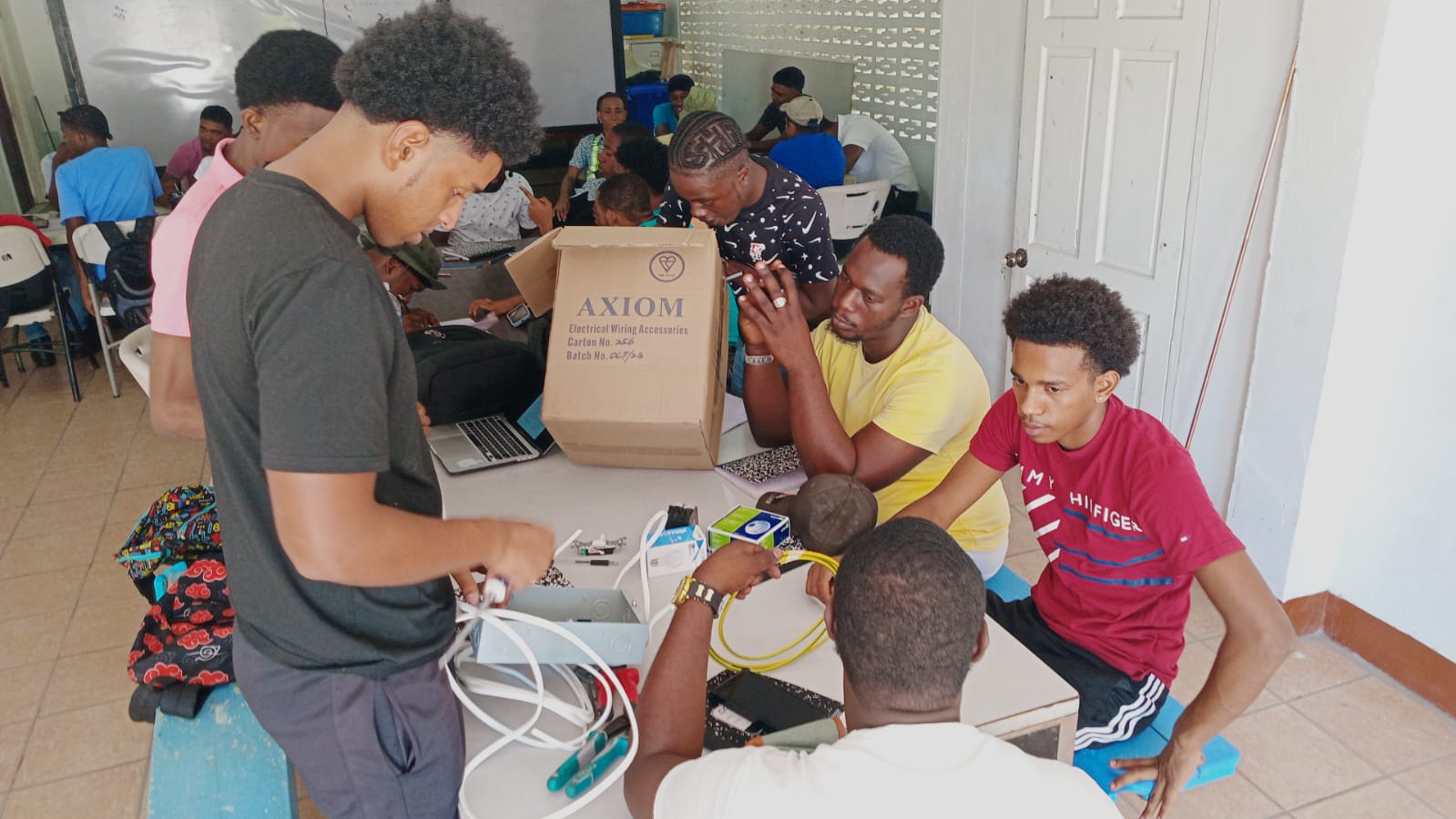
Drawing on this research and other available evidence, COL developed an innovative open school concept grounded in a blended learning approach. The model proposes integrating academic education with vocational training, alongside community- and peer-based mentoring and innovative learning activities, leading to dual certification. By combining flexible academic pathways with practical skills development and stronger social support, the model is designed to address several factors that contribute to boys’ disengagement while giving learners clearer connections between education, employment, and their future aspirations.
The intended outcome is to re-engage young people who may otherwise leave education, improve their prospects for completing secondary education, and equip them with both recognised academic qualifications and employable skills. Following encouraging feedback from many countries, COL plans to pilot this concept in selected Caribbean Member States.
As the pilot progresses, COL will support and strengthen this work to improve learning outcomes for young men and boys across the Commonwealth. What is learned in the Caribbean could offer valuable insights for other regions facing similar challenges. Ultimately, inclusive education requires recognising worrying trends as they emerge and responding to the different needs and barriers learners face, whoever they are. This is essential for creating education systems in which every learner has the opportunity to participate, succeed, and thrive.
Read the full study, Against All Odds: Understanding Men’s Success Amid Disengagement from Education in the Caribbean:
https://doi.org/10.56059/11599/6106