

Graduate employability is no longer simply about securing a first job; it is about preparing graduates to navigate a rapidly changing world of work with confidence, adaptability and purpose. Yet gaps between what students learn and what workplaces need continue to make this transition difficult.
At the heart of COL’s work with the Higher Education Commission (HEC) in Mauritius is a vision of higher education that does more than award qualifications, equipping learners with capabilities that remain relevant in changing economies and societies. Our partnership has created a platform for collective action, bringing education, government, industry and professional bodies together to reimagine how institutions can systematically build, demonstrate and sustain graduate employability.
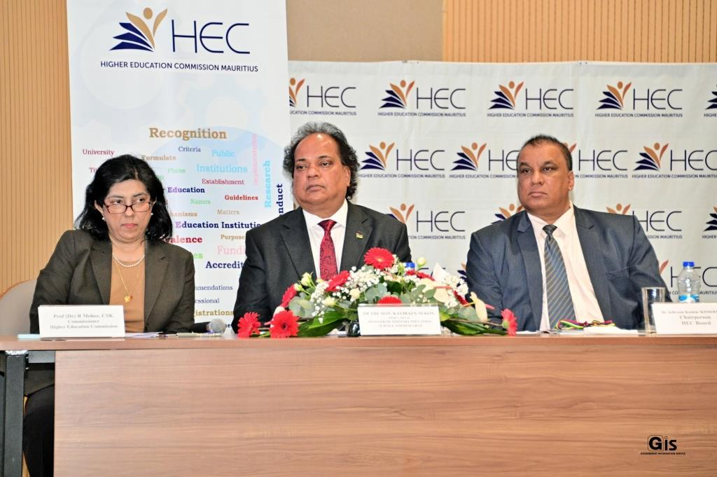
Against this backdrop, COL and HEC Mauritius convened a national stakeholders’ workshop in September 2026 to strengthen graduate employability and better align higher education with evolving labour-market needs.
Ahead of the workshop, a status review was undertaken as a key component of Phase 1 of the project to better understand the challenges facing graduates in Mauritius. It identified gaps between what graduates learn and the skills and experience employers need, particularly in practical workplace experience, communication, emotional intelligence, professional conduct and digital skills. Limited internship opportunities and weak links between higher education and industry also make the transition into employment more difficult. The review also highlighted the growing importance of skills such as AI and digital literacy, adaptability, critical thinking and sustainability, alongside continuous learning throughout a career. Together, the findings pointed to the need for stronger work-integrated learning, closer industry collaboration, more responsive curricula, professional certification and career development.
Building on this evidence, the workshop provided an opportunity to lay the foundation for more resilient and sustainable graduate employability processes in Mauritius. It brought together senior representatives from government, public and private higher education institutions, professional bodies, employers, industry and skills-development agencies to support the National Strategy for Higher Education, Science and Research 2025–2035, which identifies graduate employability as an important national priority.
Opening the event, the Honourable Dr Kaviraj Sharma Sukon, Minister of Tertiary Education, Science and Research, Mauritius, highlighted the continuing gap between employer expectations and university preparation. “One message is clear: our universities cannot work in isolation from the world of work. Let us work towards a higher education system that is more responsive, more connected to industry and, above all, better able to create opportunities for our young people,” he said.
Senior participants included Professor (Dr) Romeela Mohee, Commissioner of HEC; Dr Ashveen Kumar Kissoonah, Chairman of HEC; and Professor Khedo, Vice-Chancellor of the University of Mauritius, alongside leaders from other higher education institutions, professional bodies, government agencies and industry.
The session followed an evidence-informed process, with participants examining the findings of the Graduate Employability and Emerging Skills Study. The identified findings provided the basis for presentations, group activities and structured stakeholder discussions around three interconnected themes: skills gaps and opportunities; strengthening institutional employability processes; and strengthening stakeholder collaboration and support systems.
A key takeaway was that improving employability is a shared responsibility involving higher education institutions, employers, professional bodies and government. Participants recommended strengthening work-integrated learning, authentic assessment, career guidance, curriculum and competency mapping, employer engagement, graduate tracking, and the use of labour-market intelligence to inform programme improvement. Discussions also called for a shift from occasional engagement with industry towards sustained partnerships, with employers contributing more systematically to curriculum development, mentoring, applied projects, assessment and recruitment.
At the end of the session, stakeholders agreed that stronger impact would require institutions to move beyond isolated employability activities towards coordinated systems with clear governance, measurable outcomes, stronger employer partnerships and regular use of graduate and employer feedback.
“The next step is to move from evidence to implementation. COL will work with HEC Mauritius towards the development of a national employability policy and institutional frameworks that can guide coordinated action and strengthen connections between higher education and the changing world of work,” said Professor Jane-Frances Agbu, Adviser, Higher Education at COL.
Moving ahead, the next phase will turn the priorities identified through the review and stakeholder dialogue into practical frameworks for coordinated action. By moving from status review to dialogue, policy and implementation, Mauritius is laying the foundations for resilient, future-ready graduate employability that can inform and inspire action across the Commonwealth.