


Advancing lifelong learning calls for new ideas, pioneering research and strong collaboration across countries and regions. In this spirit, the Commonwealth of Learning (COL) is pleased to announce the appointment of ten new COL Chairs for 2026–2029. They are distinguished experts who are advancing open, distance and technology-enabled learning across the Commonwealth.
Established in 2010, the COL Chairs Programme brings together leading academics and researchers to provide thought leadership, foster innovation and strengthen regional collaboration. Over their three-year term, Chairholders will contribute their expertise to COL’s strategic priorities through research, advocacy and capacity building. Their work will support more inclusive, flexible, and quality learning opportunities and progress towards Sustainable Development Goal 4 (SDG 4).
COL congratulates the newly appointed Chairholders and looks forward to the unique perspectives and contributions they will bring to the programme.
Meet the COL Chairs for 2026–2029:
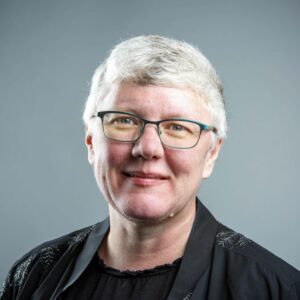
Professor Lynne Bowker
Université Laval, Canada
Prof Bowker’s work as a COL Chair will explore Open Educational Resources (OER), localisation and emerging technologies, including AI. Building on experience of how localised OER can strengthen student engagement, Prof Bowker aims to deepen collaboration within the open and distance learning (ODL) community, exchange knowledge on OER localisation needs and practices across the Commonwealth and share insights from using AI tools to support ODL.
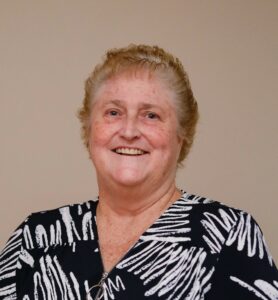
Professor Dianne Chambers
Edith Cowan University, Australia
Advancing inclusive practices and the use of AI and assistive technology in pre-service and in-service teacher education will be central to Chambers’ work. As a COL Chair, Chambers intends to develop a specialised training platform to promote ethical AI integration that supports diverse learning needs.
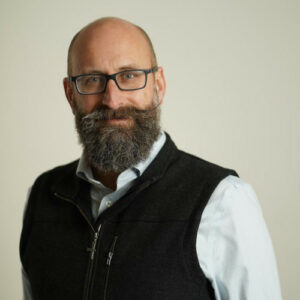
Professor Tim Drysdale
University of Edinburgh, United Kingdom
Through his appointment, Prof Drysdale will explore digitally mediated, open-source practical learning in STEM subjects, including remote and virtual laboratories and associated student and teacher feedback systems. Recognising the potential of open-source digital education to benefit learners and educators across the Commonwealth, Prof Drysdale aims to develop approaches to practical STEM education that can overcome resource constraints, be delivered at scale and be adapted to suit individual teaching contexts.
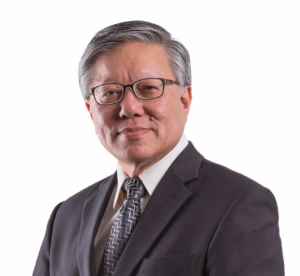
Professor Soon Fook Fong
Universiti Malaysia Sabah, Malaysia
Prof Fong will advance a national inclusive Open Educational Resources (iOER) ecosystem, integrating ethical AI, accessible resources and regional collaboration to support the development, adaptation and rebundling of high-quality iOER. Through this work, Prof Fong aims to contribute expertise in multimedia education and iOER, strengthen Commonwealth partnerships and widen access to flexible, affordable lifelong learning, particularly for learners with disabilities and underserved communities.
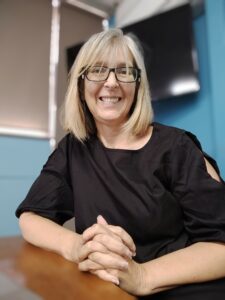
Professor Karen Ferreira-Meyers
University of Eswatini, Eswatini
Strengthening quality assurance and responsible AI adoption in open, distance and e-learning (ODeL) across Commonwealth Africa will be key priorities for Ferreira-Meyers. Based at the University of Eswatini, Ferreira-Meyers will lead an institutional ODeL quality-assurance review, design and pilot a teacher micro-credential, deliver AI capacity-building workshops, develop open multilingual resources and establish a regional community of practice with partner institutions.
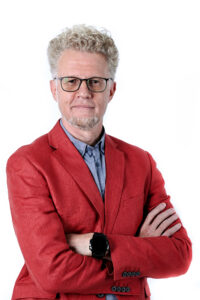
Dr James Keevy
JET Education Services, South Africa
Through the COL Chairs Programme, Dr Keevy aims to support the development of policies and systems that enable the integration of credentials, including micro-credentials, into national, regional and global education and training systems across Commonwealth Member States.
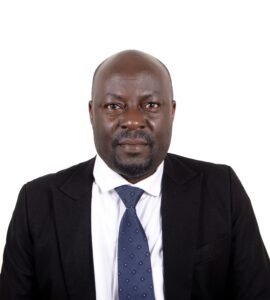
Professor Paul Muyinda
Makerere University, Uganda
Prof Muyinda’s research will advance inclusive, quality-assured and sustainable technology-enabled learning through capacity building, micro-credentials, accessible digital learning design and quality enhancement in ODeL across the Commonwealth. With more than two decades of leadership, research and policy experience in ODeL, he aims to strengthen flexible learning opportunities, promote innovation and support institutions in using digital technologies to expand equitable access to education and lifelong learning.
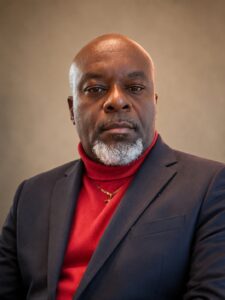
Professor Michael N. Nkwenti
University of Yaoundé I, Cameroon
Building on his expertise in educational technology and flexible learning, Nkwenti will promote OER, ODL and Technology-Enabled Learning (TEL) through policy development, capacity building, digital innovation, research and strategic partnerships. His work will support institutional transformation and expand equitable access to inclusive, resilient and high-quality lifelong learning opportunities across Cameroon and beyond.
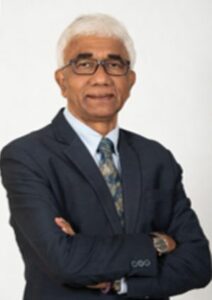
Professor John Arul Phillips
Asia e University, Malaysia
As a COL Chair, Prof Phillips will promote innovative, inclusive and AI-augmented ODL, strengthen educator capacity and share scalable practices across Commonwealth institutions. He also aims to apply his expertise in teacher education, ODL and AI in education to foster international collaboration, advance research and develop practical solutions that expand access to quality education.
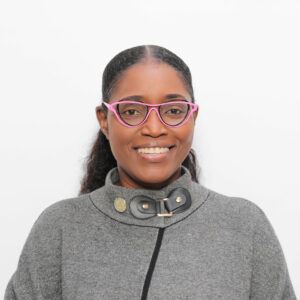
Dr Delize Williams
Vocational Training Development Institute, Jamaica
As Principal of the Vocational Training Development Institute, Dr Williams is well positioned to foster innovation, research and capacity building in ODL, particularly blended and technology-enabled technical and vocational education and training (TVET). Through this appointment, Dr Williams aims to support institutional transformation, strengthen regional collaboration and expand access to quality lifelong learning opportunities that improve lives and livelihoods across Jamaica and the Caribbean.