

By Dr Jako Olivier, Education Specialist: Higher Education, COL
What separates a self-taught technician from one with formal training and certification from a recognised institution, even when both have the same skills?
Both can be equally capable of the job. Yet, when it comes to applying for work or further study, one has a recognised, trusted qualification to demonstrate their abilities, while the other may struggle to prove what they know.
The difference is not necessarily one of skill, but one of access and recognition. Family responsibilities, financial constraints or geographic location may have limited the self-taught technician from pursuing formal education. Even though they have developed the same skills through practical experience and independent learning, they may have no formal credentials to demonstrate their competencies to employers or educational institutions.
For the millions of people who acquire skills through informal or non-formal learning, situations like these can create significant barriers to employment, career advancement and further education. Expanding access to learning is only part of the solution. People must also have opportunities to build on the skills they already possess and have their learning recognised and valued, rather than being required to start again.
This challenge was at the heart of discussions at ePIC Canada 2026, a pan-Canadian gathering hosted by Réseau pour le développement de l’alphabétisme et des compétences (RESDAC) at the Canadian War Museum in Ottawa. The conference brought together representatives from education, industry, technology, public policy and community development to explore how recognition can contribute to a more inclusive and resilient learning society. Its theme, “Lifelong learning. Lifewide recognition. All learning counts – for citizens and communities”, connected Canada’s skills priorities with the international ePIC movement’s commitment to valuing learning across the many settings in which it occurs.
Discussions highlighted the transformative potential of recognising skills acquired through different learning pathways, particularly through open badges, which can make people’s capabilities visible in ways that conventional credentials may not. For migrant workers, people working in the informal sector and others whose experience may not be formally recognised, open badges can provide verifiable evidence of practical skills developed through work and everyday life. By making these skills more visible and easier to communicate, badges can help individuals better demonstrate their knowledge and competencies and have them recognised across different educational and employment settings.
Making recognition meaningful
Making skills visible is not the same as ensuring they are recognised. A badge may provide evidence of learning, but its value depends on what it represents, the credibility of the organisation issuing it and whether employers and institutions trust it.
This raises a broader question: how can individual credentials become part of recognition systems that create meaningful opportunities for learners?
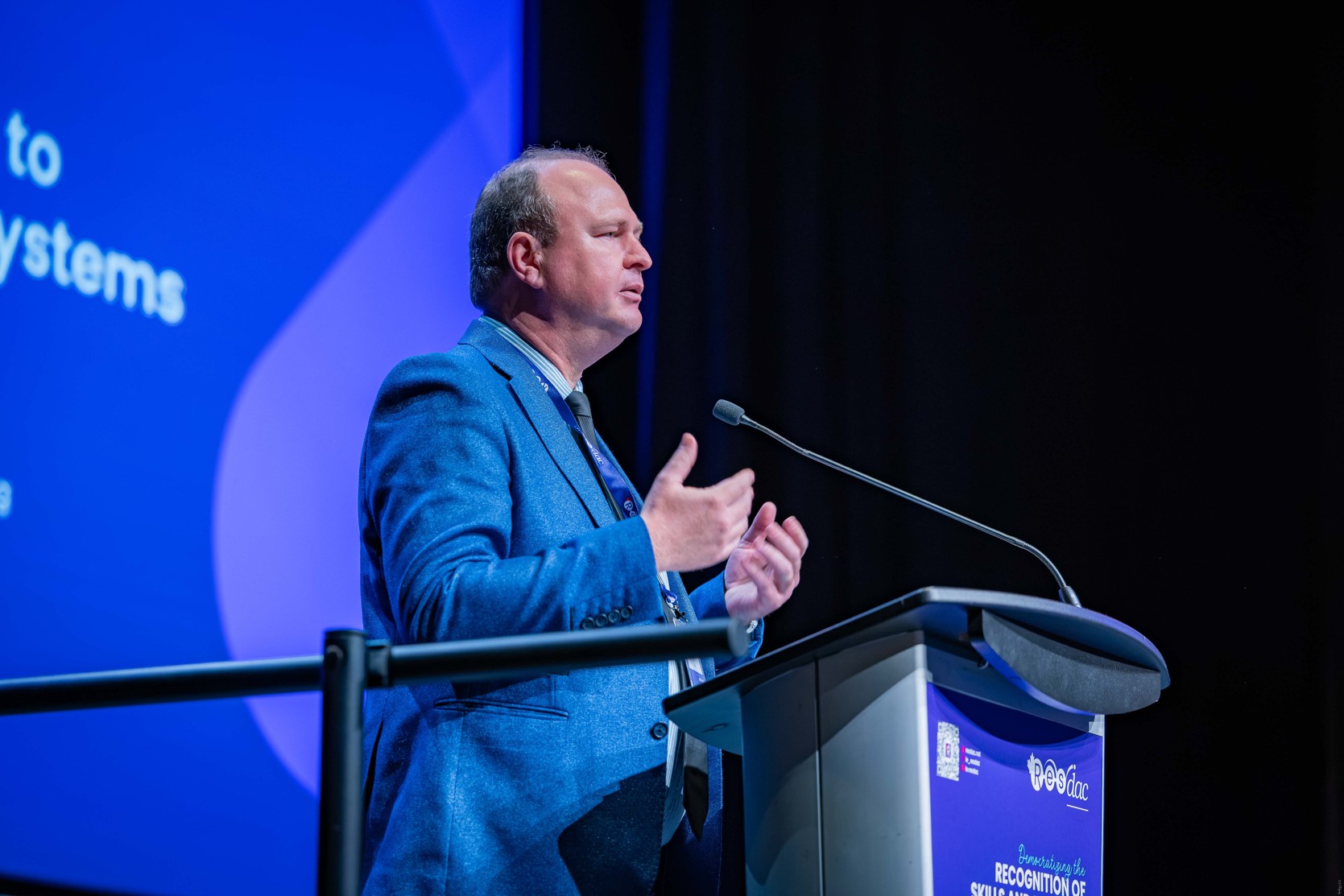
This distinction between visibility and recognition was central to my presentation, “From Badges to Recognition Ecosystems: A Commonwealth Approach to Micro-credentials”. I noted that while badges can make achievements visible, meaningful recognition depends on the evidence, quality assurance and trusted relationships behind them. Recognition must go beyond issuing credentials to building national, regional and global ecosystems that enable learners to have their learning recognised for increased access to further education, employment and other opportunities.
Another key theme that emerged from the conference was that inclusive recognition and professional standards should reinforce one another. More inclusive standard-setting requires participation beyond established professional bodies, and criteria must be transparent so that people understand how their capabilities will be assessed. Employers, educators, learners and communities must all take part in these efforts so that recognition can create practical opportunities without reducing the value of learning to employment alone.
The growing role of AI brought other priorities to light. When AI is used to build recognition systems, it must be human-centred, with strong human oversight, clear explanations and safeguards for personal information. Technology should support professional judgement and learner agency, rather than make consequential decisions without transparency or reproduce existing inequalities.
Together, these discussions highlight the importance of recognition systems that balance inclusion, quality and trust. They also highlight the need for shared principles that can guide implementation while responding to different educational and national contexts.
A one-Commonwealth approach
These considerations are reflected in the Commonwealth Micro-credential Framework for Lifelong Learning. Informed by research and five regional consultations, the framework requires assessed, quality-assured achievement while recognising learning acquired in formal, non-formal and informal settings. It connects this recognition with transparent information and potential pathways to further study, credit transfer and employment.
The Commonwealth Micro-credential Implementation and Quality Assurance Guide builds on this approach by providing guidance on design, delivery, evidence and provider capability. It promotes credible and consistent standards while allowing countries and institutions to adapt their approaches to local regulations, priorities and system maturity. For institutions, advancing recognition through this approach means strengthening assessment and learner support alongside the technologies used to issue and verify credentials.
A recent example from Mauritius shows how these shared principles can be applied in practice. Pilot micro-credentials were co-designed by higher education institutions and industry, with the Higher Education Commission responsible for their approval and recognition. The pilot established clear responsibilities while enabling institutions to lead the design, delivery and internal quality assurance of their programmes.
The future of recognition
As opportunities for lifelong and flexible learning continue to expand, COL works with governments, institutions and civil society across Commonwealth member states to widen access to learning and skills development through non-traditional pathways, while strengthening the systems needed to recognise that learning. Through national and regional frameworks and institutional capacity development, COL supports approaches that are credible, accessible and responsive to each country’s national contexts, resources and institutional capacities.
This work helps connect quality-assured learning with clear pathways to further study, employment, and improved livelihoods. In combination with accessible open and distance learning, people can build on their existing skills and move between learning and work as their needs change. The next step is therefore not simply to issue more badges, but to strengthen the conditions that make recognition useful.
For the Commonwealth’s 2.7 billion citizens, recognising existing capabilities and enabling targeted reskilling can contribute to a more adaptable workforce, stronger local enterprises and greater economic and social resilience. For a self-taught technician, that could mean no longer having to start again or struggle to prove what they already know. It could mean having their skills recognised, experience valued and more opportunities to shape their future.
Photo credit: Hamza Bennani (bE Ha Photography)