

By Gopesh Tewari, Education Specialist, COL
In 2025, about 645 million people faced hunger. That’s nearly one in every 13 people on the planet. Food is the most basic of human needs, but climate change, conflict, supply-chain disruptions and an increasingly multipolar geopolitical order are placing strain on global food systems, making it more difficult to produce enough affordable and nutritious food for everyone. Across the Commonwealth, many member countries carry a heavy share of the world’s food insecurity burden.
The world’s population is projected to approach 10 billion by 2050, and the World Resources Institute estimates that the world will need about 56 per cent more food calories than it produced in 2010, with less land and water, and in a hotter climate. A 2025 study published in Nature estimates that, even after farmers adapt, global yields of staple crops could fall by about 24 per cent by 2100 if emissions continue to rise unchecked, and by around 11 per cent even if emissions fall rapidly to net zero.
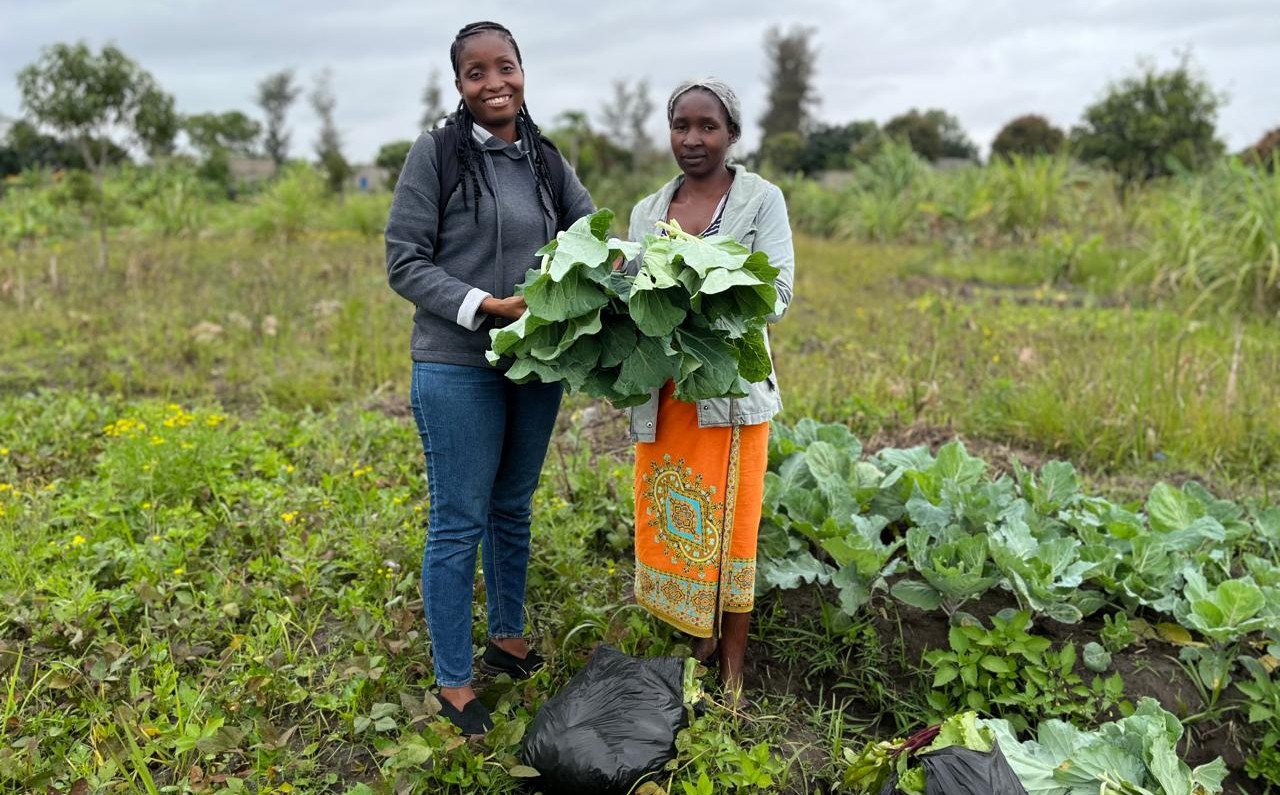
Two recent global observances, the International Day of Rural Women and World Food Day, brought these challenges into focus. The theme of this year’s International Day of Rural Women, “Rural women farmers caring for mother nature”, and the World Food Day theme, “Innovate today. Nourish tomorrow”, both align with the need for green, climate-resilient and forward-thinking agrifood solutions to ensure sufficient, diverse, safe and nutritious food for all, while safeguarding the planet. Central to this ambition are rural women, whose contributions to food production and livelihoods are essential, yet whose access to the resources, skills and opportunities needed to strengthen food systems remains limited.
The women behind the harvest
Rural women are at the heart of green and blue food systems. The FAO estimates that women make up 43 per cent of the agricultural labour force in developing countries. In southern Asia, 71 per cent of working women are employed in agrifood systems, compared with 47 per cent of men; in sub-Saharan Africa, the figure is 66 per cent, compared with 60 per cent of men. In the blue economy, women account for 40 per cent of those working in small-scale fisheries value chains, and 62 per cent of workers in post-harvest fisheries and aquaculture.
From seed to market, women’s labour runs through every stage of these value chains. Their rights, resources and decision-making power, however, lag well behind. Men hold greater ownership rights over agricultural land than women in 40 of 46 countries reporting on this. Women are also less likely to have access to extension services, skills training, finance and markets, while shouldering most of the unpaid care work. The result is a 24 per cent productivity gap between women and men farming plots of the same size. FAO estimates that closing these gaps could add nearly USD 1 trillion to global GDP and reduce the number of food-insecure people by 45 million.
The challenge of nutrition
The global agenda is also shifting from food security to nutrition security, tackling ‘hidden hunger’ by looking beyond calories to ensure diets contain sufficient micronutrients. Without enough micronutrients, children can experience blindness, while micronutrient deficiencies can cause anaemia, weakened immunity, stunting and a higher risk of disease. Women, children and older people in low-income countries are among the most vulnerable to this form of malnutrition.
While biofortified staple crops, such as multi-nutrient 3-in-1 rice developed by IRRI, bred to contain more iron, zinc or vitamins, are now reaching millions of people, complementing food fortification and crop diversification, many Commonwealth member countries are still struggling to achieve basic food security. In 2025, almost one-third of the world’s population, and two-thirds of people in Africa, could not afford a healthy diet. Anaemia among women of reproductive age is also worsening. While women are often the ones growing nutritious food, they are also among those least able to eat it. In fact, food insecurity is consistently higher among women than men in every region.
From learning to livelihoods
COL’s earlier work in this area shows what becomes possible when rural women gain access to learning. Through its Lifelong Learning for Farmers (L3F) programme, COL combined open and distance learning, low-tech mobile phones and farmer collectives to share knowledge, build skills, strengthen social capital and facilitate access to credit.
Building on these lessons, COL is now developing a three-pronged approach to sustainable agriculture and green and blue bioeconomy skills development and learning. It is working with institutions to better align agriculture and TVET policies and frameworks; strengthening agricultural knowledge intermediaries, such as extension workers, trainers and institutions, that bring skills and knowledge to farmers and fishers; and working directly with youth and women at the intersection of future skills, green and blue skills development, and sustainable livelihoods.
From field to CHOGM
A COL delegation led by our President and CEO, Professor Peter Scott will carry these priorities to St John’s, Antigua and Barbuda, where Commonwealth Heads of Government will meet this November. The Commonwealth Youth and Women’s Forums, held alongside the summit, offer opportunities to put youth and women at the heart of discussions on investment and prosperity, with green and blue skills development and empowerment at the centre.
Innovation is often pictured as a scientific breakthrough in a laboratory, a drone flying over a field, the release of a new climate-resilient seed variety or a smartphone-based decision-support app. For a rural woman working in agrifood systems, one of the most powerful innovations may look far simpler: a lesson in her own language, a land title in her own name and a seat at the table where decisions about food are made. That is what we at COL are working towards: a food-secure and well-nourished future for our member countries through open, technology-enabled skills development, learning and knowledge-sharing.