
By Dr Jyotsna Jha, Director: Skills at the Commonwealth of Learning
Gender justice is a complex issue that requires both large structural reforms and micro-level action. While there has been significant progress and long-standing international commitments to gender equality, global inequalities continue to persist.
As UN Women points out, no country has eliminated legal gaps or achieved full equality between men and women. Even in 2026, women have only 64 per cent of the legal rights men hold worldwide, with many laws restricting women’s rights in areas such as education, work, financial independence, family life, and beyond.
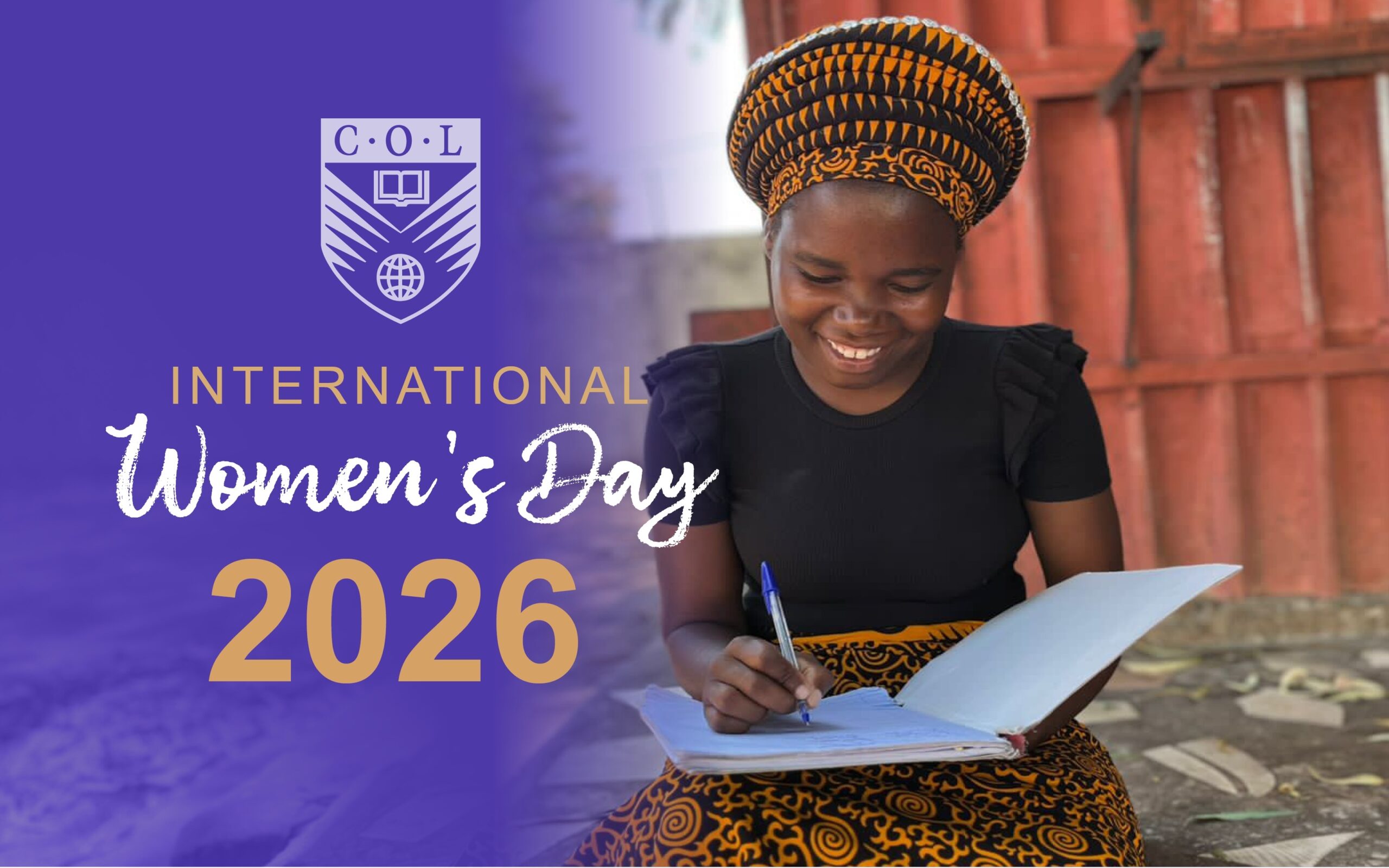
This year’s International Women’s Day theme, which focuses on the role of rights, justice, and action for all women and girls, sheds light on ongoing legal disadvantages and calls for greater accountability and fairness in gender justice.
On this special day, we must take a moment to reflect on the strong collaborations and diverse approaches that guide our gender-related work. In the face of these persistent socio-political challenges, COL reaffirms its commitment to empowering women and girls and to accelerating progress towards gender equality.
We recognise that there are multiple pathways to achieving gender justice, which is why we use gender mainstreaming to integrate gender-equality into our internal culture, organisational strategy and project plans. We also work closely with partners across the Commonwealth to design, support, and implement education, skills, and empowerment programmes for women and girls, while actively re-engaging men and boys who have become disengaged in society.
Gender mainstreaming
Gender mainstreaming embeds gender equality into the foundations of COL’s work rather than addressing it as an afterthought. The approach involves a set of strategic approaches and technical and institutional processes to ensure gender equality and justice are cross-cutting priorities across our diverse areas of work.
Just last year, at the corporate level, we launched Open Funds for Gender Mainstreaming, enabling colleagues working across different domains to apply for projects that integrate gender-related interventions in their respective areas of work. The fund has encouraged COL staff to reimagine projects with institutions and initiatives that have not received adequate attention so far. For example, proposals to integrate gender equality interventions in technical and vocational education have now been implemented. The fund is currently supporting gender mainstreaming across Malawi, Tanzania and Zanzibar in Africa, and through regional level work with the Caribbean Association of National Training Authorities (CANTA).
COL has also used gender auditing as a catalyst to increase awareness and commitments from partner ministries and institutions. A few recent examples are demonstrated through our work with Gulu University in Uganda, the Centre for National Distance Learning and Open Schooling (CENDLOS) in Ghana, the Ministry of Higher Education, Research, Science, and Technology (MoHERST) in The Gambia, and the National University of Samoa. Across these collaborations, in all cases barring Gulu University, our gender audits have led to the development of Gender Action Plans with detailed steps for integrating gender into policies, processes, and programmes. COL is now supporting the Gambia’s MoHERST on a pilot project to advance women’s participation in STEM (Science, Technology, Engineering, and Mathematics) education and careers through mentorship and teacher training.
These achievements are helping create lasting gender transformation that will be felt long after projects conclude.
Women in STEM
At the heart of gender justice is addressing historical imbalances. Although the limited participation of girls and women in STEM education and professions has been widely discussed in this context, this imbalance chronically persists.
To empower young women to pursue careers in STEM, COL has launched several pilot projects with engineering colleges and technical institutions in Africa and South Asia. These initiatives focused on developing new short-term courses in technical fields and on making technology and engineering education more gender-responsive. We are also working with several Commonwealth Member Countries in Asia, such as Brunei and Malaysia, to provide research and analysis of the high participation of women in STEM education and careers. Still, more needs to be done across the Commonwealth to address these persistent gender gaps in disciplines that require long-term participation by women.
Education, empowerment and resilience
More than 30 years after the Beijing Declaration and Platform for Action, the empowerment of women and girls remains a critical part of, and an unfinished agenda for, gender equality. COL’s flagship project on Empowering Women and Girls (EWG) addresses empowerment through a holistic approach in the local contexts of five countries: Bangladesh, Pakistan, Sri Lanka, Malawi, and Mozambique. Launched in 2023 as a three-year project with generous financial support from Global Affairs Canada, EWG works with a range of stakeholders to deliver awareness-raising, rights-based training, and capacity building in rural communities. Beyond targeting women and girls, EWG also works with religious and community leaders, men, young boys, and schoolteachers.
Through other COL initiatives such as Girls’ Inspire and Open Schooling, we work closely with state institutions and grassroots organisations to bring the most vulnerable out-of-school girls back into education through supportive conditions and institutional reforms.
In the Pacific, with the support of the New Zealand Ministry of Foreign Affairs and Trade (MFAT), COL has further aided skilling and entrepreneurship programmes for girls and women across eight small island nations. We are now developing the second phase of our project in that region, with two foundational design pillars: climate responsiveness and the integration of GEDSI (Gender Equality, Disability and Social Inclusion). All our training and capacity-building exercises in education, skills, and empowerment have a strong focus on climate change resilience – an area where women and girls have a critical role to lead.
Engaging with men and boys
COL’s gender equality work also addresses what some call “reverse gender disparities.” Several middle-income countries in the Commonwealth are facing the challenge of high school dropout rates and underperformance among boys and young men.
Actively addressing boys’ disengagement, COL has developed an innovative open education concept for the Caribbean region that integrates academic and skills education through blended delivery, hands-on training, and mentorship for boys and young men who have dropped out of mainstream education systems. As we expand this work, we are actively building collaborations with Caribbean Member States interested in developing new business plans and launching pilot projects, providing support and expertise to help bring these initiatives to life.
As we revisit the theme of International Women’s Day this year, we reaffirm our commitment to this important cause and to the long journey that lies ahead. By offering a brief glimpse into the diverse approaches that guide our gender work, we invite our stakeholders to align with their local gender priorities and continue advancing gender justice — at home, in schools, in workplaces, and across the wider community.
*Jyotsna Jha is the Director, Skills at the Commonwealth of Learning, headquartered in Vancouver, Canada. She also leads Gender as a cross-cutting area in the organisation.