

Teacher professional development is most effective when teachers have access to quality resources, adapt them to their classroom contexts, and share them with colleagues. Open Educational Resources (OER) make this possible by providing openly licensed teaching and learning materials that support collaborative, cost-effective and locally relevant professional learning. In this way, OER transforms teachers’ roles, helping them move from users of content to co-creators of resources that respond to the diverse needs of learners.
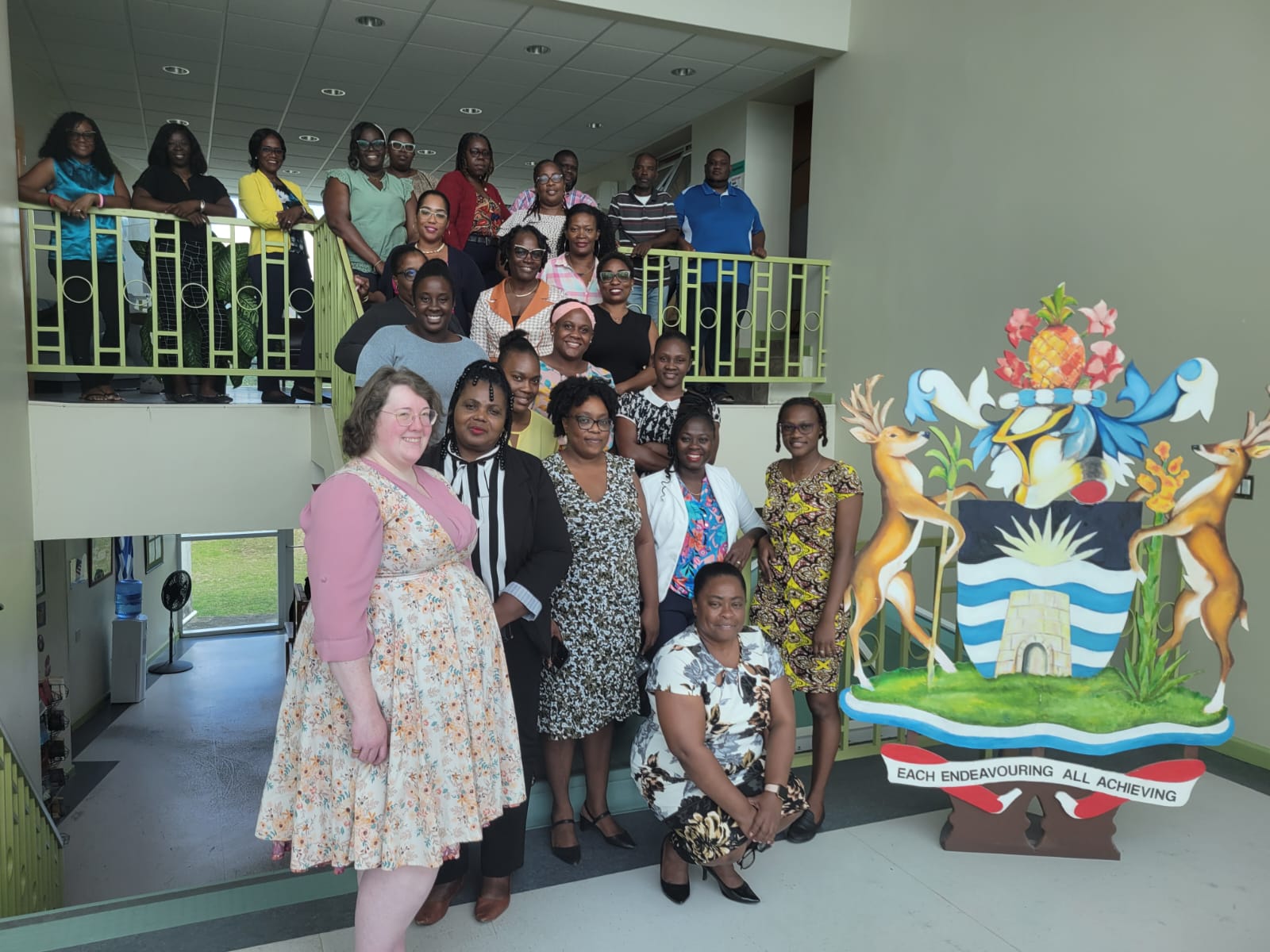
In March 2026, 25 teacher-leaders from the Ministry of Education, Sports and Creative Industries (MOESC) of Antigua and Barbuda came together in St John’s for a three-day COL-supported capacity-building session on OER.
With a structure around a train-the-trainer model, participants were empowered as both learners and future champions of OER practice within their schools and communities. Over the three days, participating teacher-leaders explored the principles of open education and Creative Commons licensing, developed hands-on skills in searching OER repositories and applying evaluation frameworks, and learned how to describe resources using metadata conventions aligned with the emerging continuing professional development (CPD) platform.
A live remote demonstration of the platform gave participants hands-on experience with the infrastructure they will help develop and champion. The final day connected these skills to course design, school-based mentoring, and sustainability, while also initiating discussions on establishing a community of practice among the participants.
Dr Betty Ogange, Education Specialist: Teacher Education, COL, affirmed COL’s support to the Ministry. “COL is pleased to support the Ministry’s efforts in developing a sustainable national CPD platform that integrates OER, supports evidence-based decision-making, and strengthens local capacity for continuous teacher professional development.”
Ms Stacey Payne-Mascall, Assistant Director of Education at MOESC, reflected on the Ministry’s goal of building a community of practice around OER. She committed to scheduling a follow-up online check-in session with all participants to sustain the momentum of the session.
One teacher-leader captured the spirit of the three days. “Thank you for coming and inspiring me. I am now excited to go be an inspiration to others so that we can all be more effective in teaching and learning.”
This initiative contributes to COL’s broader strategic agenda of expanding access to quality learning through open, distance and technology-enabled approaches. For Small States and other resource-constrained contexts, the Antigua and Barbuda experience demonstrates how OER can be embedded within national teacher professional development systems to support sustainability, evidence-based decision-making and local ownership. Lessons from this work will help inform COL’s support for other countries seeking practical, scalable models to strengthen teacher capacity and develop locally relevant educational resources.