

For many learners excluded from traditional education, Open and Distance Learning (ODL) offers a second chance. Whether it is a young mother with childcare responsibilities hoping to complete her high school education or a 40-year-old farmer seeking to upskill, ODL opens pathways to lifelong learning that were previously out of reach.
But what does success in ODL for learners realistically look like? Do high enrolment numbers matter if students are registered but struggling in silence? What happens when a learner is academically admitted but remains psychologically unsupported, digitally excluded, or institutionally invisible?
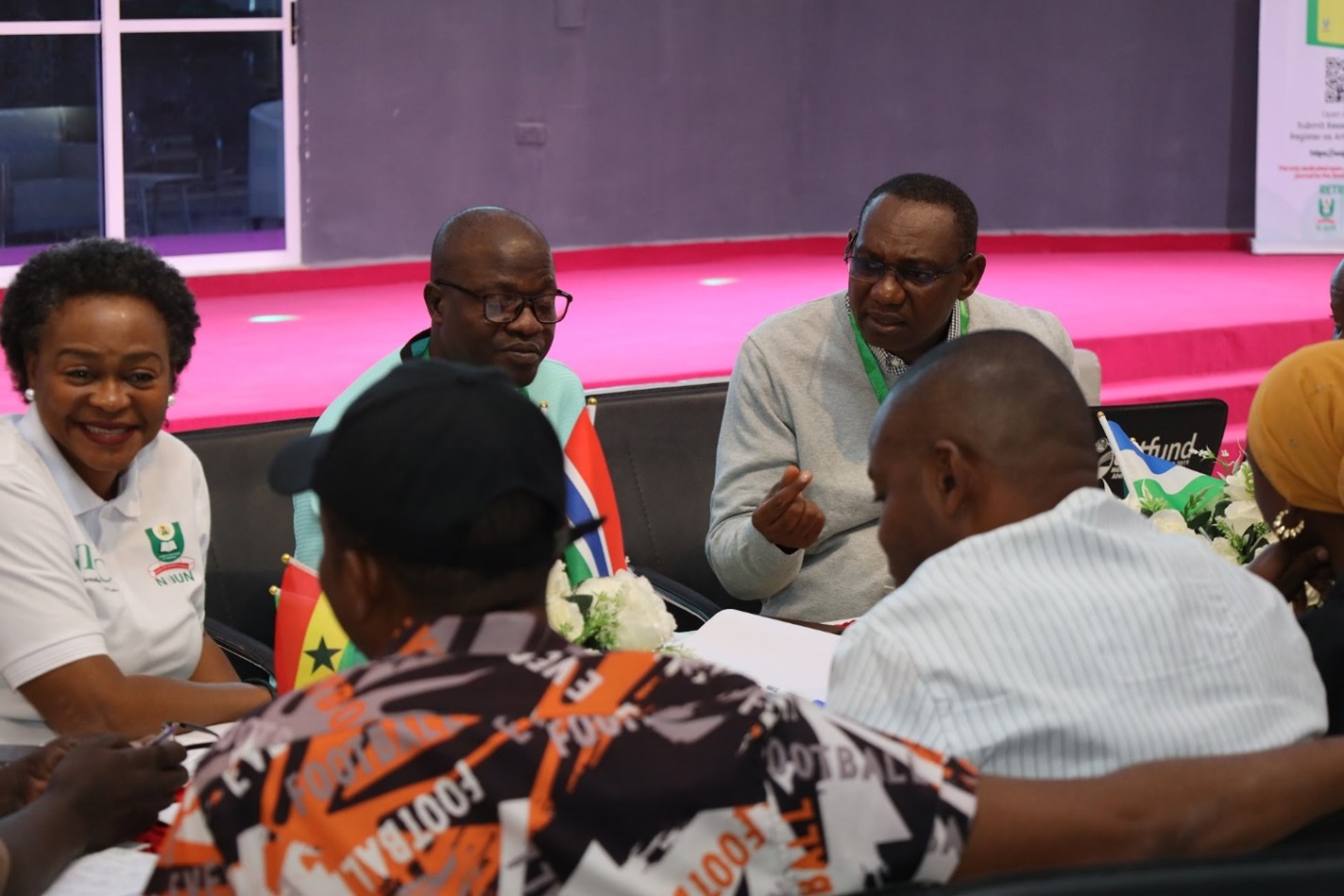
To address these questions, COL, in collaboration with its Regional Training and Research Institute for Distance and Open Learning (RETRIDOL) in Nigeria, recently convened a regional session on Inclusive Learner Support Processes in ODL and Digital Education in the West African context. The session responds to a growing regional and global imperative to ensure that as ODL expands access, it also provides equitable academic, administrative, technical, and psychosocial support for all learners.
Bringing together higher education and government stakeholders from six Commonwealth countries in West Africa — Cameroon, The Gambia, Ghana, Nigeria, Sierra Leone, and Togo, participants explored how learner support systems can better address the needs of students living with disabilities, as well as those marginalised by geography, language, income, conflict, climate, or digital exclusion.
Opening the session, Professor Uduma Oji Uduma, Vice-Chancellor of the National Open University of Nigeria (NOUN), highlighted the importance of inclusive learner support. “We must intentionally design systems where every learner, regardless of geography, disability, socio-economic background, language, gender, or circumstance, can thrive.”
His remarks emphasise that access alone is insufficient if learners cannot navigate digital platforms, safely disclose their needs, receive materials in accessible formats, or access timely academic guidance, counselling, and emotional support.
A presentation on findings from a status review of inclusive learner support in West African ODL highlighted persistent barriers, including weak infrastructure, limited digital literacy, fragmented support systems, insufficient staff capacity, and weak implementation of inclusive policies. Workshop participants called for stronger support for learners with disabilities, rural learners, and other underserved groups. They agreed that psychosocial well-being must be recognised as a critical dimension of learner support, especially in ODL contexts where isolation, anxiety, and limited human contact can negatively affect persistence and success.
Aligned with COL’s broader commitment to learning that promotes social inclusion and sustainable development, the session moved beyond identifying challenges to reflecting on practical solutions. Discussions focused on how institutions can redesign systems to be more human-centred, responsive, and effective.
By the end of the session, participants made recommendations for ODL institutions in West Africa to adopt inclusive learner support systems grounded in the proposed West Africa Flexible Universal Learning Support (WAFULS) model. Participants also recommended providing support through multiple accessible formats and strengthened academic, administrative, technical and psychosocial services. In addition, they emphasised the need for sustained awareness-raising so that learners can fully utilise support available to them. These recommendations recognise that inclusion cannot rely on goodwill alone. Genuinely inclusive ODL requires clear policies, capable staff, accessible systems, and sustained institutional commitment.
RETRIDOL’s distinctive role within COL’s regional architecture helps anchor global vision in local realities. Advancing COL’s strategic vision, RETRIDOL facilitates dialogue, training, research, and institutional engagement to translate policy ambition into practice and support the future of ODL in West Africa.
Professor Jane-Frances Agbu, Adviser: Higher Education, COL, reflects on the importance of this collaborative work. “By foregrounding inclusive learner support, including the often-overlooked psychosocial dimension, COL and RETRIDOL are helping institutions move towards ODL systems that are not only wider in reach, but also fairer, more supportive, and better equipped to help every learner succeed.”